
Nong Khiaw - The Complete Guide
Nong Khiaw is special. A beautiful backpacker haven, sitting nestled between tall limestone mountains and divided in two by the snaking Nam Ou River.
This laidback, northern Laos town is exactly what you expect when you picture a backpacker hub. The town is stuffed full of cheap accommodation, great restaurants and bars and plenty of things to do, all whilst being surrounded by some incredible jaw-dropping scenery!
For those looking for adventure, Nong Khiaw is ringed with dramatic peaks to climb giving way to some of Laos’ best hikes and walking trails. The whole area is an outdoor enthusiasts playground with underground caves, waterfalls and the Nam Ou River all ready to be explored.
During our adventures we have been lucky enough to visit some wonderful places, but Nong Khiaw is up there as one of our favourites. The town has stolen our hearts twice, with each trip turning from a planned few days stay into months-long love affairs.
After spending nearly two months in the town, this is our full travel guide on everything there is to see, do, eat and drink in the stunning town of Nong Khiaw!
Word of warning - when we say this is the complete guide, we mean it! This is a long one. Find a comfy seat, grab a beer and let us tell you why Nong Khiaw should be at the top of your where to go list in Laos!
In This Ultimate Nong Khiaw Travel Guide
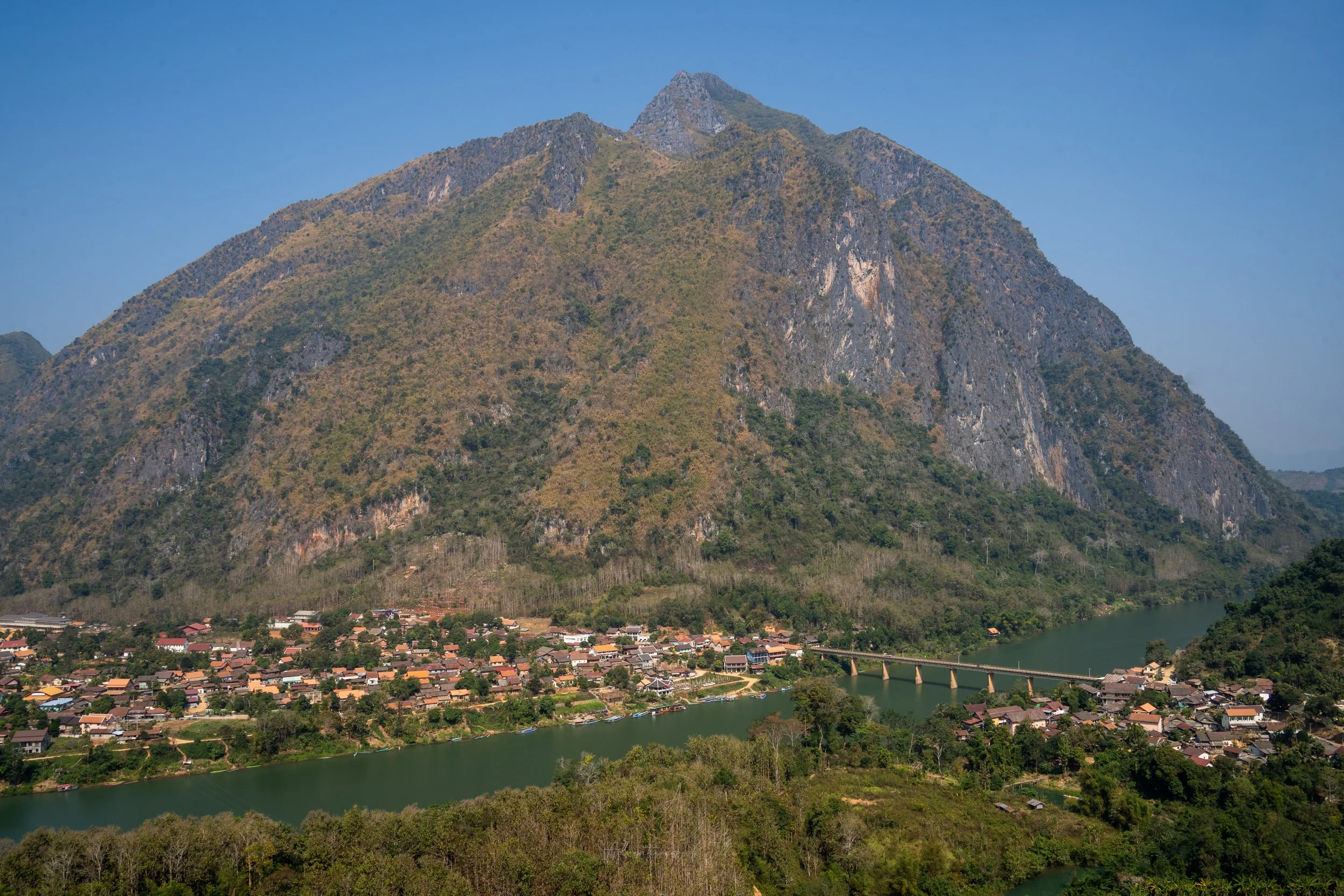
A view over Nong Khiaw town and Nong Khiaw’s “Everest” mountain, taken from the Pha Noi viewpoint - it really is a lovely little town!
Disclosure: This article contains affiliate links. We will earn a small commission from any purchases made through these links.
How to get to Nong Khiaw?
Being a backpacker hub, Nong Khiaw is pretty well connected with buses running regularly to the towns and cities all around. The cities of Luang Prabang and Oudomxay (also known as Muang Xai or Oudomxai) are only about four hours away by bus and the hiking hotspot and National Parks of Luang Namtha is around a bumpy seven hour drive away.
The bus station in Nong Khiaw is located a short walk outside of town and can be found on a map here. Unless you are travelling to Nong Khiaw by taxi (or by river - see more later), then this will be the bus station you will arrive and depart from.
For better or worse (we think for the better) Nong Khiaw is not on the new high speed railway line, so if you are travelling from the south of Laos (from Vientiane or Vang Vieng), you will need to book a train ticket to either Luang Prabang or Oudomxay and book an onward bus or taxi to take you onto Nong Khiaw.
Getting to Nong Khiaw from Luang Prabang
The vast majority of travellers (including us on our second trip back to Nong Khiaw) will travel to Nong Khiaw from the UNESCO world heritage city of Luang Prabang.
Buses depart daily from Luang Prabang’s bus station (located here) and drive north, taking around four hours to reach Nong Khiaw.
The road to Nong Khiaw, like many of Laos roads, could be described more like a track rather than a main road and is full of potholes, loose gravel and deep crevices. If this is your first bus ride in Laos expect a very bumpy ride!
Tickets for the buses to Nong Khiaw can be bought directly from your hostel, guesthouse or hotel, or from any of the tourist agencies dotted around town. Tickets vary in price depending on the tour company and size of bus and cost anywhere between 160,000 kip to 250,000 kip. Almost all of the bus tickets will include a tuk tuk transfer from your accommodation to the bus station.
If you have your own transport, or are within walking distance of the bus station, you can save quite a bit of kip, as tickets bought directly from the bus station cost only 120,000 kip per ticket.
For those who would rather have everything booked in advance before you arrive (especially useful if you are short on time), you can book your bus tickets online and in advance, using 12Go. Just click here to book your tickets.
Our recommendation is to book early, especially if you are planning to visit Nong Khiaw during the peak tourist times (October to April - see more details later), as tickets will sell out extremely quickly!
Getting to Nong Khiaw from Luang Namtha
On our first trip to Nong Khiaw, we travelled from Luang Namtha in the north. We departed early in the morning and had a very bumpy seven hour ride punctuated by having to change the two front tyres on the minibus (we hope your journey is easier than ours).
It could have been worse though, the people in front of us were all sitting on beer crates rather than seats… it’s the gamble you take when travelling in Laos!
Travel tip for taking the bus in Laos
If you have a ticket pre-purchased, make sure you get to the bus station early. Being one of the first there will give you more of a chance to get an actual seat on the bus! It’s not guaranteed, but it’ll definitely help!
Bus companies in Laos will often cram the buses until bursting and it’s not uncommon for a 16 seater to become a 24 seater or more. On one journey through Laos we counted 28 passengers (including us), one baby and a set of chickens all crammed on a 16 seater!
We booked our tickets from Luang Namtha to Nong Khiaw directly from our accommodation, the wonderful Phou Lu III Bungalows. Each ticket cost 230,000 kip. This included a tuk tuk transfer to the bus station and our onward ticket to Nong Khiaw. The bus we took also stopped in Oudomxay along the way.
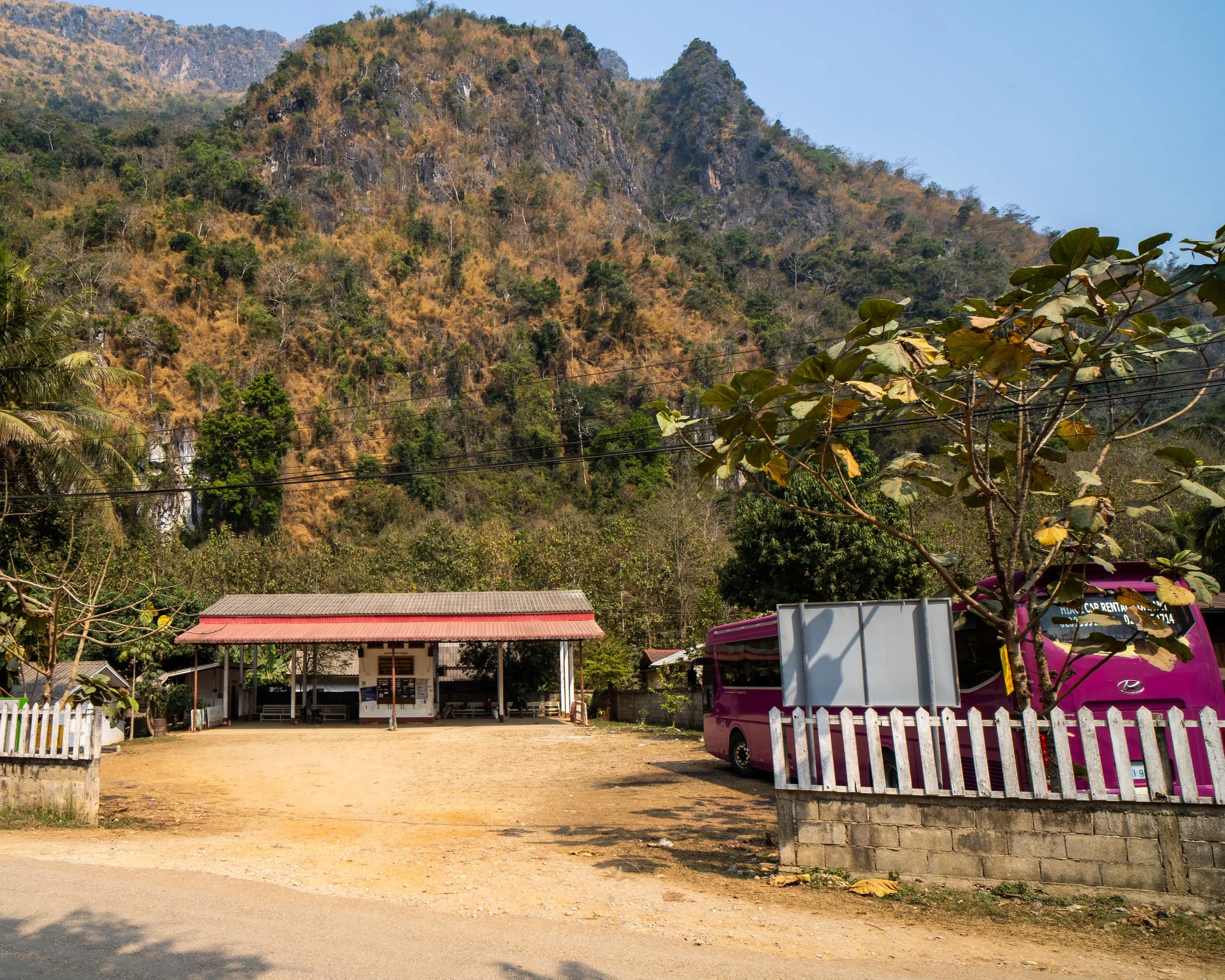
Nong Khiaw’s very quiet bus station is a good reflection of the chilled out vibes in town!
Bus stations in Laos
In lots of places in Laos, you will find the bus station isn’t anywhere near the centre of town. In Nong Khiaw this isn’t too bad as the distance is still walkable. When we arrived, it took us about 15 minutes to walk into town with our backpacks. In both Luang Namtha and Luang Prabang, the bus stations are well outside the main towns and accommodation areas, therefore you will need to factor in the price of a tuk tuk or taxi to your total ticket price. This is often quite high as the tuk tuk drivers know that you don’t really have a choice. Our tip would be to unite with your fellow bus travellers and increase your negotiation power as a group.
Getting to Nong Khiaw from Vietnam - Crossing the Pang Hok Vietnam/Laos border
For the more adventurous traveller (we cannot wait to do this ourselves next time), you can actually get to Nong Khiaw from Vietnam.
To do this, you’ll need to catch a bus from Dien Bien Bus Station in Vietnam (location) and travel across the Pang Hok Border (location) all the way to Muang Khua Bus Station in Laos (location).
Buses depart Dien Bien bus station around 7AM (it may be later or earlier depending on how full the bus is), however we would aim to get there by 6AM to guarantee a seat, as the bus to Laos is very popular. Tickets can be bought via your accommodation in Dien Bien or online here. If you’re buying tickets in Dien Bien itself, a bus ticket should cost around 250,000 kip (around 310,000 VND) to take you to Laos.
If you are travelling through Vietnam, you can get to Dien Bien Bus Station from either Hanoi (via an overnight bus - book tickets here) or from Sapa (again via an overnight sleeper bus - book your tickets here).
For more ideas about where to go and what to eat in Vietnam, make sure you check out all our Vietnam travel guides here.
Once you’ve arrived in Muang Khua, you can catch a boat down the Nam Ou River all the way to Nong Khiaw. The boat south will depart daily from Muang Khua’s Boat Deck (location). Tickets for the boat will go on sale from the pier at 9:30AM and the boat will leave between 10AM to 11AM.
The journey downstream will take around 6 hours depending on the number of stops the boat makes. The first half of the journey downstream will take around 3 to 4 hours until it reaches a dam. From there you’ll get off the boat, jump into a tuk tuk to bypass the dam and then you’ll hop back into another boat to continue your trip down the river. From the second boat it’s about 1.5 to 2 hours to get to Nong Khiaw.
If you are planning to travel this route, then we would highly recommend splitting up the journey and stopping in Muang Ngoi (another beautiful riverside town - read more about the town in our full Muang Ngoi guide here) before heading on to Nong Khiaw.
Tickets from Muang Khua to Muang Ngoi cost 300,000 kip and a ticket from Muang Khua to Nong Khiaw will cost 400,000 kip.
Laos Visas at the Pang Hok Vietnam / Laos Border Crossing
If you are planning to use the Pang Hok border crossing between Vietnam and Laos, make sure you have arranged a printed visa before attempting to cross the border. This border does not accept eVisas to enter Laos. To get a printed Laos visa you can arrange one through the Laotian embassy at Hanoi.
As with all border crossings make sure you have some cash on you. This can be in the form of either Vietnamese Dong, USD or both. We’ve heard it’s not uncommon for you to be requested to pay an extra fee to help with “processing” costs across the border!
Activities and attractions - What to do in Nong Khiaw?
Nong Khiaw is an outdoor lover’s dream. The whole town is completely surrounded by tall, limestone mountains and with the Nam Ou river flowing through the middle. This small town in northern Laos is perfect for anyone who is eager to go hiking, kayaking, cycling or climbing all whilst enjoying the incredible Laotian landscapes.
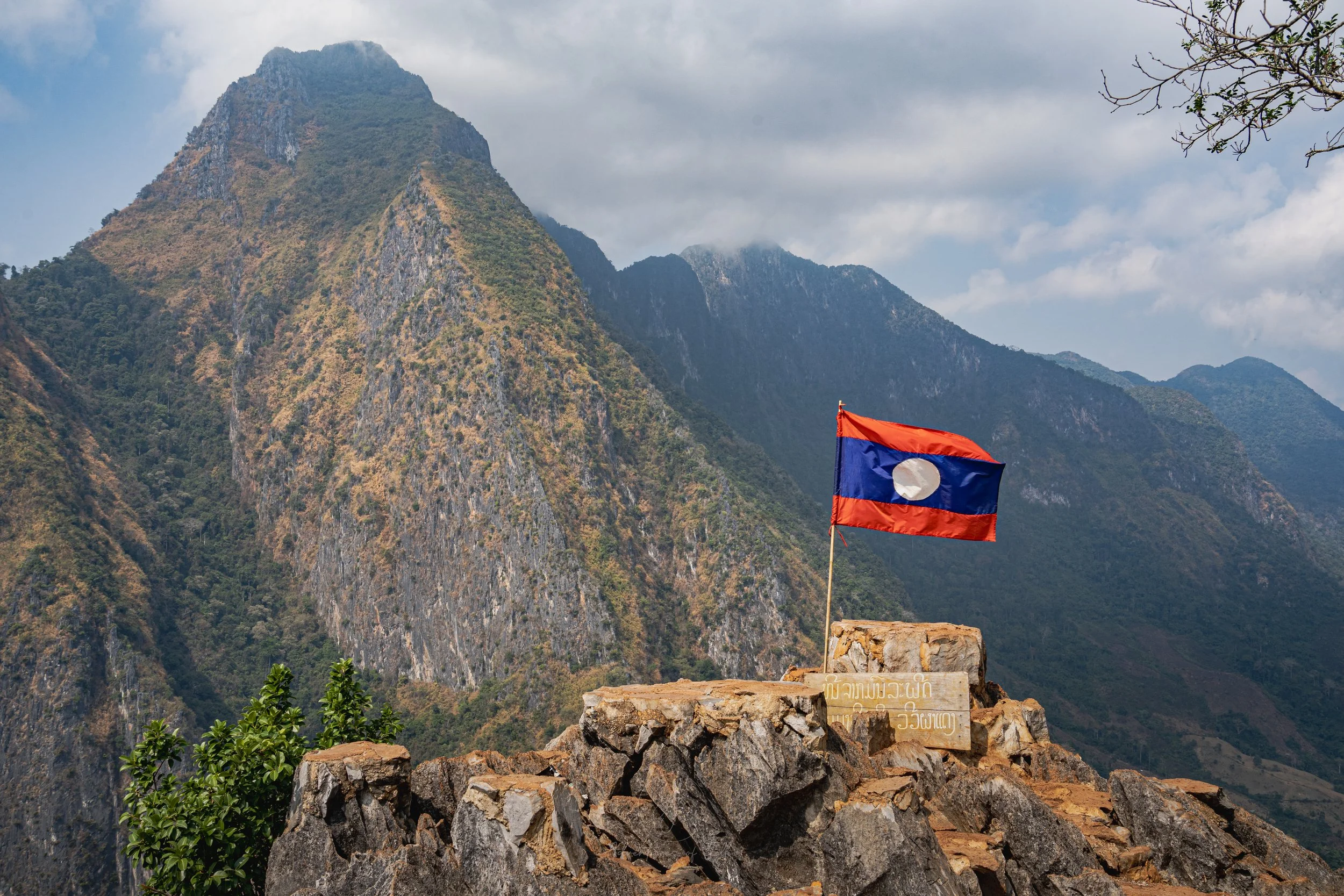
Hike one of Nong Khiaw’s incredible viewpoints
You’ve probably seen the pictures on Instagram, we’ve certainly posted enough of them, so let’s face it, the viewpoints are probably the reason why you came to Nong Khiaw. The town is encircled by towering peaks, with each one giving a fantastic view over the surrounding countryside. There are four main viewpoints that can be climbed from the town of Nong Khiaw. Each hike up varies in length, height and difficulty. Here is our full guide to the viewpoints of Nong Khiaw.
Som Nang Viewpoint
The Som Nang Viewpoint is easily our “most hiked” viewpoint in Nong Khiaw and is somewhere we head to for sunset almost every day. In fact on our last visit, we spent nearly a month in town and hiked this almost every day we were there!
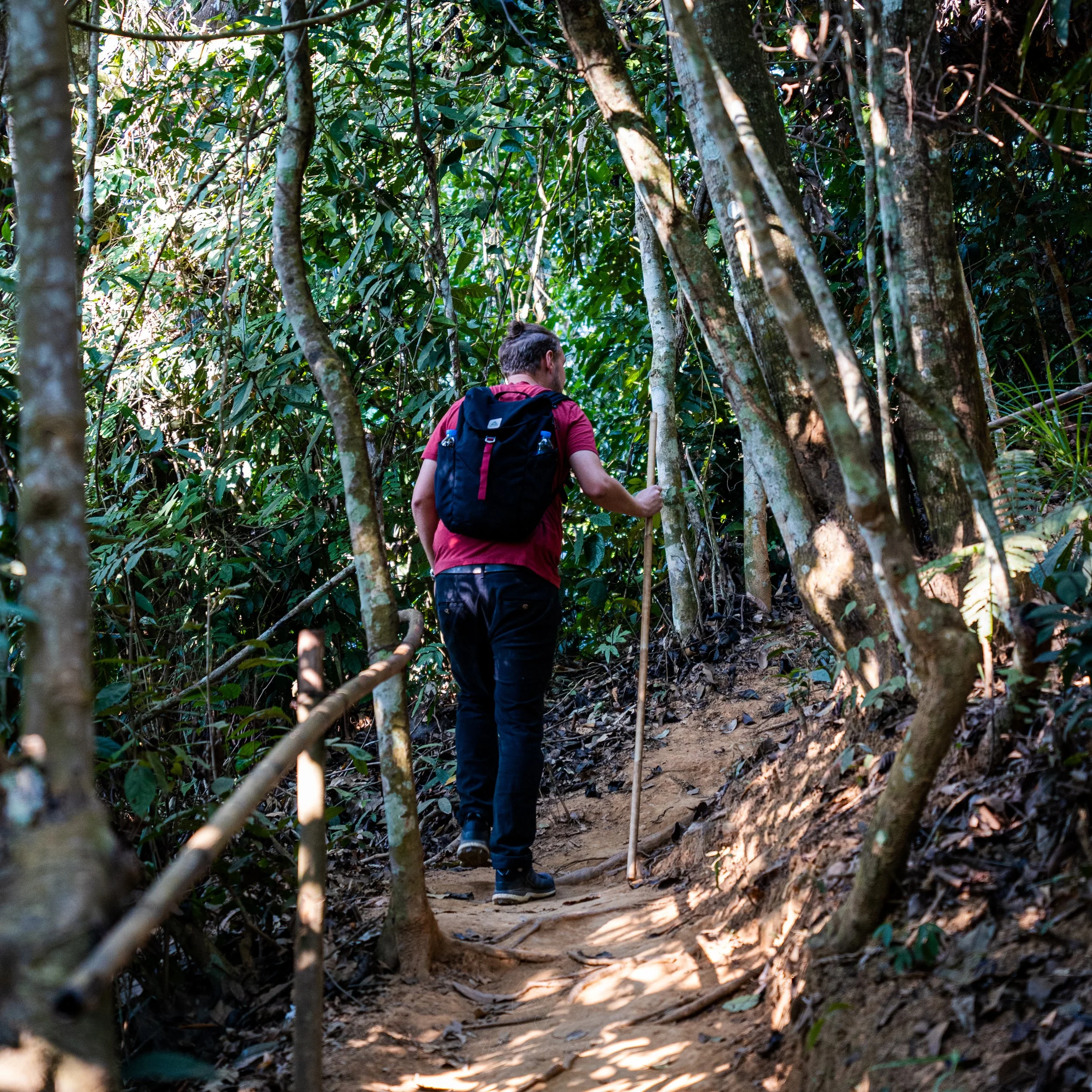
The viewpoint is the shortest and easiest of the hikes on offer in Nong Khiaw. This is also the most easily accessible viewpoint from the town, with its entrance located near the southern end of the bridge. After purchasing tickets, one ticket costs 50,000 kip, the walk starts with a steep hike up a natural staircase cut into the earth. As you walk up you’ll be treated to a sneak peak of what's to come with a small viewpoint and benches looking out over the Nong Khiaw bridge.
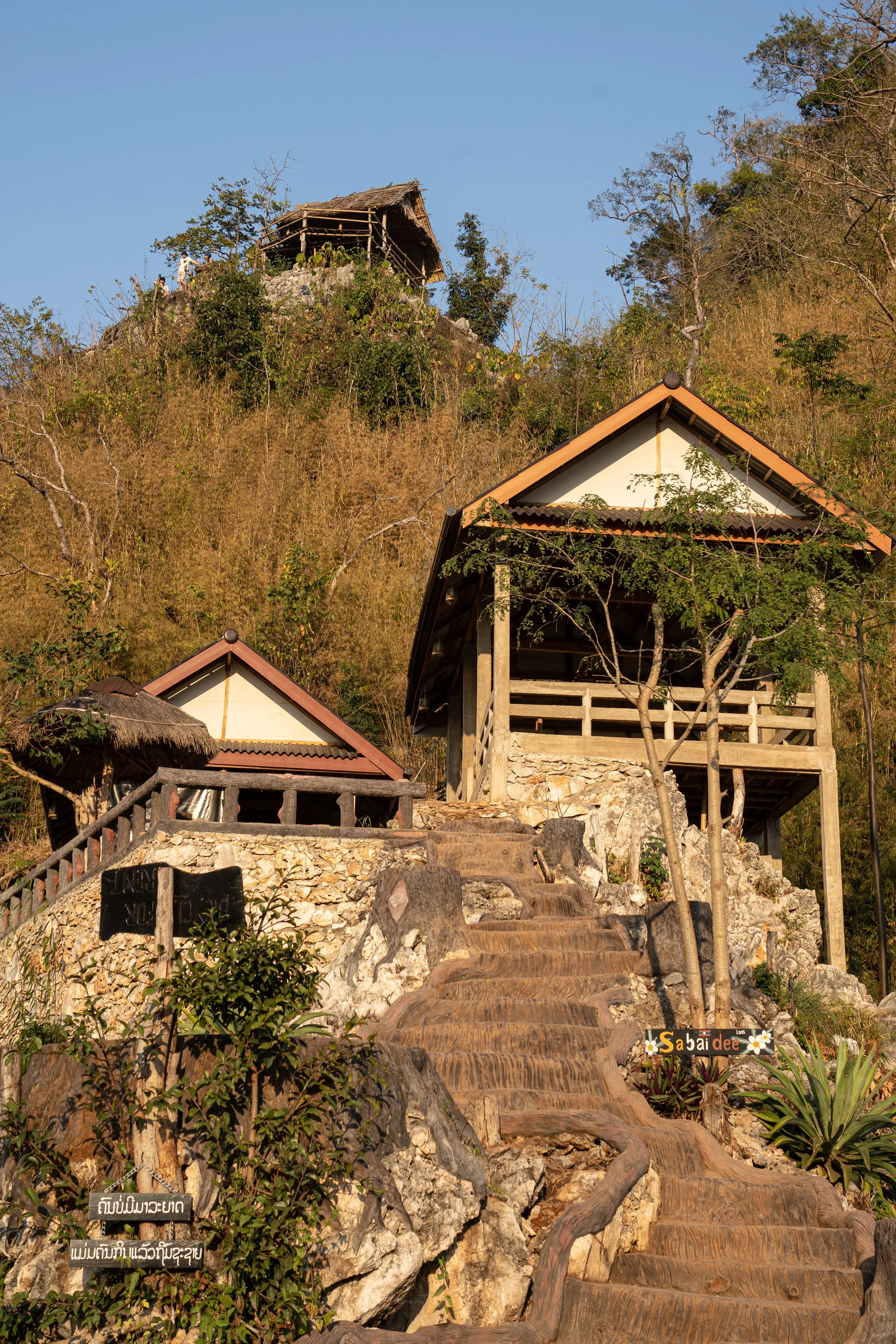
As you continue upwards, the halfway point is marked by swings, hammocks and picnic benches. After this, the route winds up the mountainside until it reaches the main viewing platforms. These are easily the best maintained and most developed of Nong Khiaw’s viewpoints (presumably as they are the easiest to get to) and consequently the most popular. A large area is cut into the side of the mountain with multiple platforms and benches. There is a small shop and toilets available.
Don’t rely on the shop and toilets being open, as during our second visit they were not open at all! This could be as it was just before the start of the high season.
This viewpoint gives brilliant views over the town of Nong Khiaw and down the river valley. As the trek only takes about half an hour to get to the top, this is a brilliant spot to watch the sun set.
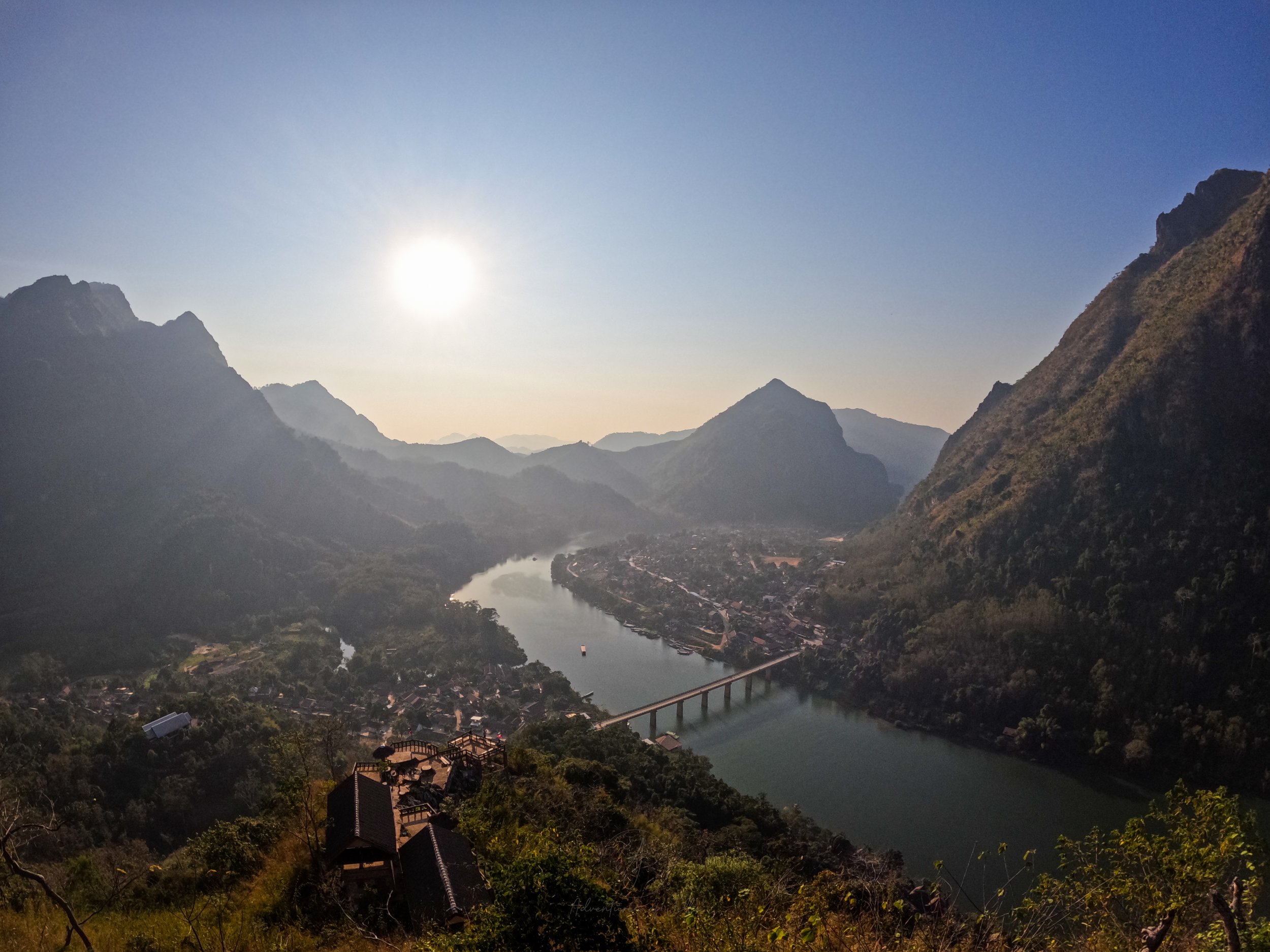
For those feeling brave, there is another path behind the shop that leads to another slightly higher viewing platform. This one is much less maintained and sways a little when you walk on it! But if the platforms below are busy, this one is usually quieter. There are also rocks you can climb onto to the right if you’re feeling like a daring selfie! But please be careful.
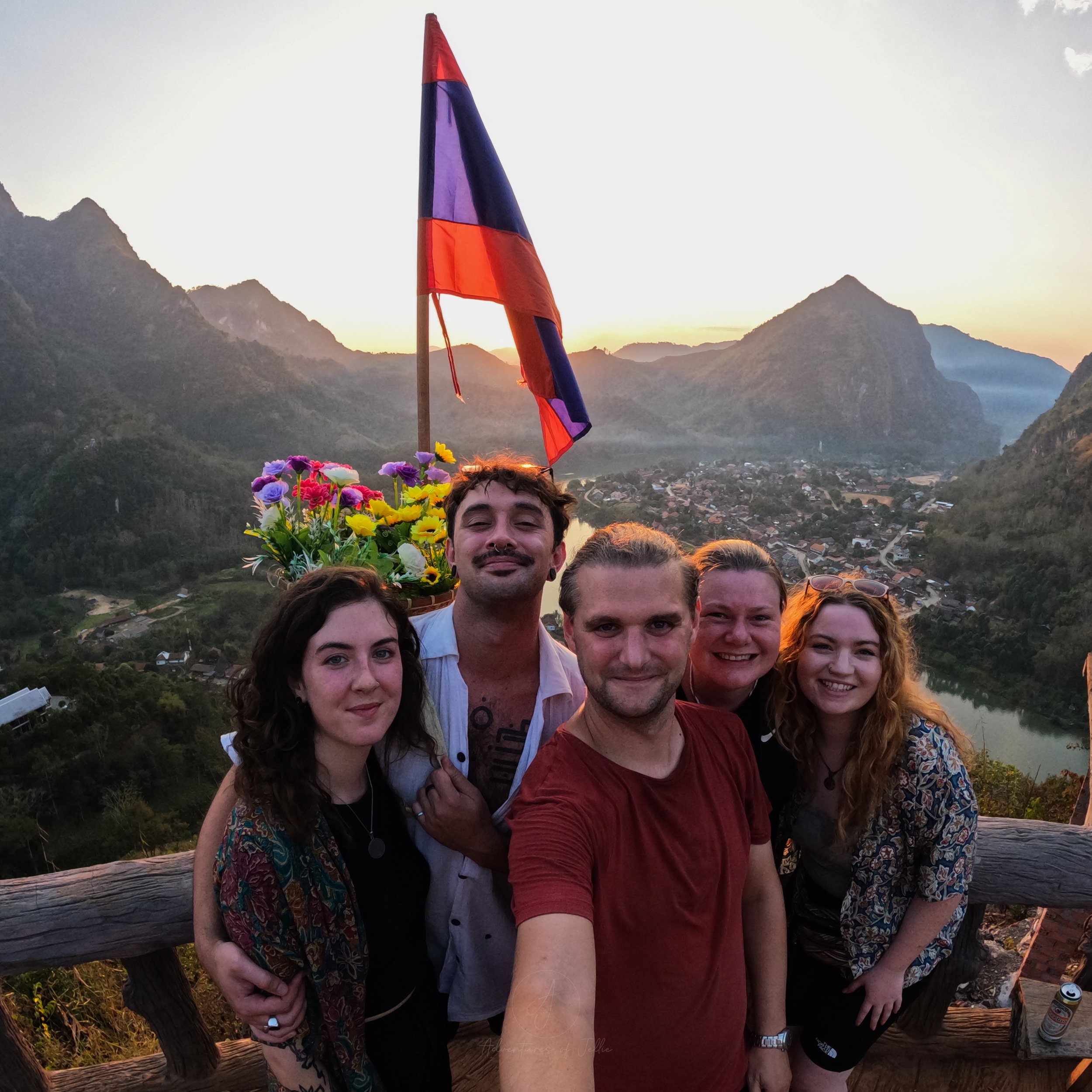
Som Nang Viewpoint is Nong Khiaw’s premier and most popular sunset spot, there’s always a good crowd!
Entry cost: 50,000 kip per ticket.
Difficulty: An easy uphill walk. Walking sticks are provided at the bottom but not really necessary. The steps are steep in places but as the overall walk is so short this shouldn’t be an issue.
How long does the walk take: 20 to 40 minutes each way depending on your speed and if you go all the way up to the hut.
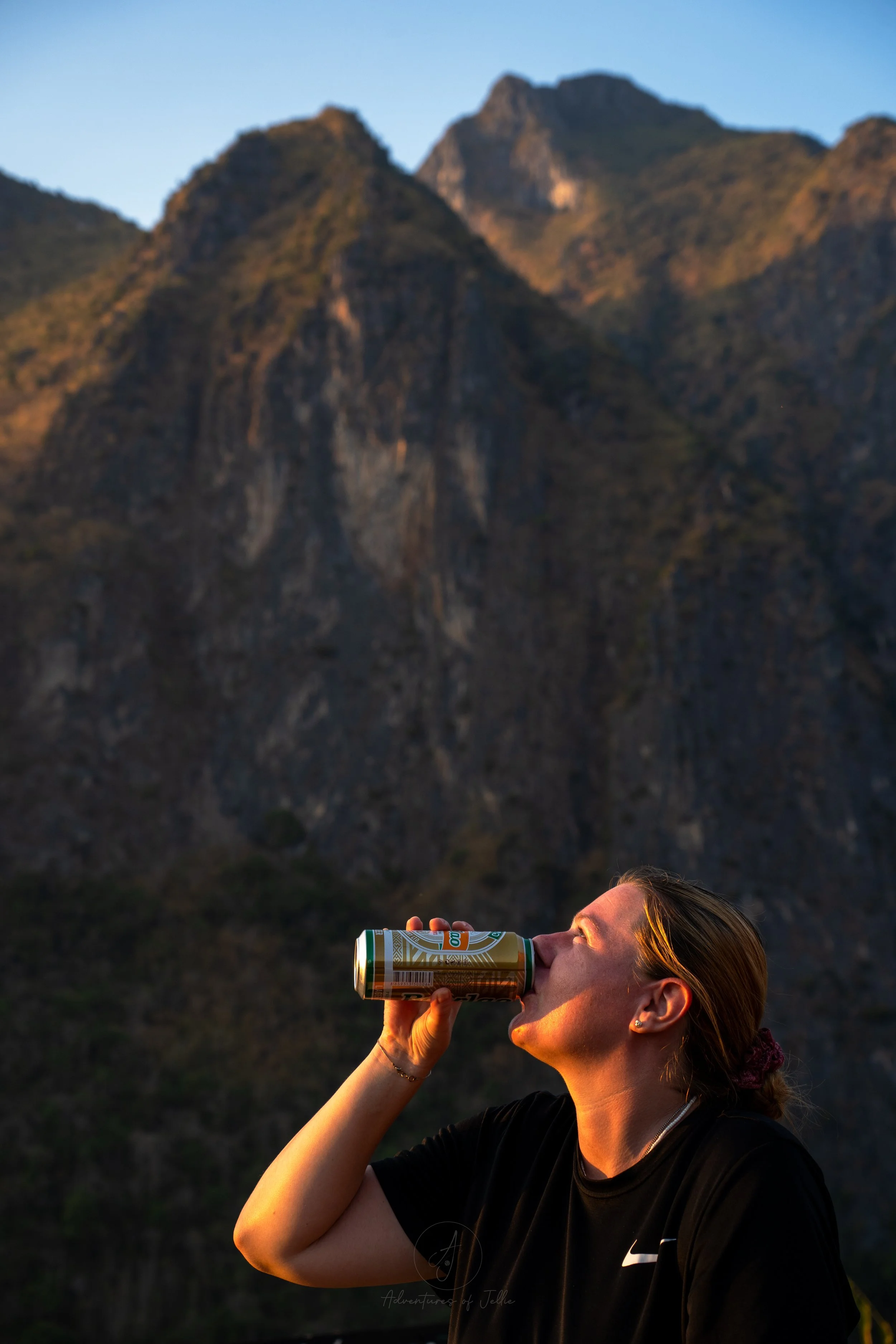
Aside from water and snacks, a beer is an essential item to bring on the Som Nang Viewpoint trail!
Our viewpoint travel tips:
Set off about an hour before the sun starts to set as it will get busier and busier. It really is the perfect place to watch the sun set, but this isn’t exactly a secret so it gets very busy.
Remember to pack a sunset beer or two, if you’re lucky you can buy one from the shop but the range was more limited/more expensive than the town below!
If you are heading up for sunset, make sure you bring a torch or have your phone charged for light on the way down. It’s an easy hike in the twilight but you will still want to watch your footing.
Nang None Viewpoint Trail, also known as the Sleeping Lady Viewpoint
Set a short fifteen minute walk outside of the main town on the northern side of the river, the entrance to the Sleeping Lady viewpoint is located just past the Hive Bar (read more about this bar later).
There is a small ticket booth and a register to sign to access the trail. Tickets cost 40,000 kip each.
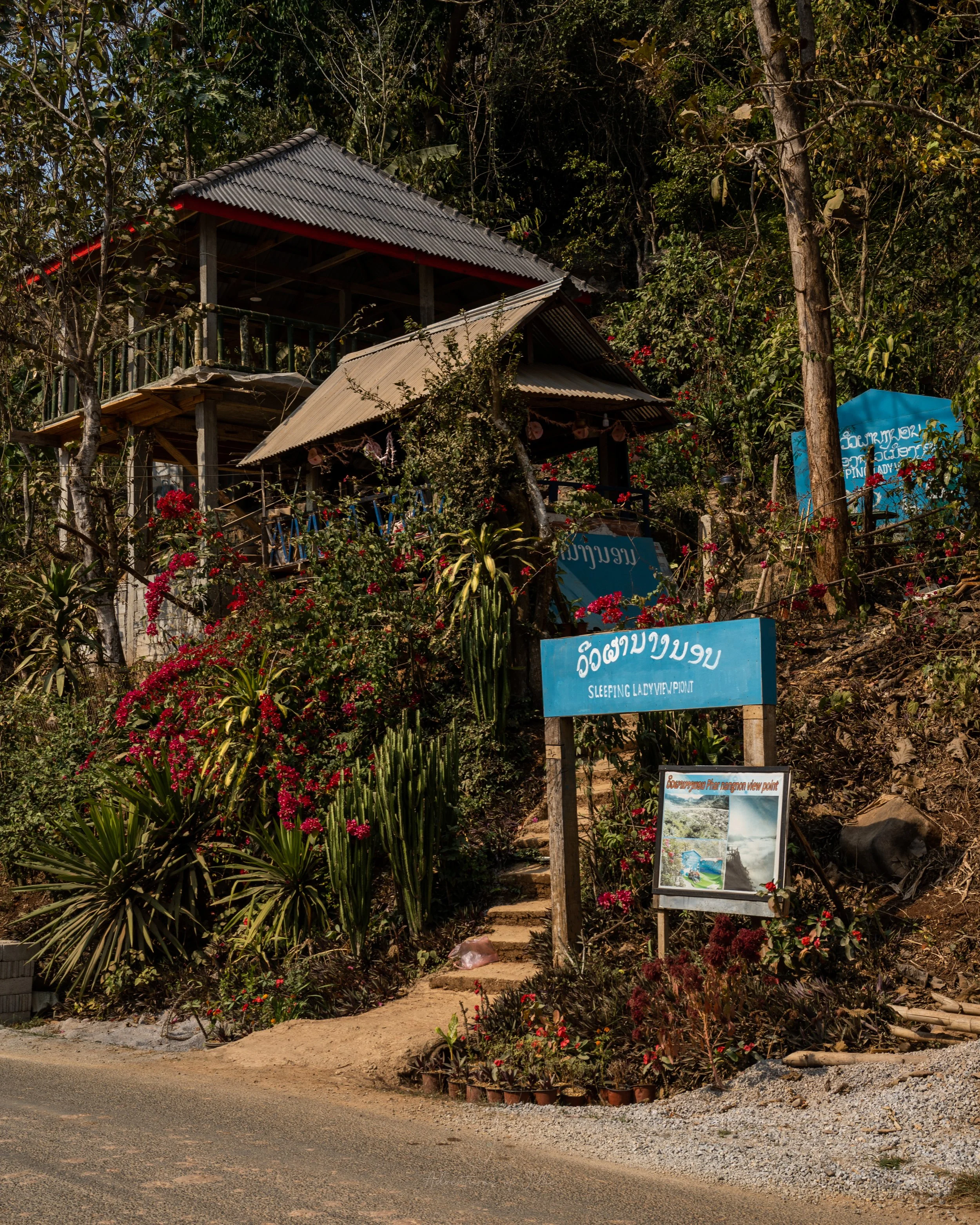
After the entrance, there is a small stone staircase, before you’re immediately thrown into bouldering mode as you navigate yourself up, over and around large rocks and tree roots. There are ropes to help you up some of these segments, but beware you’re often sharing these ropes with large angry ants.
On the subject of being careful, always check before grabbing a tree on this route as some of the trees are covered in extremely large spikes. There are also other hazards but we will come to those in due course. About a quarter of the way up the trail, the path splits in two, with the right hand fork leading you to viewpoint number one and the left continuing upwards to viewpoint two. We’d recommend heading off right at this point and going to viewpoint one before continuing on to the final, much higher, viewpoint two.
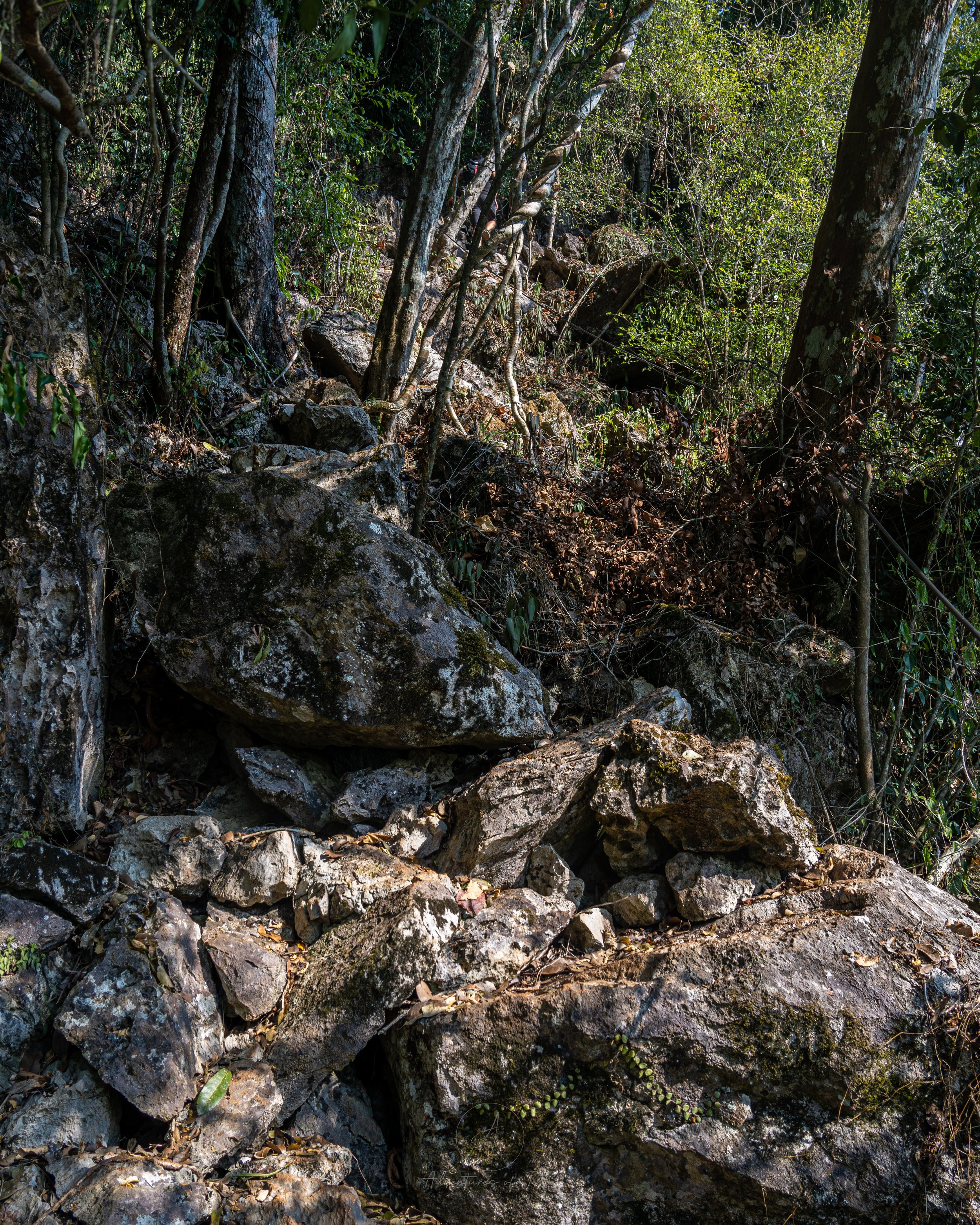
Believe it or not, this is the path up Sleeping Lady!
Viewpoint one is fantastic with three wooden platforms set across the rocks and a great view over the town of Nong Khiaw. This is a great place to have a drink of water and catch your breath. However, if you look up, a long way up, you will realise you still have quite a way to go!
Leaving viewpoint one behind you, you’ll come back to the fork in the road and continue on up. The trail climbs very steeply over a long time (around an hour for us) until the trail flattens out, and the trees are replaced by thick stands of bamboo. The path then winds around the mountain, via a small stone path set between rocks which clings to the cliff edge. Before long, all sides drop away and you’re rewarded with the peak.
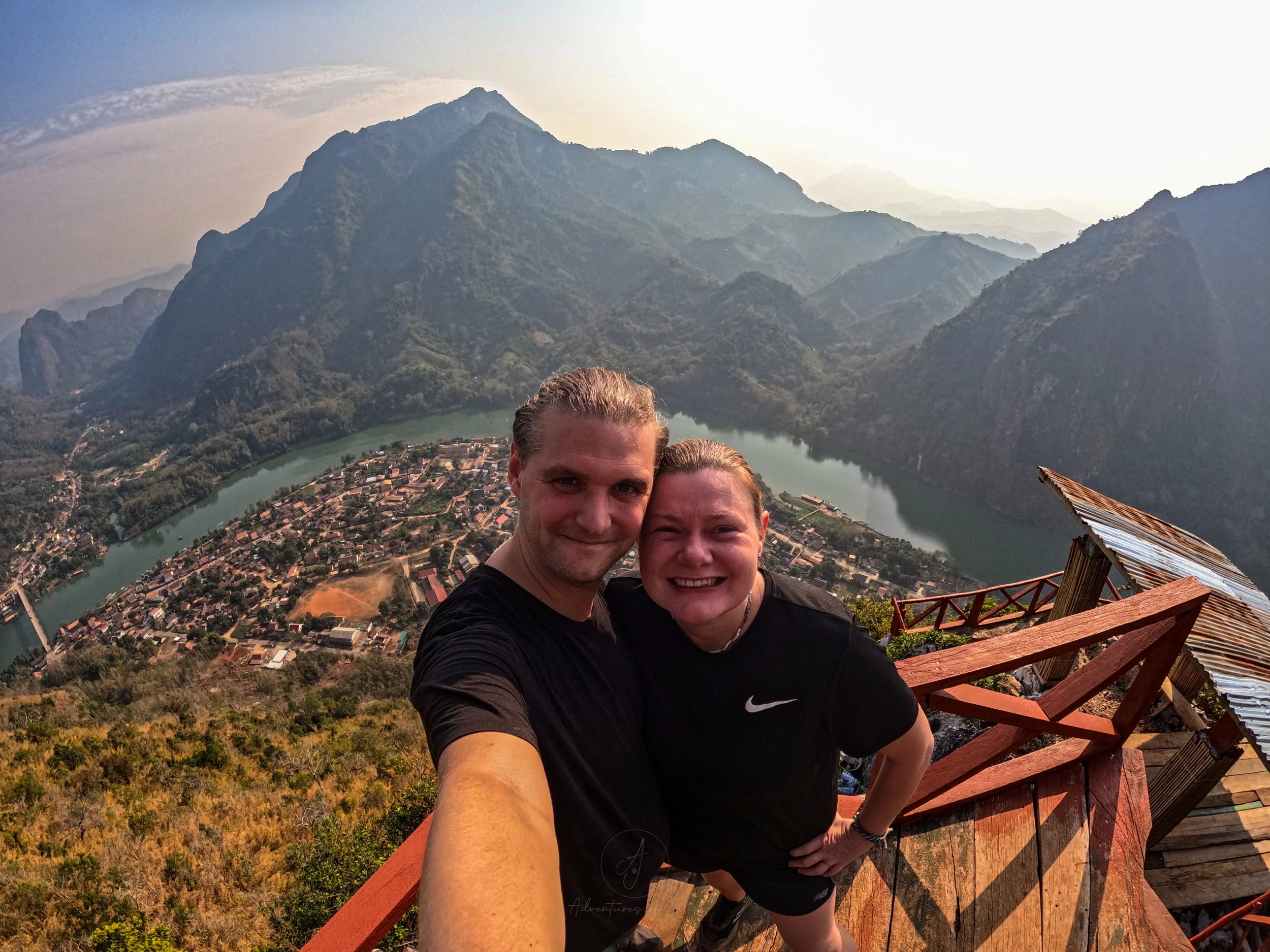
There are two platforms to the viewpoint, one with a covered roof and the second, is up a rickety wooden ladder which leads to a wooden platform complete with a Laotian flag crowning the summit. The views from this viewpoint make the walk worthwhile! From both platforms, you have spectacular views out across both sides of the town, over a sharp bend in the river, and out across the massive blue peaks that lie beyond. It's a hard climb, but thoroughly worth it!
On a personal note, and remember this is anecdotal so we can’t guarantee that this happens to everyone… Remember to check your walking sticks! We had both picked up fallen bamboo to use as hiking poles. But, unbeknownst to Ellie, her hiking pole was also resident to a certain hairy tarantula. We don’t know at what point our eight legged friend joined us on the trail, or if he had been living there all along, but a short way down from the viewpoint he decided to come and say hello. Some flailing and yelling later, and Mr Spider was persuaded to leave Ellie’s person and we learnt a valuable lesson of checking our equipment.
The above was John’s version of events. What really happened was this… as I walked down the steep hill, something big, black and hairy caught my eye. Emerging out of the top of my bamboo pole was not one, but eight thick legs. About the size of my hand in width, this big spider slid down my pole and landed on my left forearm. Unfortunately for him, I am not keen on spiders, especially not big tarantulas and so Mr Spider ended up flying through the air and landed on the step in front of me. After yelling at my wonderful fiancé (who was 15 metres down the steps in front of me and totally oblivious to my struggles), I eventually hopped over Mr Hairy Feet and proceeded to run, Spirited Away style down the steps and away from my new tarantula friend. I may or may not have been screaming at the time!
Tarantulas aside (we didn’t spot any on our subsequent trips up), this is a phenomenal trail. It is a hard climb full of varied terrain but with great pay offs at both viewpoints. As we have said above, we have hiked up Sleeping Lady many times and always absolutely loved the challenge!
Entry cost: One ticket costs 40,000 kip.
Difficulty: Medium, some small amount of rock scrambling at the start and a lengthy hour and half of steep climbing to the top viewpoint. Totally doable, even if the most exercise you’ve done for the past few months is picking up a bottle of beer!
How long does the walk take: Around an hour and a half to get to the top viewpoint including stopping at the first viewpoint and plenty of breaks for water, photos and snacks! We did the whole trek up and down in just under three hours. This included a lot of time chilling out at the top and a little time recovering from tarantula triggered terror.
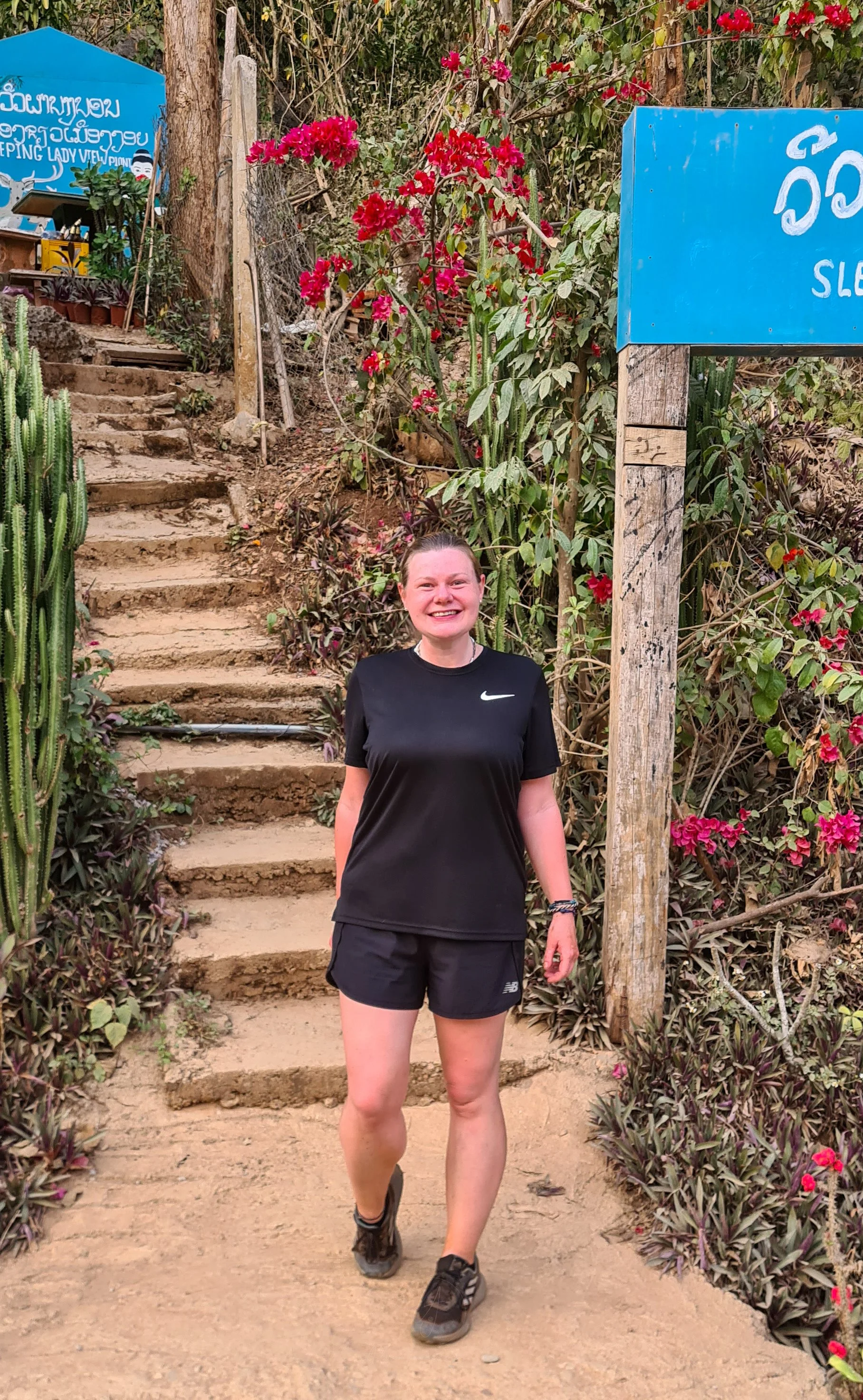
After trails, tantrums and tarantulas we made it down!
Our viewpoint travel tips:
Bring lots of water with you, both viewpoints are worth a visit. If you’re climbing the mountain after it's been very dry, the path is covered in fine dust and grit which can be quite slidey underfoot. Wear proper shoes and pick up a bamboo pole from around the path, just make sure there aren’t any unwanted passengers!
This path would not have been pleasant if it was wet under foot or after rain. Where there are steps it's just cut into the soil of the mountain, and most of the footpath is on rocks or dirt so it would be very treacherous when wet.
Keep an eye on the time as parts of this path would have been a nightmare to come down in the dark.
Nong Khiaw Viewpoint and Trail - The Pha Daeng Peak
From the Nong Khiaw Bridge, if you look up to the Som Nang Viewpoint, you may notice far, far above this, is a fluttering Laotian flag. This flag marks the summit of Pha Daeng Peak and the top of the Nong Khiaw Viewpoint and Trail. The entrance to the trail is just past Home Cafe on the south side of the river. Tickets for this hike cost 50,000 kip each. The ticket booth is marked with bright blue signage reminding you to stick to the path with Laos’ ever present cluster bombs serving as the ticket counter.
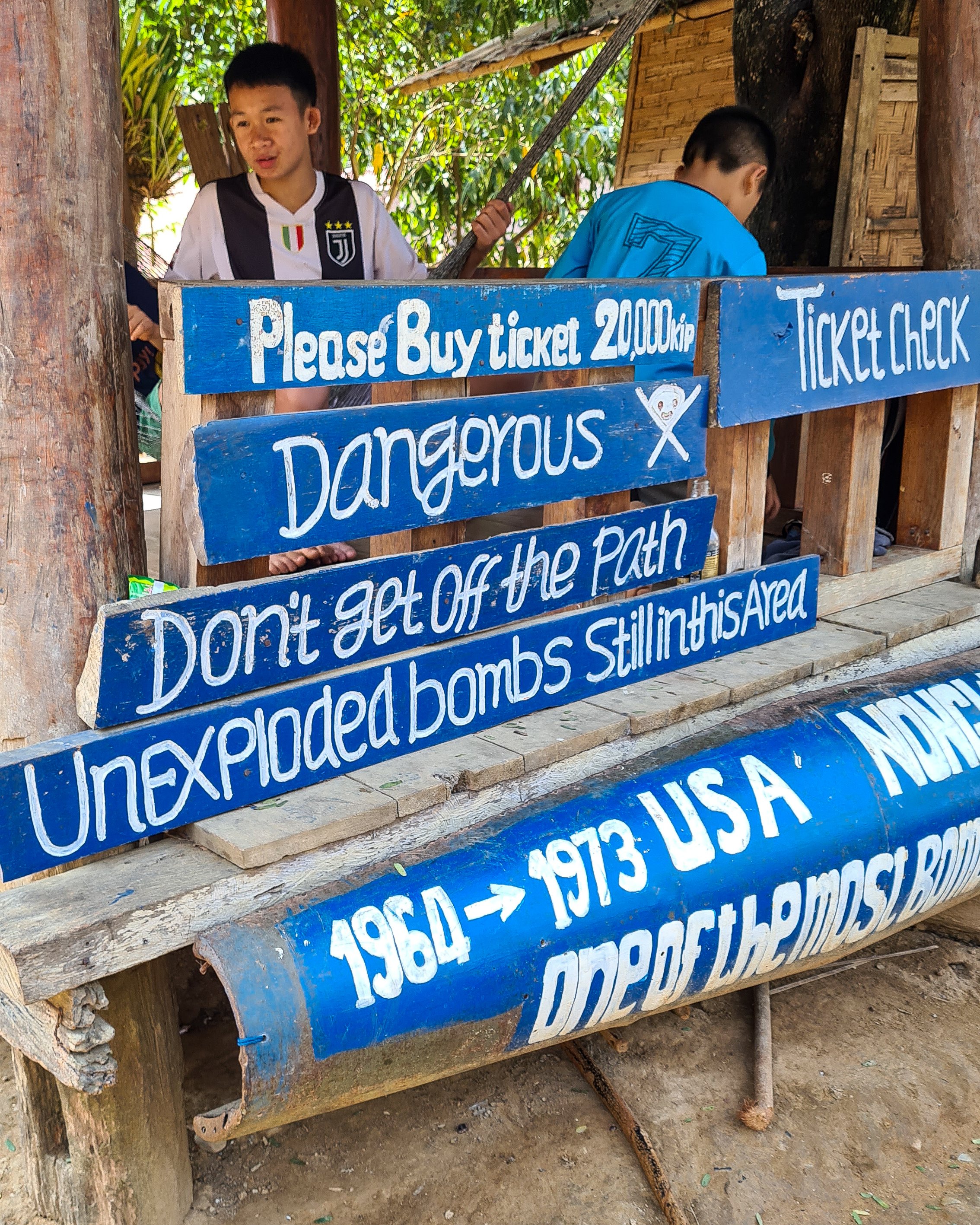
Always stick to the path in Laos!
The trail starts up from the town between local houses, before steeply ascending into the hillside jungle. The landscape changes as you ascend, starting out in farmers fields in the beating sunshine, before getting more forested and shady. As you near the summit the forest starts to thin and is replaced by thickets of bamboo. As you hike up, there are parts of this climb where you will need to scramble across or through boulders, but there are always ropes and clear markings showing you where to go.
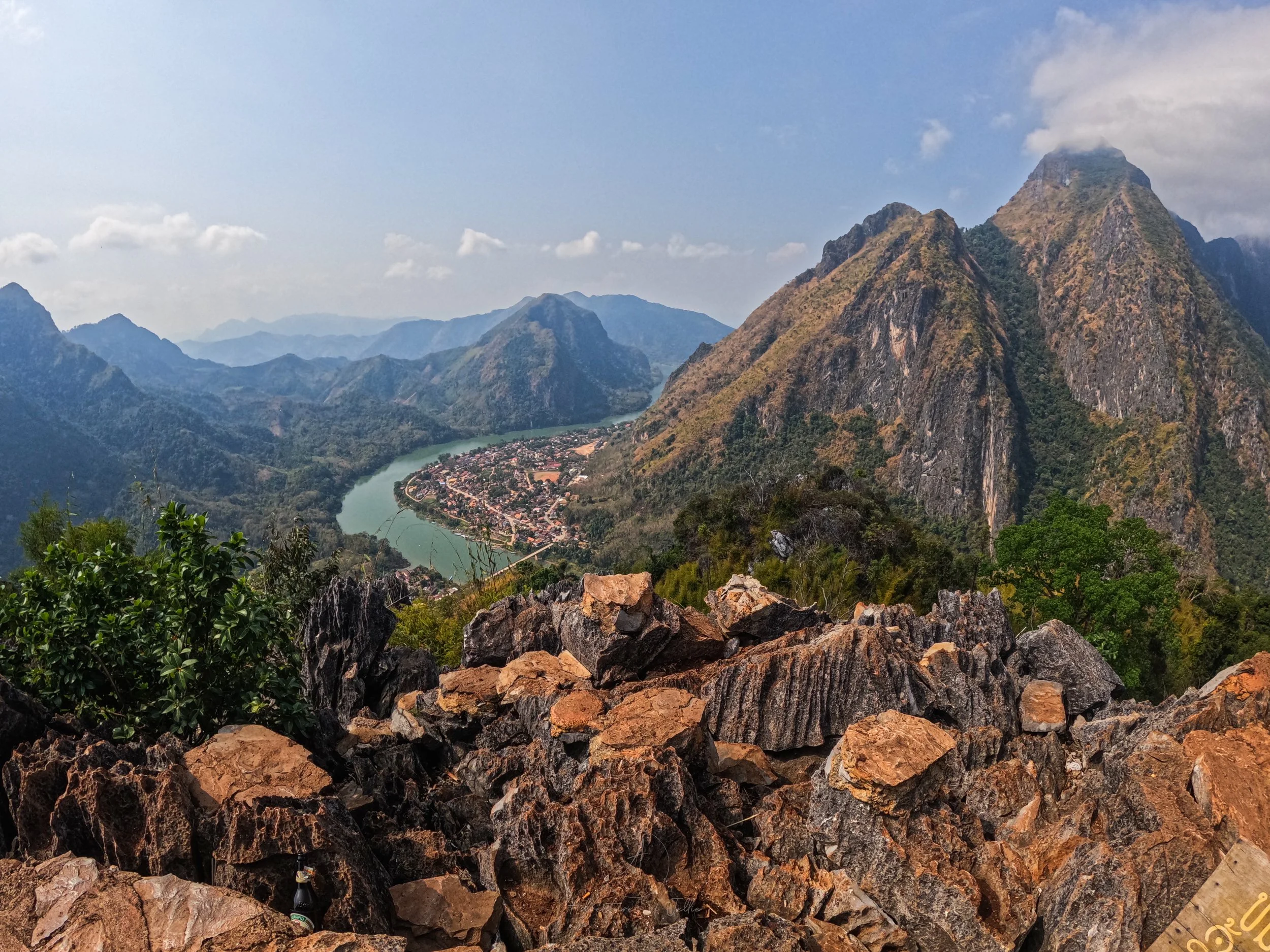
When you reach the summit you are treated to an incredible view over the valley. If you look down (a long way down) you can see the Som Nang viewpoint below. This harder and longer climb is definitely rewarded by the loftier vantage point you get. On a clear day, the views go on for absolute miles, stretching away in both directions of the mountain lined Nam Ou river.
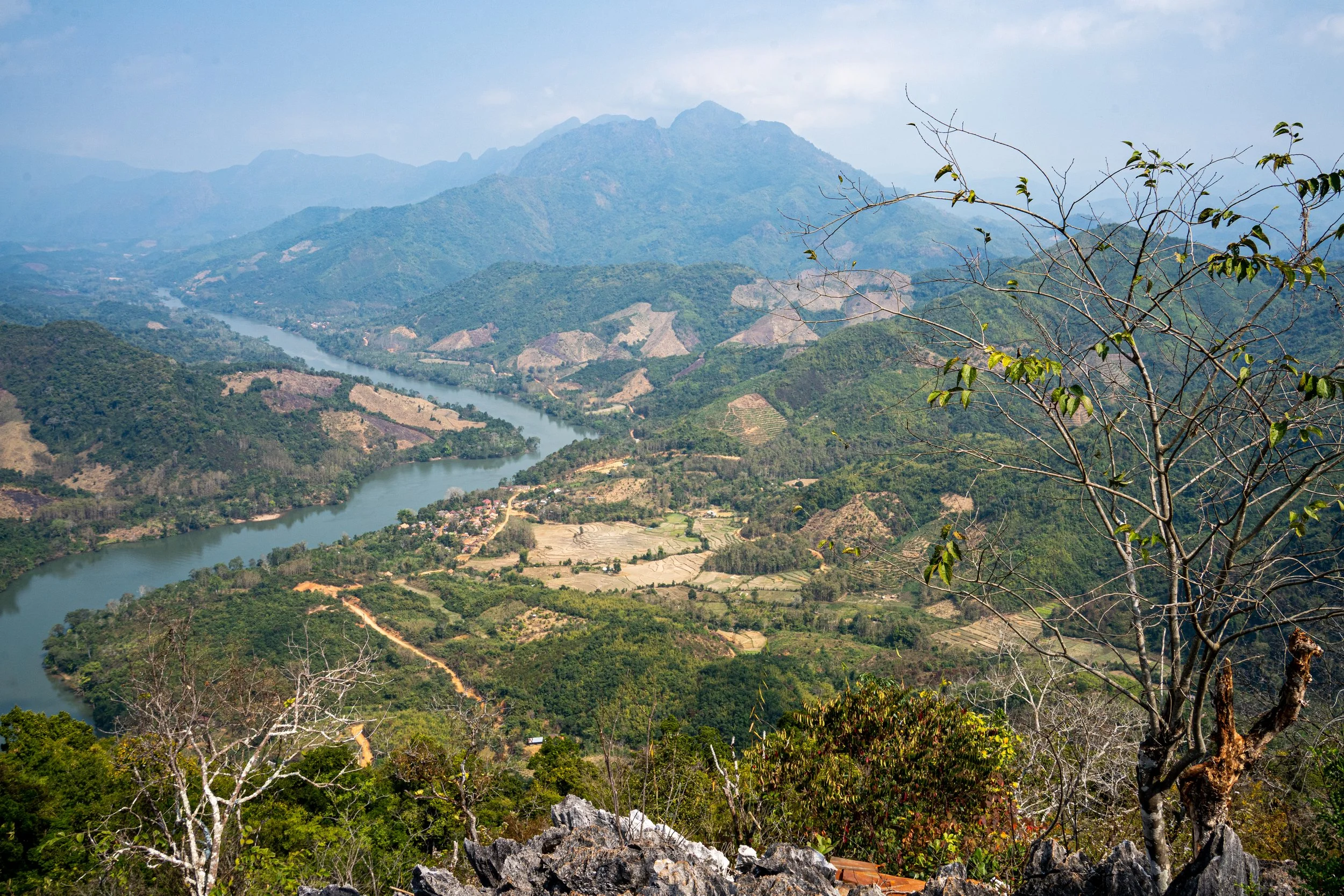
Following the Nam Ou river upstream, the mountains fall away and the river banks are covered in paddy fields.
When we first visited, the pavilion at the top was under construction, but on our most recent visit, the building work has been completed and it now looks as though it is used as an overnight camping spot (judging by the fire pit and large amount of Beer Laos cans left in the bin).
At the top there are magnificent views all around, plenty of places to sit down and lots of shade to cool off in. Also for the more daring, there were an abundance of great selfie spots to clamber on to.
Entry cost: One ticket costs 50,000 kip.
Difficulty: Medium. The walk is steep in places, but not overly long or extreme in any way. Along the trail there are benches, swings and places to rest, and in the areas where there is a need to scramble, there are always ropes to help you.
How long does the walk take: The walk took us about an hour and half to climb to the top. This included a lot of stops for photos. The way down was much shorter, taking only about 45 minutes. In total around 2 hours.
Our viewpoint travel tips:
Similar to the other viewpoints, beware of the weather. You wouldn’t want to do this viewpoint after heavy rain.
When at the top, be very careful as the viewing platform juts out of the side of the cliff. As with much of Laos, there are very few safety features e.g. rails etc.
We’ve said it before, and we’ll say it again, bring lots of water!
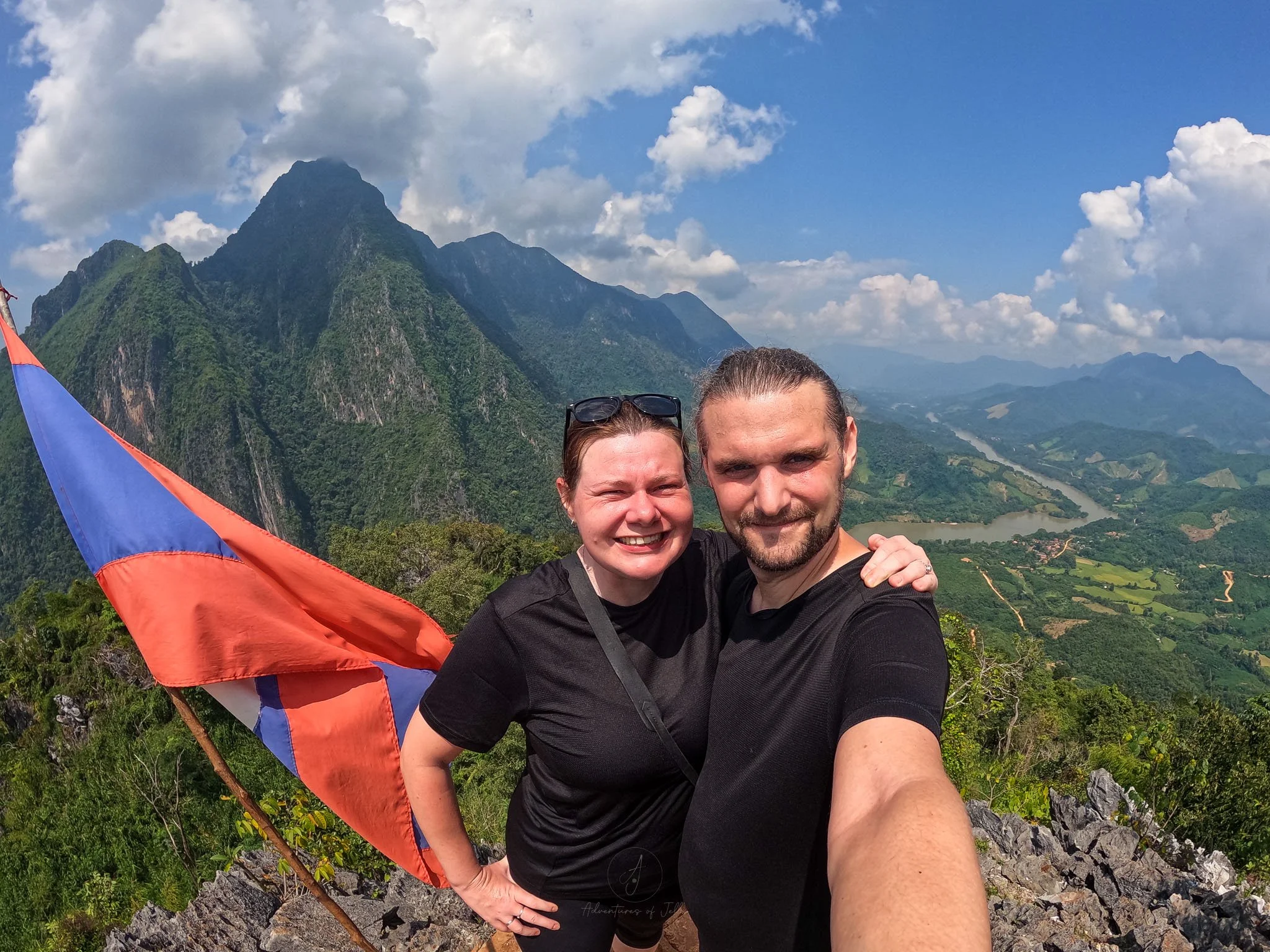
Pha Kao and Pha Noi Trail and Viewpoint
(approximate location of the entrance to the ticket office as there is no official Google listing - just follow the dirt road past Neiy Coffee & Restaurant)
Okay this is it, this is the big one. The Pha Kao and Pha Noi Trail and Viewpoint was the hardest and longest hike we did in Nong Khiaw and in fact the whole of our multiple trips to Laos! Don’t believe the Google reviews saying that they go up there in an hour. As far as we could tell, this would only be possible with rocket powered shoes or by sprinting up a mountain!
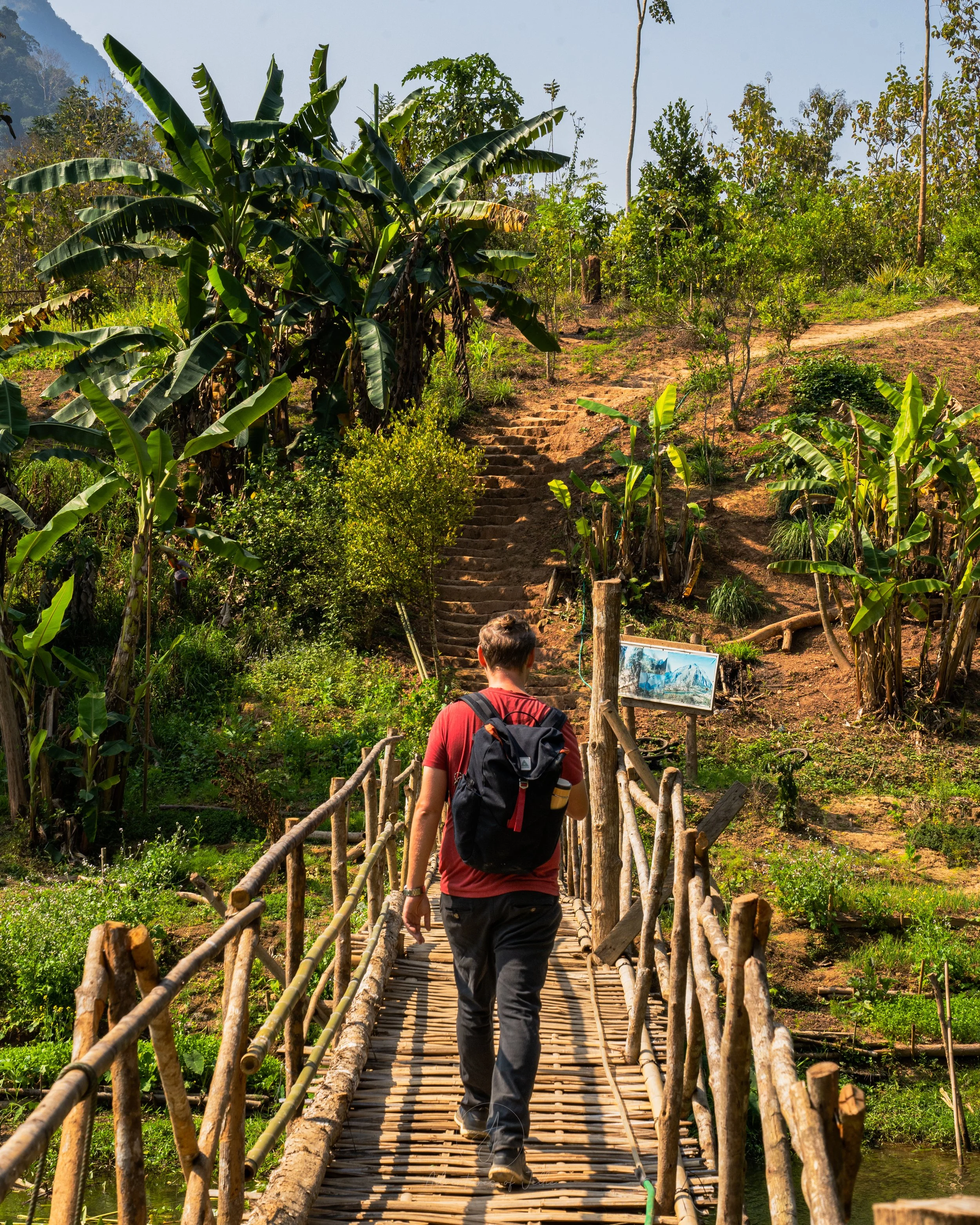
The entrance to the trail is off of the right hand side of the main road, on the southern side of the bridge. A large sign shepherds you in, as you head down between the houses. Tickets are brought from an old lady in a small wooden hut, with each ticket costing 50,000 kip.
Once tickets are brought, you head off across a bamboo bridge, through a small farm and into a beautiful forest. The trail starts off deceptively flat, as you follow the path through the woodland. This did not last.
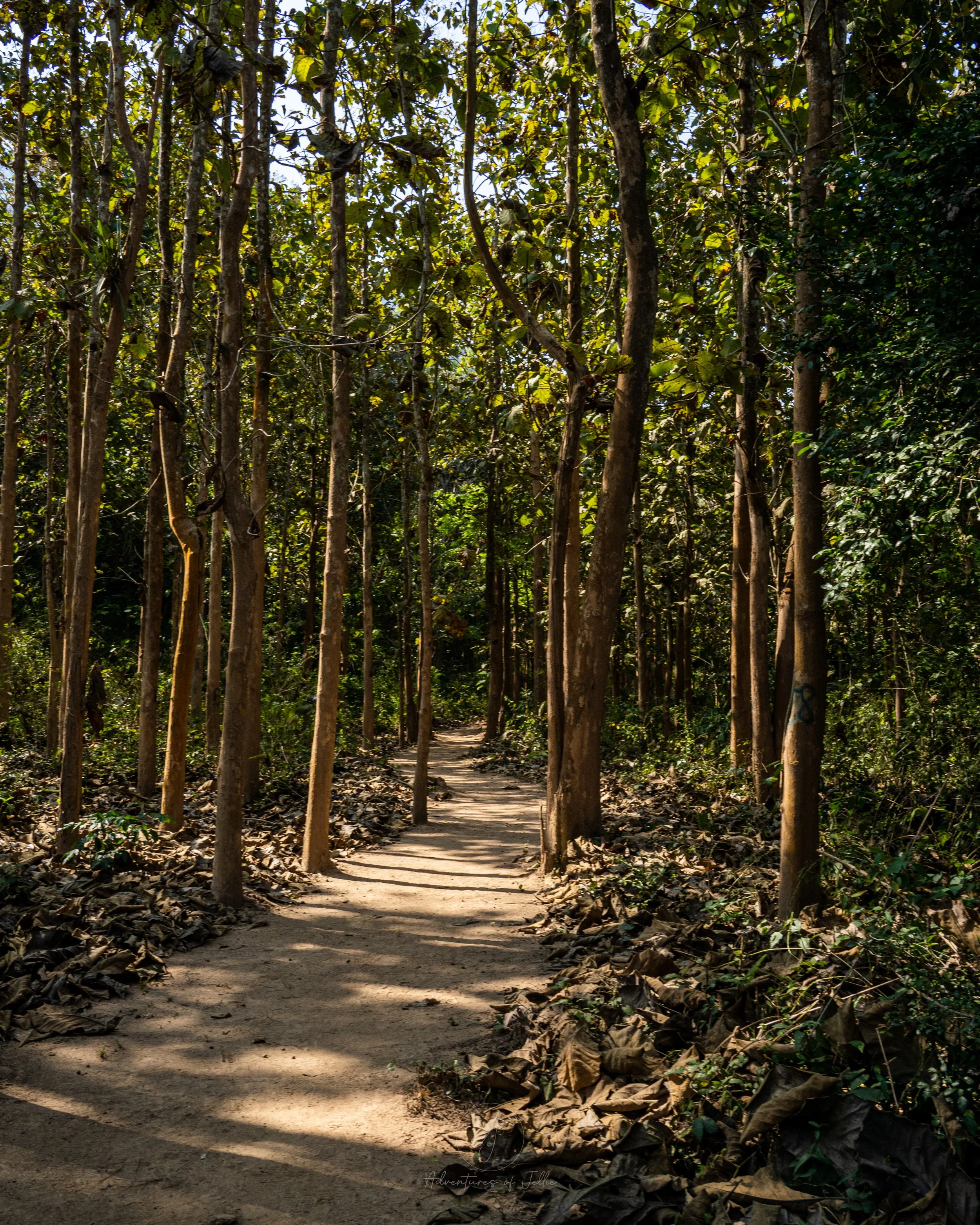
Don’t be deceived by the beginning of the Pha Kao trail… it looks so nice and flat here!
The path quickly becomes steeper with steps cut into the mud or precarious staircases made out of branches and sticks. Not long into the forest you will come to a fork in the road with a sign.
The sign says 200m to Pha Noi Viewpoint to your left, and to the right 2km to the Pha Kao Viewpoint. We can only assume these figures refer to the elevation you needed to gain, as we certainly felt that they were nothing to do with the distance you needed to walk.
We decided to take the shorter route before tackling the longer climb, so we set off to the left. The trail was definitely longer than 200m and wound sharply up through the wooded mountain side. The path snaked up and over ladders, through crevices and around cliff edges before eventually opening out into a spectacular view. From the viewpoint you could see right over Nong Khiaw town, the bend of the Nam Ou river and the surrounding mountains.
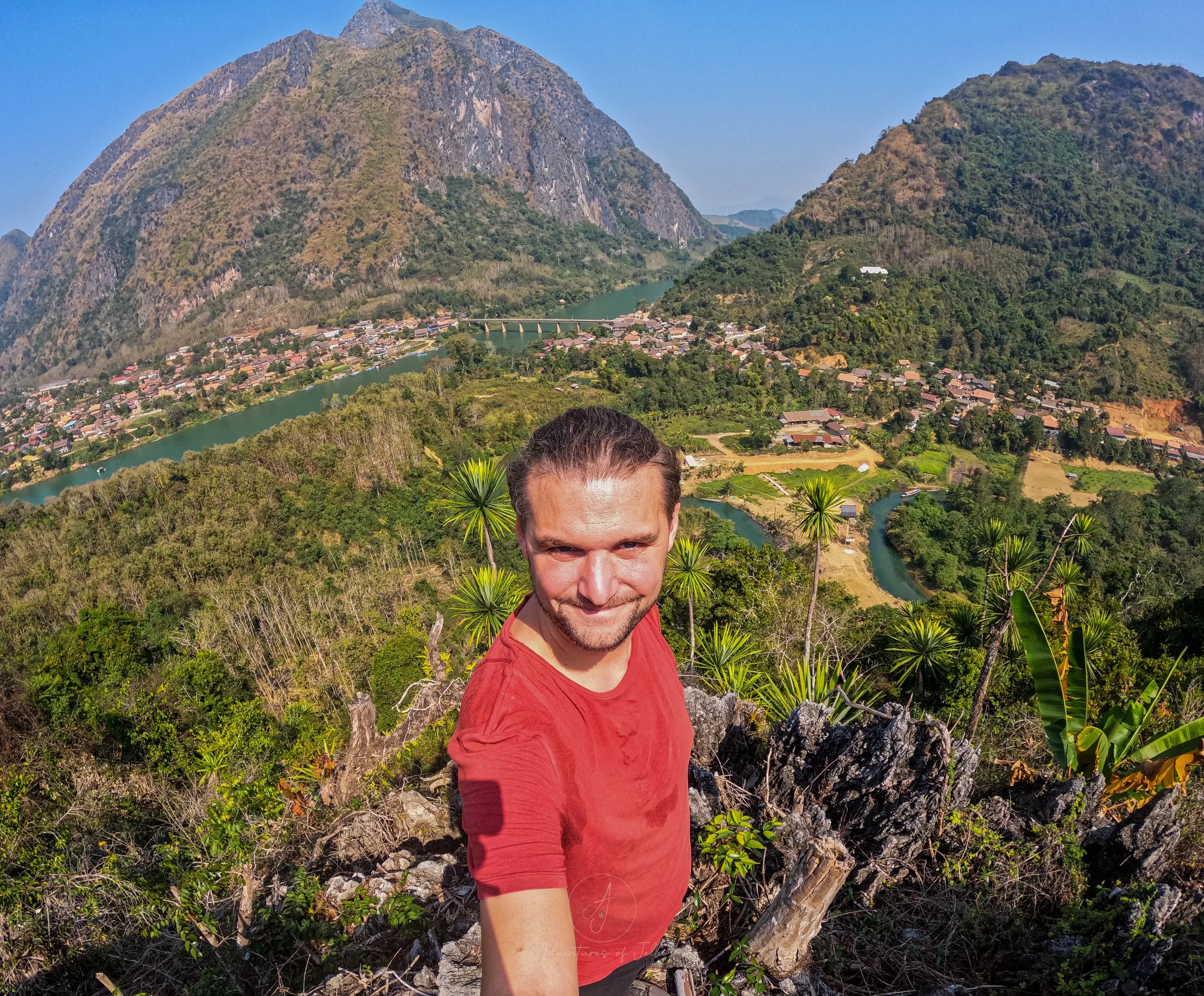
There are two platforms at this viewpoint, one has a series of sun loungers (lets spare a thought for those who had to haul these up here) and the other is a rickety, bamboo floored hut that juts out over the cliff edge. The view from here was worth the ticket price alone, but looking backwards and up the mountain, we could see our final destination was a long way off. Photos snapped, it was time to retrace our steps back to the fork in the path and then, the long right hand road to Pha Kao and the top of the mountain.
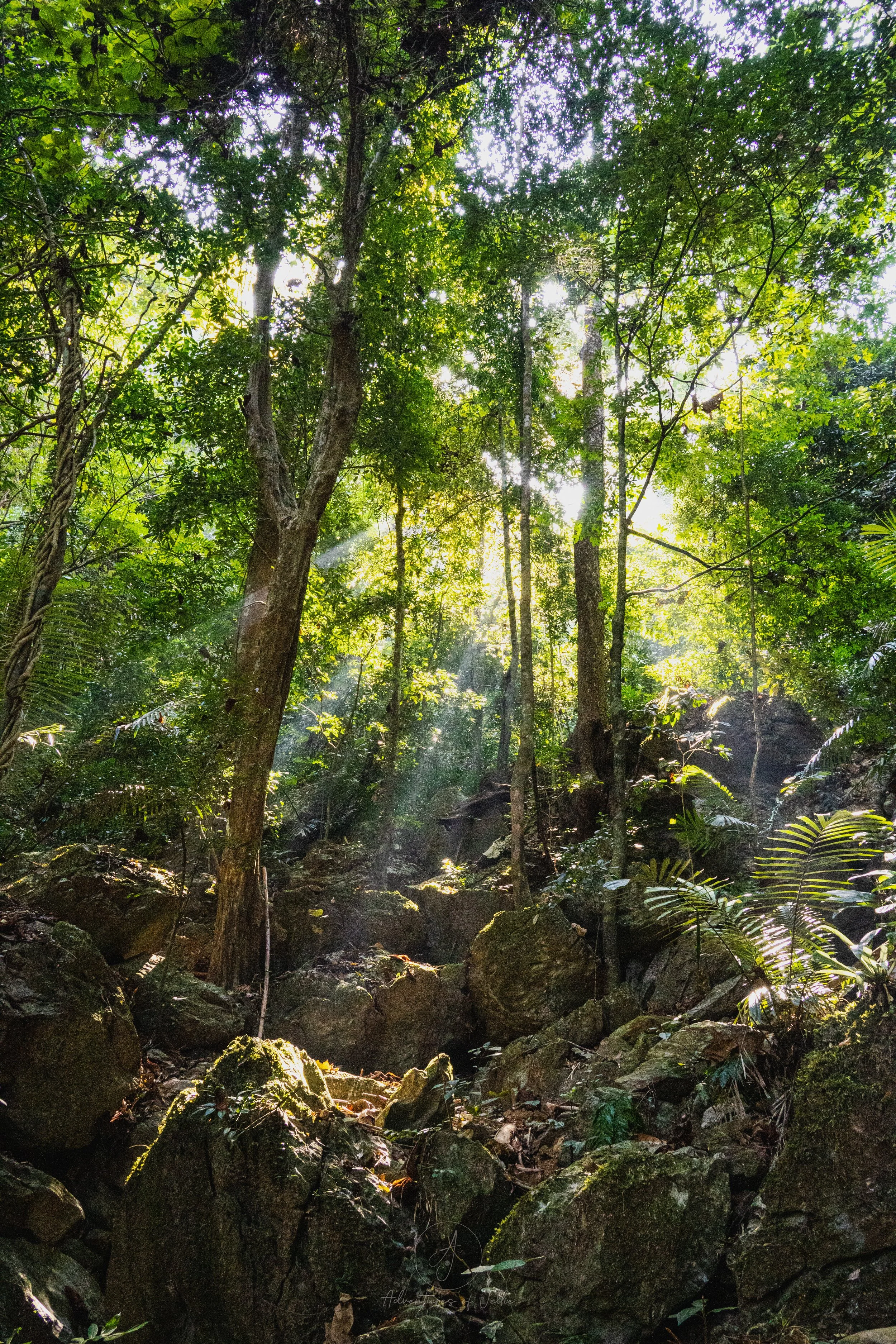
The right hand path continues through the forest, climbing in a seemingly never ending staircase. The foliage changes as you climb up and up, going from vibrant greens and broad leafed plants in the sun, to darker browns and mushroom clad trees.
The trail continues to climb upwards, underneath the shadow of the massive stone cliffs, with the path switch backing up the mountain. The path was a mixture of loose stone, leaf matter and fine dust. In some places it got extremely slidey, at one point Ellie said we might be able to just ski back down!
After many, many false peaks, the trees thinned out and we finally reached the top of the mountain. This last ten minutes was definitely the prettiest so far, with the path carved directly into the very edge of the mountain as it spiralled its way to the peak. The views were amazing. On one side of you, the jagged rocks leading up to the summit, and on the other a sheer drop flowing away into a vista of distant mountains, valleys and the snaking Nam Ou river. We weren’t sure that the peak could get better than this, but boy were we wrong!
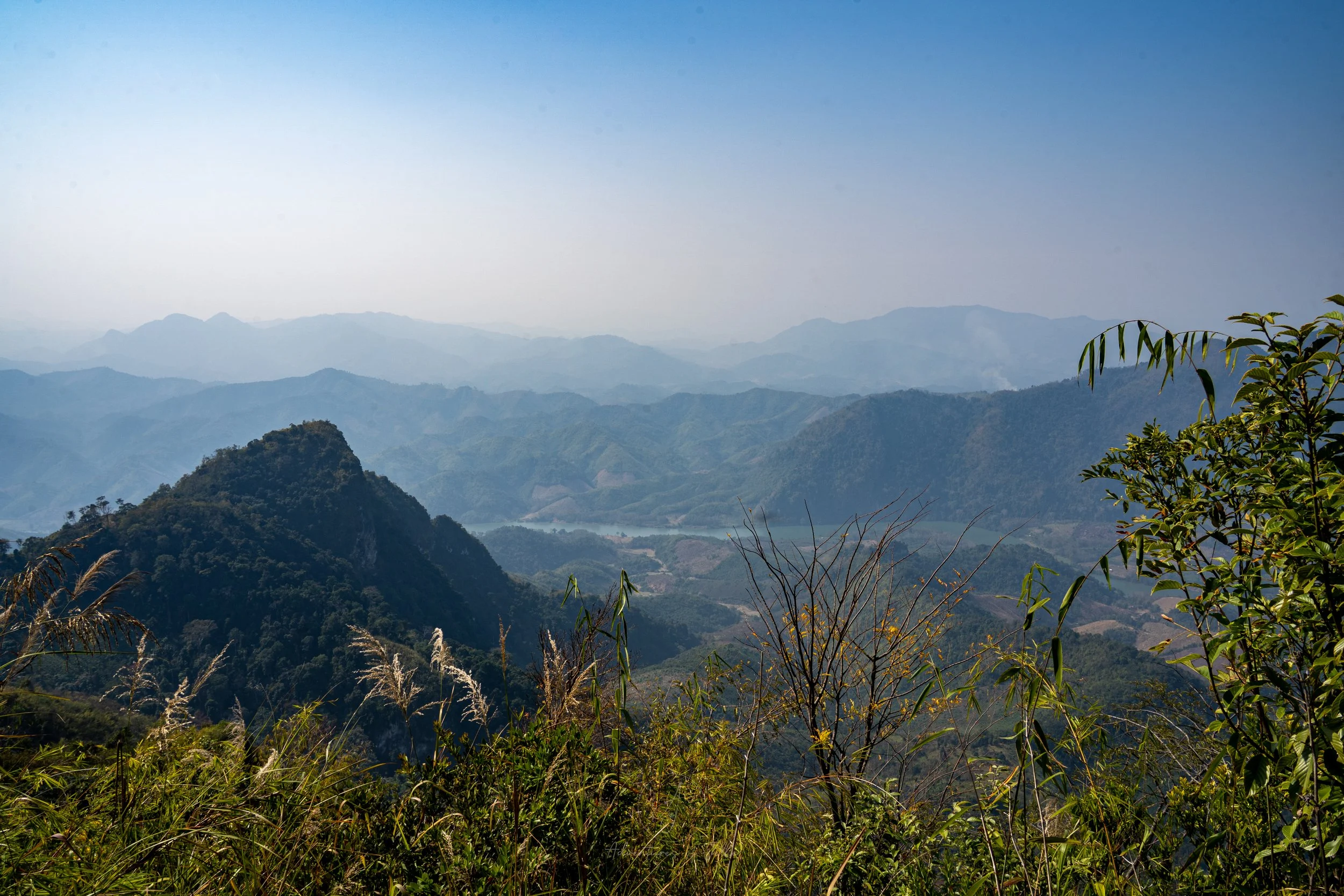
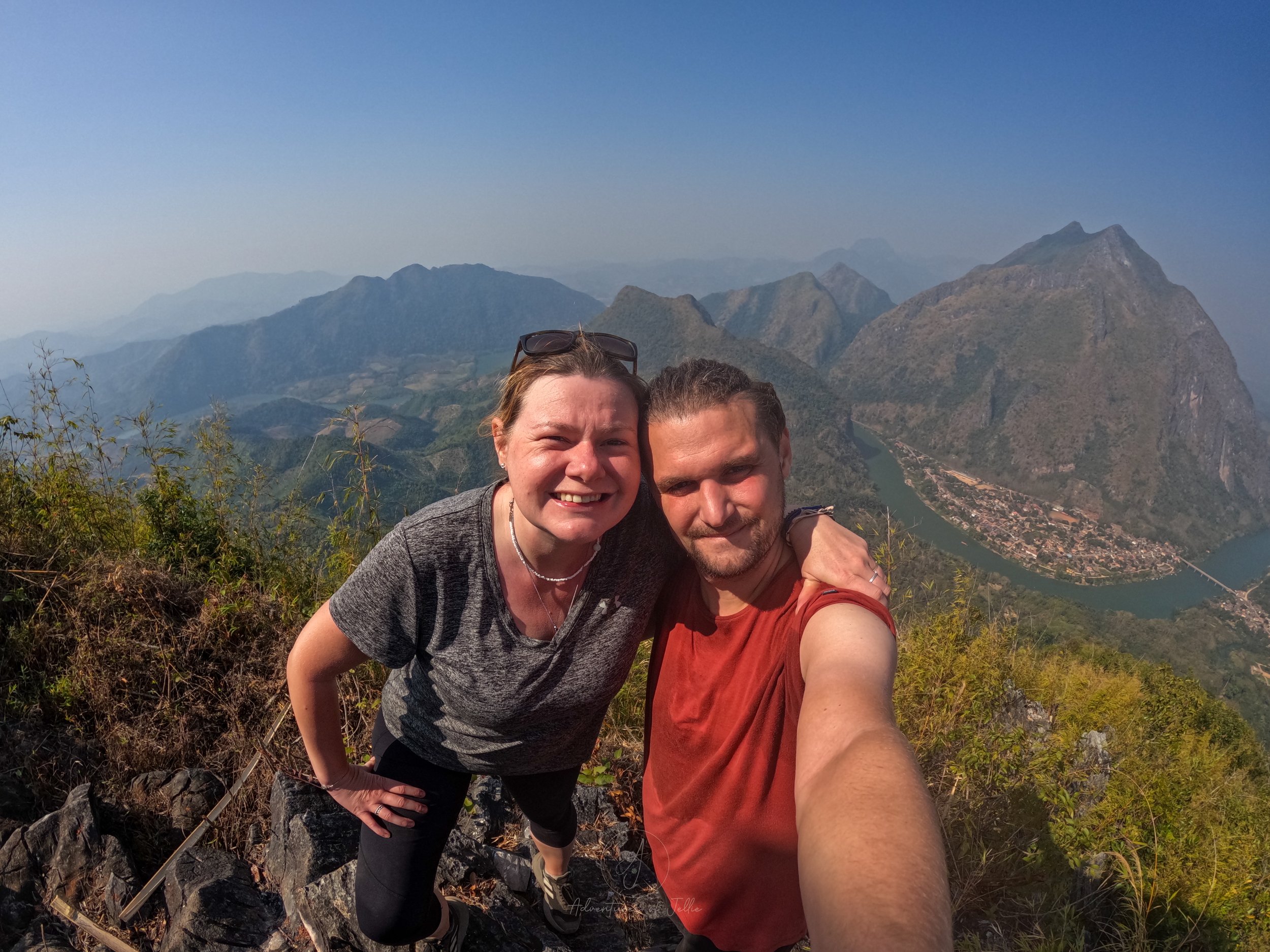
After what had seemed like a never ending climb and with shaking legs, we came to the simple bamboo and corrugated iron hut that marked the peak and the end of the Pha Kao Trail.
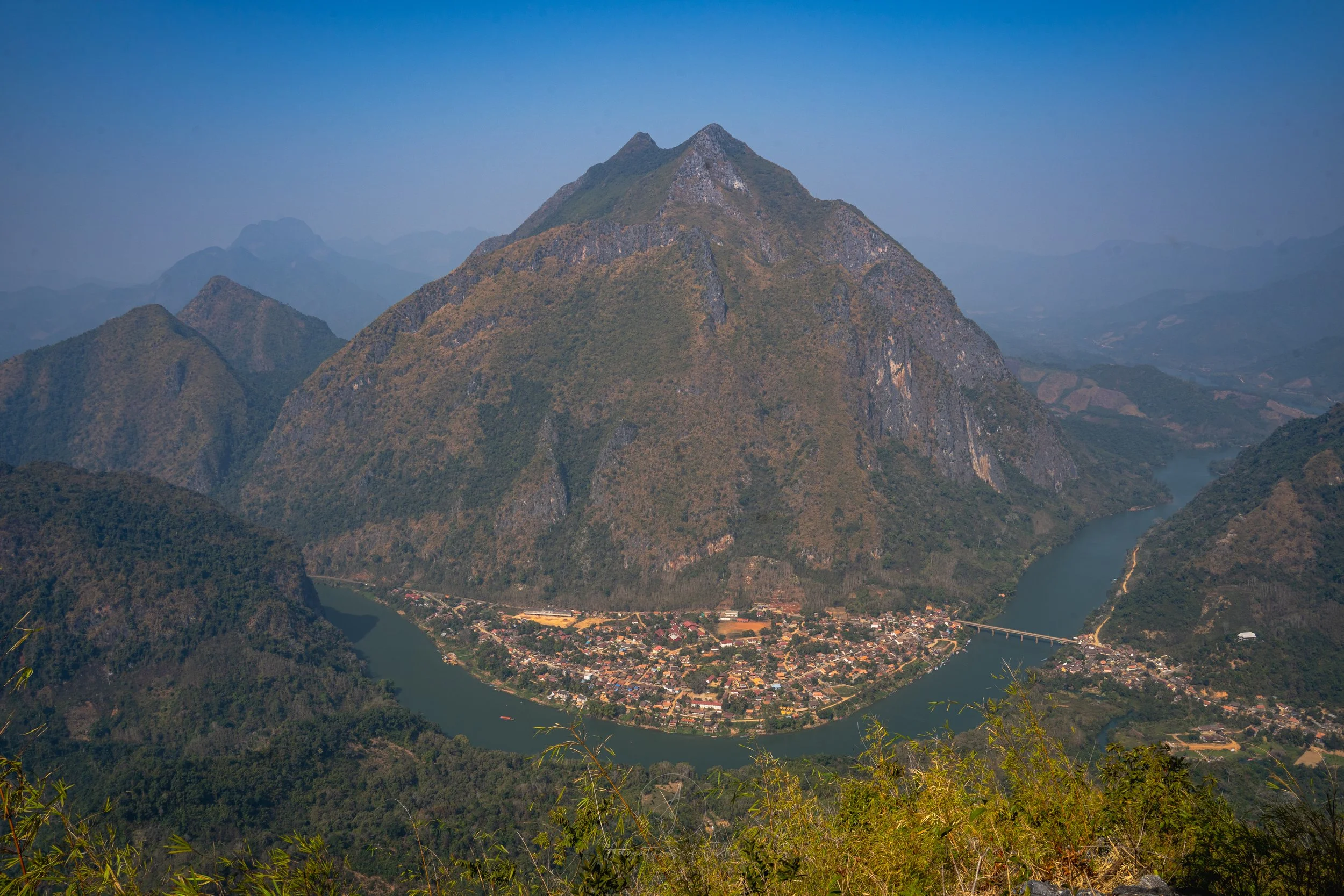
Directly in front of us was Nong Khiaw town and Nang None mountain (Nong Khiaw’s Everest as it is known locally), but the scale was unbelievable. The town was tiny from up here. Houses smaller than ants, the bridge like a little twig across the river, and around it spread out in all directions, the mountainous countryside of Laos. It was jaw dropping! This had been the longest hike we had done, but by far had the greatest pay off.
Entry cost: Tickets cost 50,000 kip (this entrance fee covers both the viewpoints on this hike).
Difficulty: Medium to Hard. The trail is long and permanently climbs upwards to over 1000 metres. The path does vary in quality, the route to viewpoint one is very well maintained, whereas the trail to viewpoint two is much more “au natural”.
How long does the walk take: Around half an hour to get to viewpoint one, Pha Noi and then another two hours to get to the top of Pha Kao (viewpoint two). Slightly faster on the way down, but not as quick as you may think as the path is extremely slippery in places and you need to watch your feet.
Our viewpoint travel tips:
Set off early to avoid the worst of the sun, but bear in mind it is between a four to five and half hour round trip and you really don’t want to come down after dark.
Picking up a walking stick is a very good idea. John’s pride stopped him using one at the start, but he quickly realised how much energy they save on long climbs. As we’ve said before a lot of the path is loose grit and gravel and so can be very slippery under foot. There are lots of good fallen branches or old bamboo along the path that can be used as a walking stick.
Make sure you bring lots of water and food, we forgot the second part and only had a small bag of fried banana chips to sustain us on our trip.
As with all these treks, beware of the weather and always stick to the footpath.
Other viewpoints to hike in Nong Khiaw
Despite having spent nearly two months in town, there are still a few hiking trails we haven’t managed to complete. We cannot tell you what the views are like from the top, or say how hard the hike will be, but here are some other viewpoints you can climb.
First up is the Phouchalang Viewpoint. You can see the peak of this trail from both the top of Sleeping Lady and the Pha Daeng Peak. The path to the top follows a wiggly dirt road that switchbacks its way up the side of another near vertical mountain. If you fancy staying on top of this mountain, there is an option to do an overnight camping / hiking trip. Just speak to any of the tour operators in town. For those who would rather drive up the mountain, there are also options to rent an ATV to take you up and down the road!
The second viewpoint that has recently opened is the Mok Jong Viewpoint. The entrance to the beginning of the trail is located a 11 km drive out of Nong Khiaw to the east. The Mok Jong Viewpoint is mostly climbed by those who have joined an overnight trek with the Eco Farm Stay Hostel. For more details about this, just head down to the hostel when you’re in Nong Khiaw.
Which viewpoint is the best to hike?
If you’re short on time:
A lot of people will only have a few days in Nong Khiaw, and as such need to cram a lot into a short amount of time.
If you only get the chance to do one viewpoint, we would recommend the Som Nang viewpoint. This is the lowest, shortest and easiest of the viewpoints so could easily be done just before sunset after a full day exploring elsewhere. Seriously, even if you're only passing through Nong Khiaw you could still do this viewpoint.
If time is on your side:
If you’re up for more of a challenge and do have a full day to spare, then definitely do hike the Pha Noi and Pha Kao trail and viewpoint. This climb really did test us, and did take us most of the day to complete, but the view from the top was incredible and as cheesy as it is to say, really did feel as though we were standing on top of the world!
In our view you can’t really go wrong with any of these hikes, all of them were challenging in their own way, and incredibly rewarding. We don’t regret any single one of them, so if you have time, do them all!
Final viewpoint travel tip:
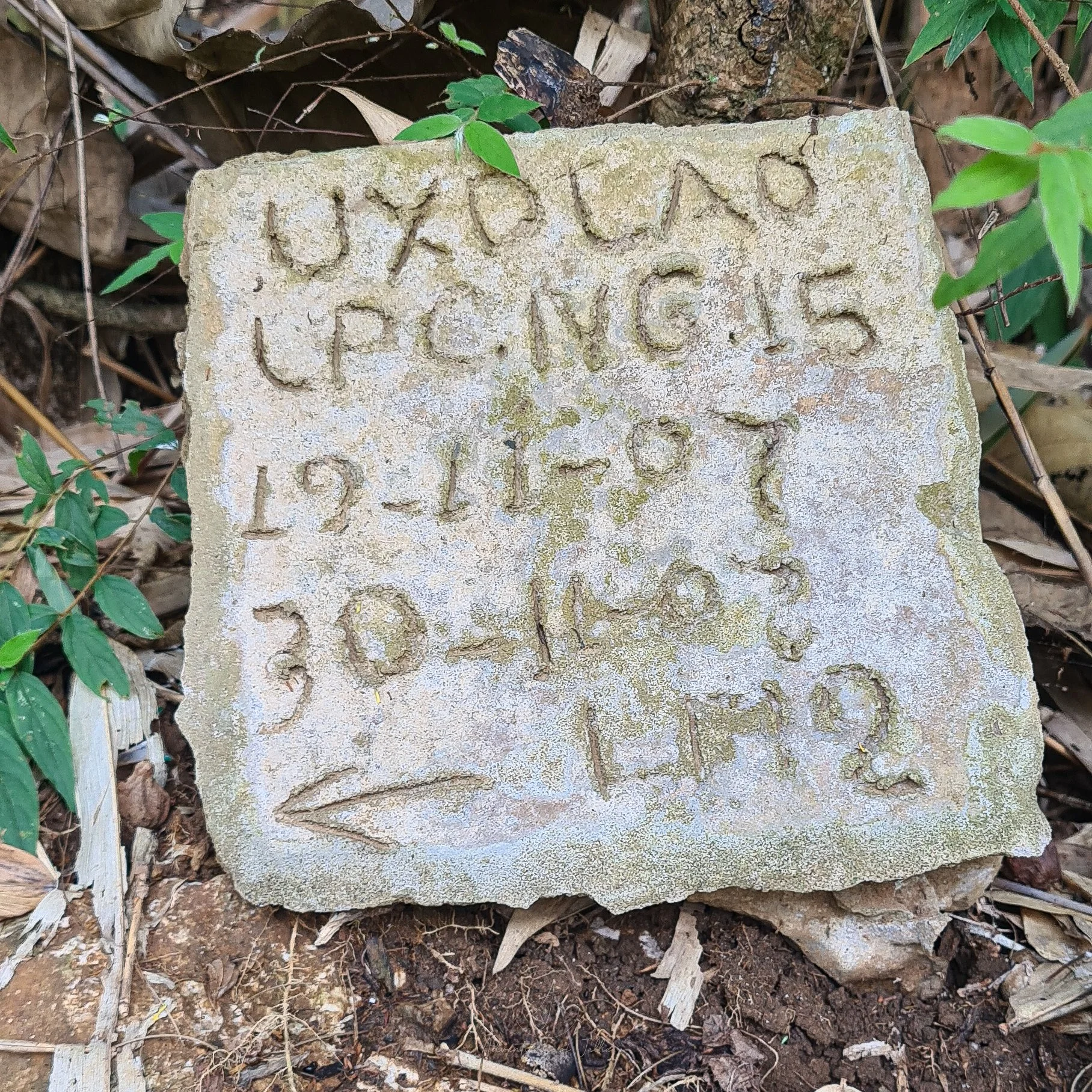
As we mentioned above please, please do not go off the marked trails in Laos. Due to the Secret War in the 1970s, there are still millions and millions of unexploded bombs littering the countryside.
Be very careful after heavy rains and always stick to marked paths!
For more information about the repercussions of the bombing campaigns, we would recommend visiting the following centres in Laos:
COPE Visitor Centre in Vientiane - http://copelaos.org/
The UXO Lao Visitor Centre in Luang Prabang - https://www.uxolao.org/
Walk across Nong Khiaw’s Bridge
Location
You cannot visit Nong Khiaw without at least walking across the main bridge that crosses over the Nam Ou River. The bridge not only serves as the main road, but is a fantastic spot for photos, especially at sunset. From the middle of the bridge you get a brilliant view down the valley.
Whatever time of day you cross it, there will always be groups of travellers taking photos and local teenagers filming their latest TikTok video!
Nong Khiaw’s Bridge holds some fantastic memories for us including some amazing sunsets and even some late night beers under the stars!
Explore some of Nong Khiaw’s hidden caves
Nong Khiaw is surrounded by limestone mountains, and these provide the perfect environment for the slow formation of caves. Nong Khiaw has three major accessible cave complexes, each within walking distance of the town (obviously a lot quicker to get to if you have a scooter). We checked out all three, and here’s what we found.
Pha Kuang Cave
If you follow the road north out of town, either by foot (30 to 40 minutes) or by scooter (10 bumpy minutes) you’ll find the Pha Kuang Cave. We can’t give an entirely fair review of this cave as we didn’t explore the cave fully, but more on that later. As you reach the cave, you buy your tickets from the house opposite. This is also where you park your bike if you’re coming by scooter, or where you moor your kayak if you came by river. Tickets for the cave cost 20,000 kip each.
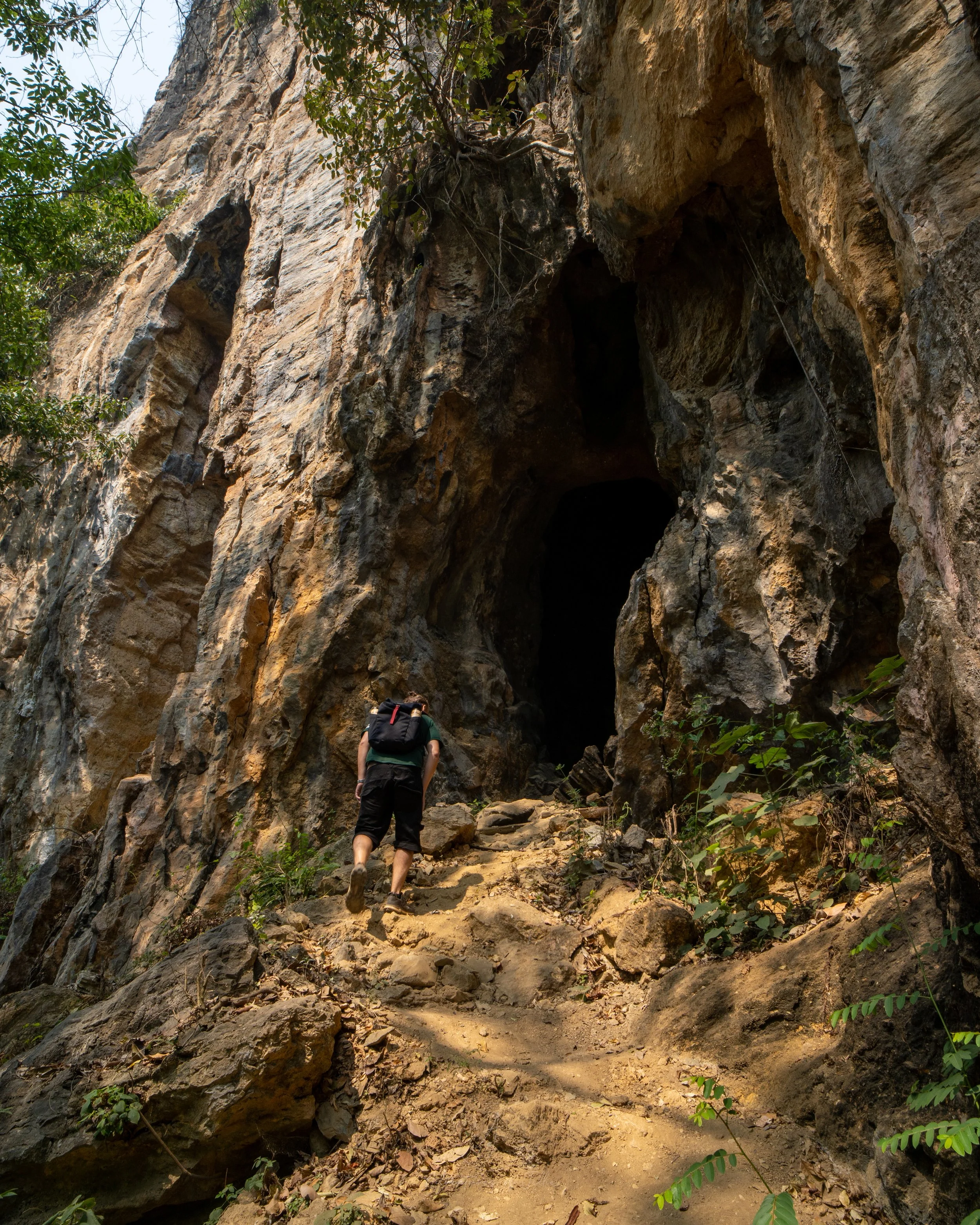
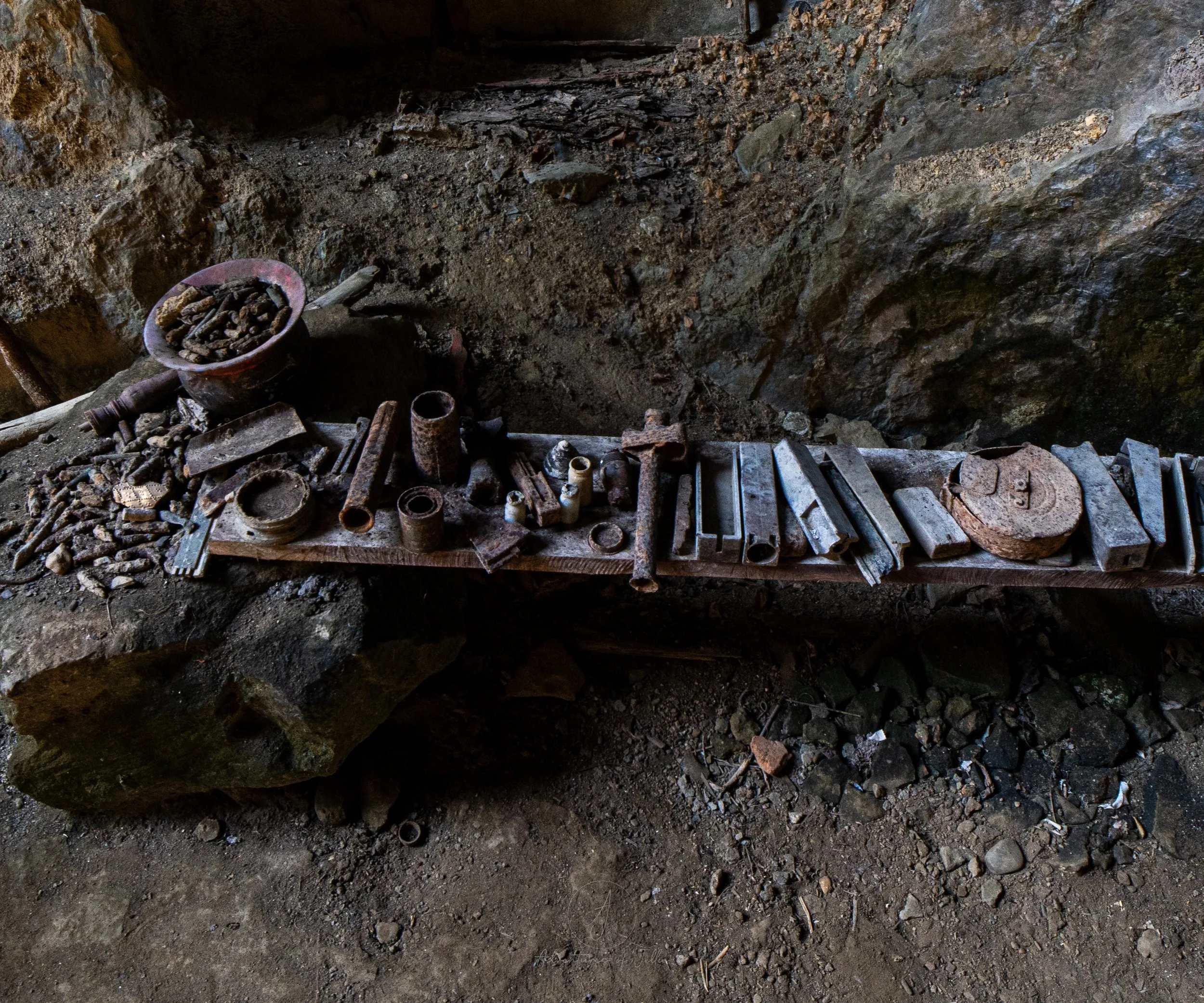
A short but sharp walk from the road, up into the hillside lies the cave mouth. This cave is huge, with a cathedral-like roof overhead and light spilling in from an enormous arched opening in the rock. There is a Buddhist shrine immediately as you enter and a collection of war remnants including cookware, bombs and shrapnel down near the arched window.
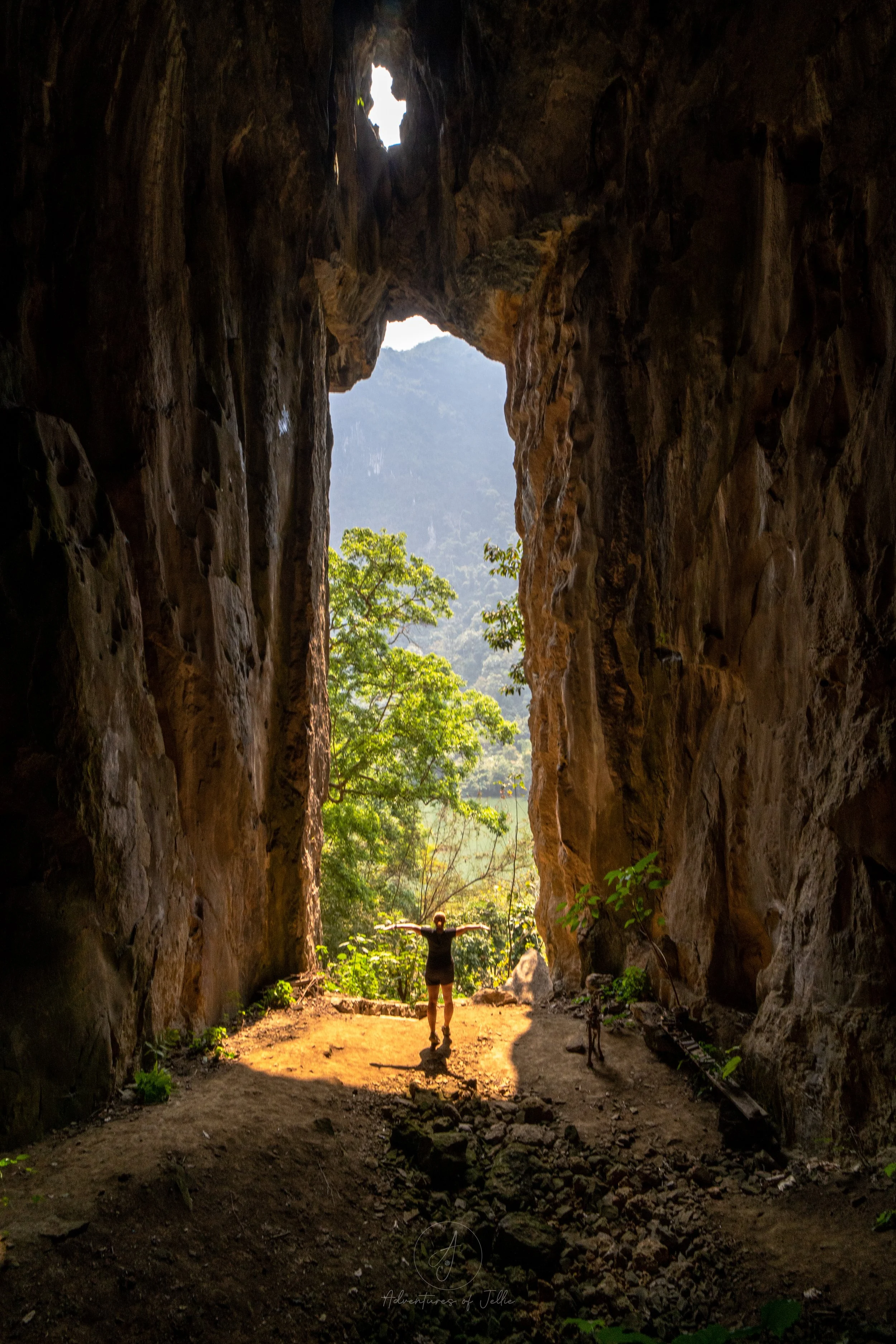
The cave is really impressive and we spent a good twenty minutes inside taking photos, posing and otherwise making fools of ourselves.
Right at the back of this large cave, is a tiny opening in the wall. This marks the start of the cave system that reaches back into the mountain. This is where we have to admit we didn’t explore the cave properly. Here’s our slightly pathetic excuses as to why.
As you walk round Nong Khiaw, especially on the northern road, you may encounter the wandering mud people. These brave souls are marked from head to foot in the mud and fine dust of Pha Kuang Cave.
The cave has squeeze and crawl spaces where the only way forward is by hands and knees or belly, all while attempting to clutch a torch in your mouth. We didn’t fancy this, and chickened out with just our lovely pictures from the cave entrance. For those more hardy than us, there is a map outside the cave displaying the route and squeeze spaces, with the smallest part of the tunnel being only 0.3m high!
If you are planning to try your hand at spelunking, make sure you bring a good torch with you!
Phar Noi History Caves
The Phar Noi History Caves are almost inside town itself. Follow the signs from the main road (southern side of the bridge) and head down to the grounds of the Eco Farm Stay and Hostel. At the far end of the field, there is a small bamboo bridge and hut. This is the ticket booth. Tickets cost 30,000 kip each, if you’ve got this far in the article, you’ll notice that entrance fees are quite standard across most activities in town! Once over the bridge, you follow the path up the hillside and through a small jungly wood before you reach the first cave.
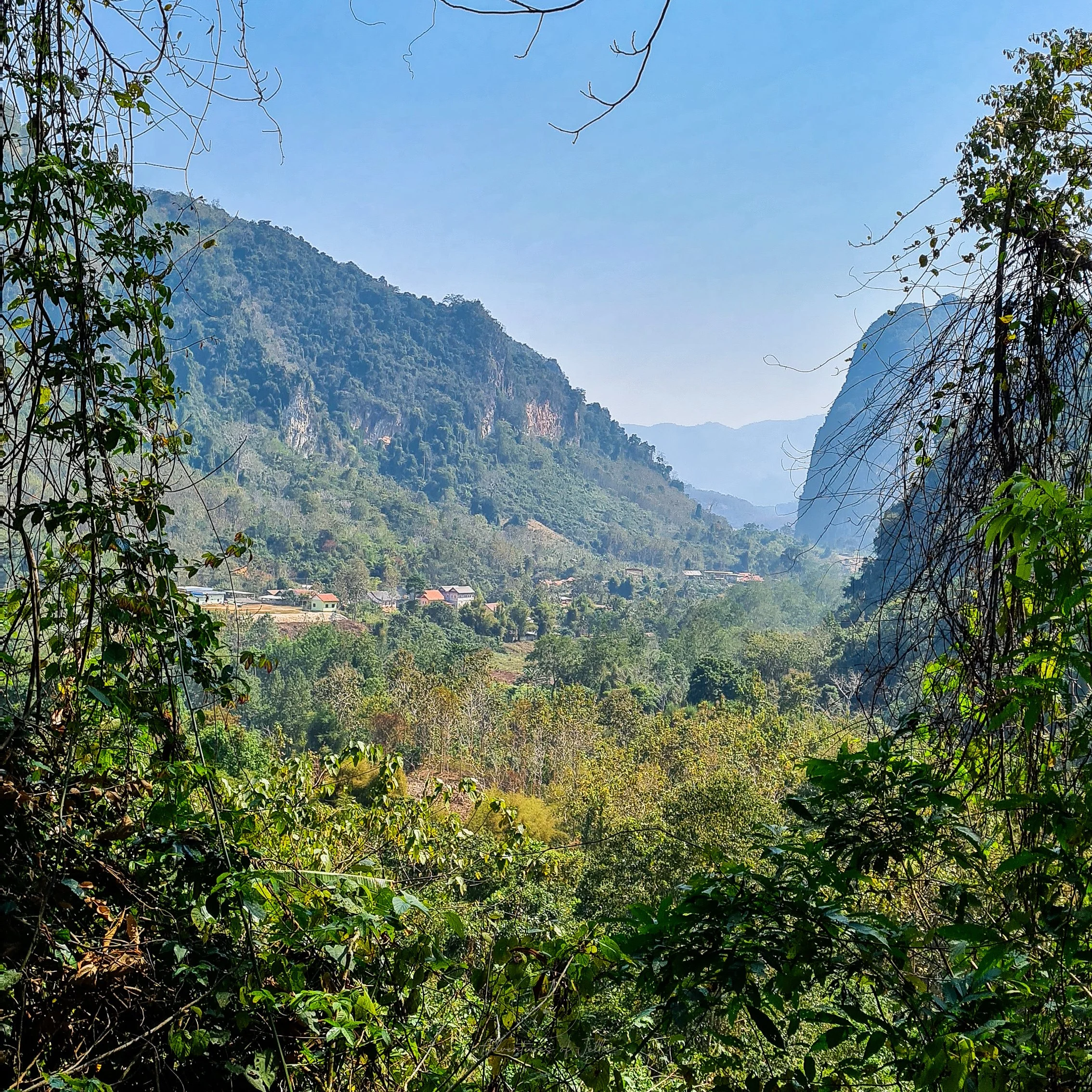
The first cave features a tall ceiling, draped in stalactites and a circular opening to the sky. At certain times of the day, the sun will line up and cast a perfect beam of light down into the cave. Unfortunately, we had no idea when this would be, so we just enjoyed the cave as it was.
The second cave was a short walk from the first and could easily be missed. Look for a large rock between two trees, and you will see a small opening at the bottom. Crouch down and head through. Just inside is a bamboo ladder leading down into a large cave. Similar to the Pha Kuang Cave you will need a torch in here, do not try to explore without one!
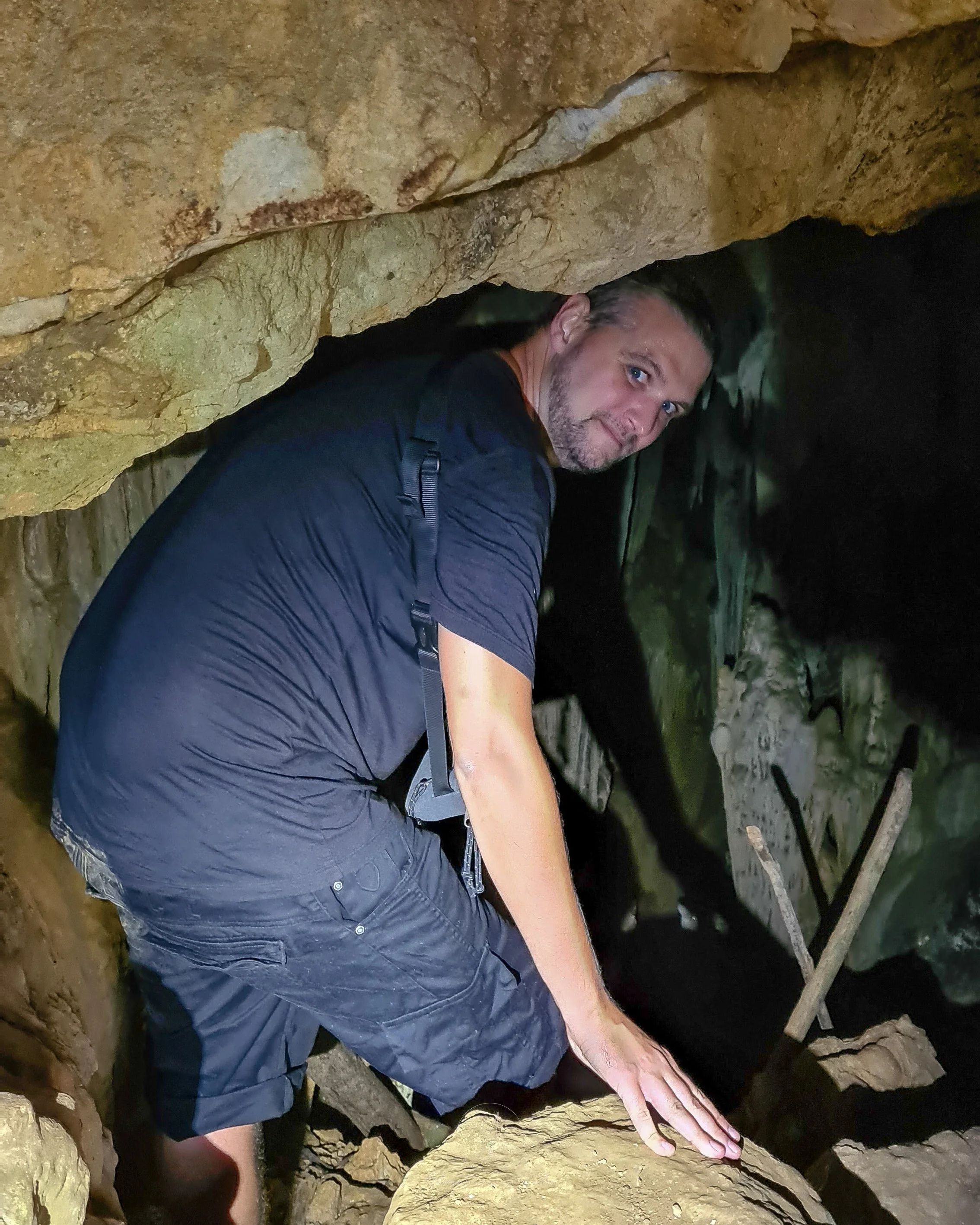
“My preciousss….”
At the bottom of the ladder and on the left are remnants of war time cookery supplies. On the right, is a massive hole in the cave floor.
If you look directly above the hole, you can see war time graffiti. Including pictures of the American bombers that the cave dwellers were seeking shelter from.
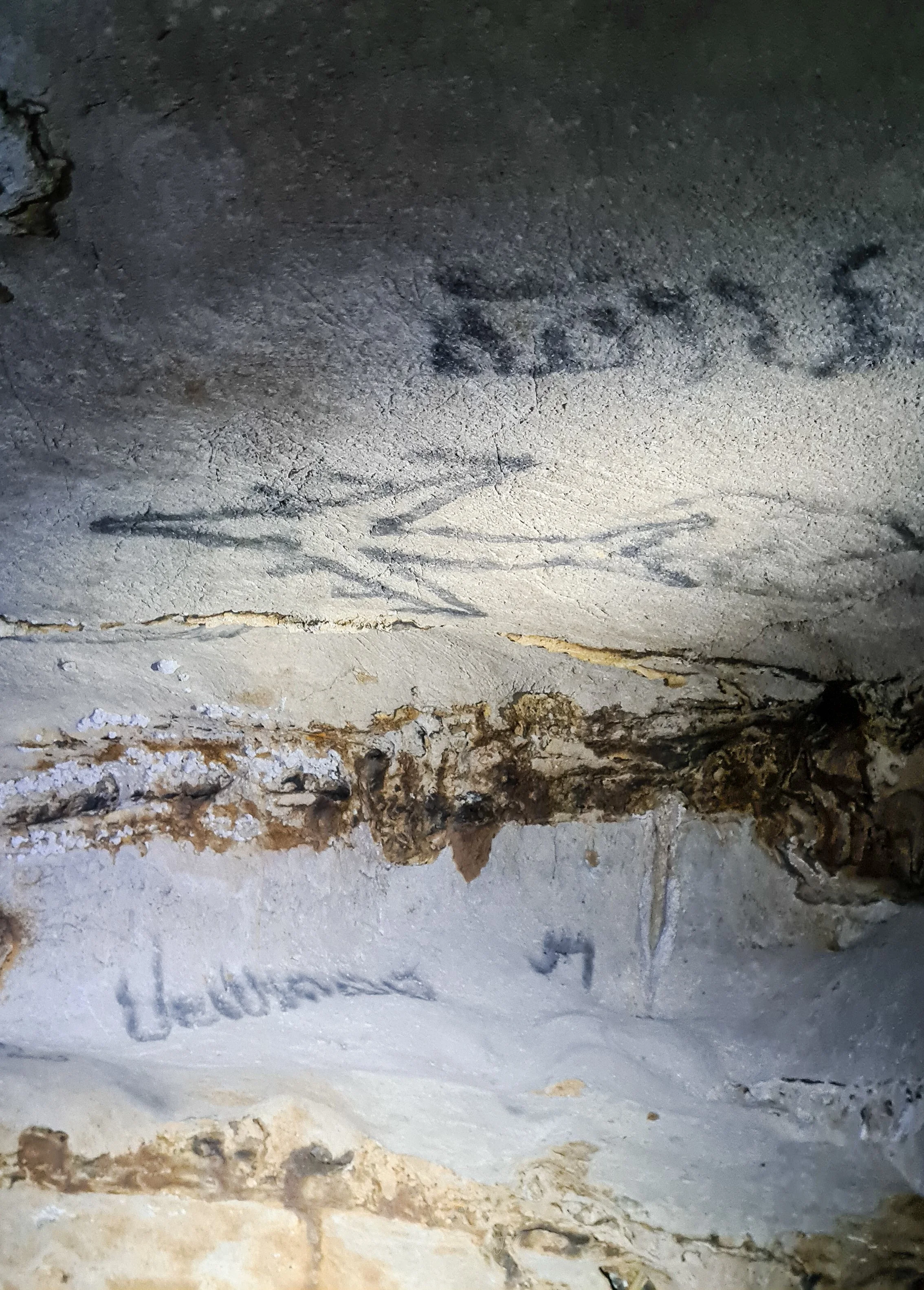
We really enjoyed the history caves. They are set basically within the town so they’re definitely worth checking out and giving an hour of your time to.
Phathok Caves
If you leave Nong Khiaw along the southern road and travel for 2.5km you will come across the Phathok Caves. We wandered down on a sunny morning to have a look at the two-cave system.
The approach is worth the walk here alone. A large bamboo bridge winds out over a stream. You buy your tickets from a stilted house then set out across the bamboo walkway above the paddy fields. The tickets cost 50,000 kip each and you will almost certainly have a group of youths offering to give you a guided tour for a little more (we politely declined).
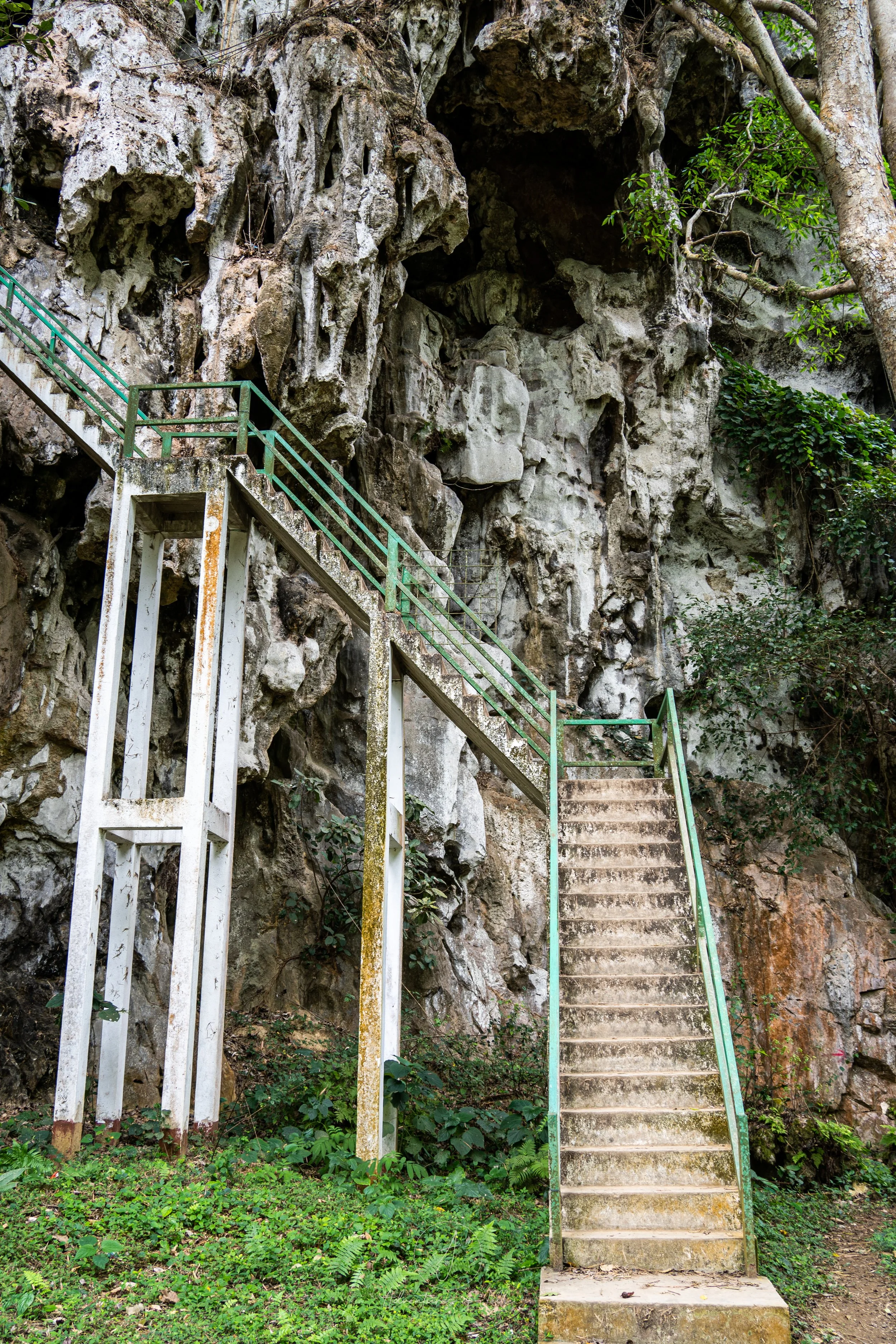
Across the rice paddy a roped off area shows the outline of a huge bomb creator, another reminder of the Secret War. The crater is so large that a healthy sized tree is now growing within its bounds. Around this crater, is a steep set of concrete stairs that climb into the rock face. The first cave lies at the top of these stairs. This cave has received some funding for preservation as a relic of the Secret War. Signs show you where the command centres, communication equipment and meeting halls were, or used to be, underneath the cave's high ceiling.
Towards the back of the cave was the shelter which was used during bombing raids, this was frankly terrifying as it was nothing more than a pit so deep you could barely see the bottom. The only access seemingly being by a rope hanging down into the darkness. You can't (thankfully) access this part so we headed back to the cave entrance.
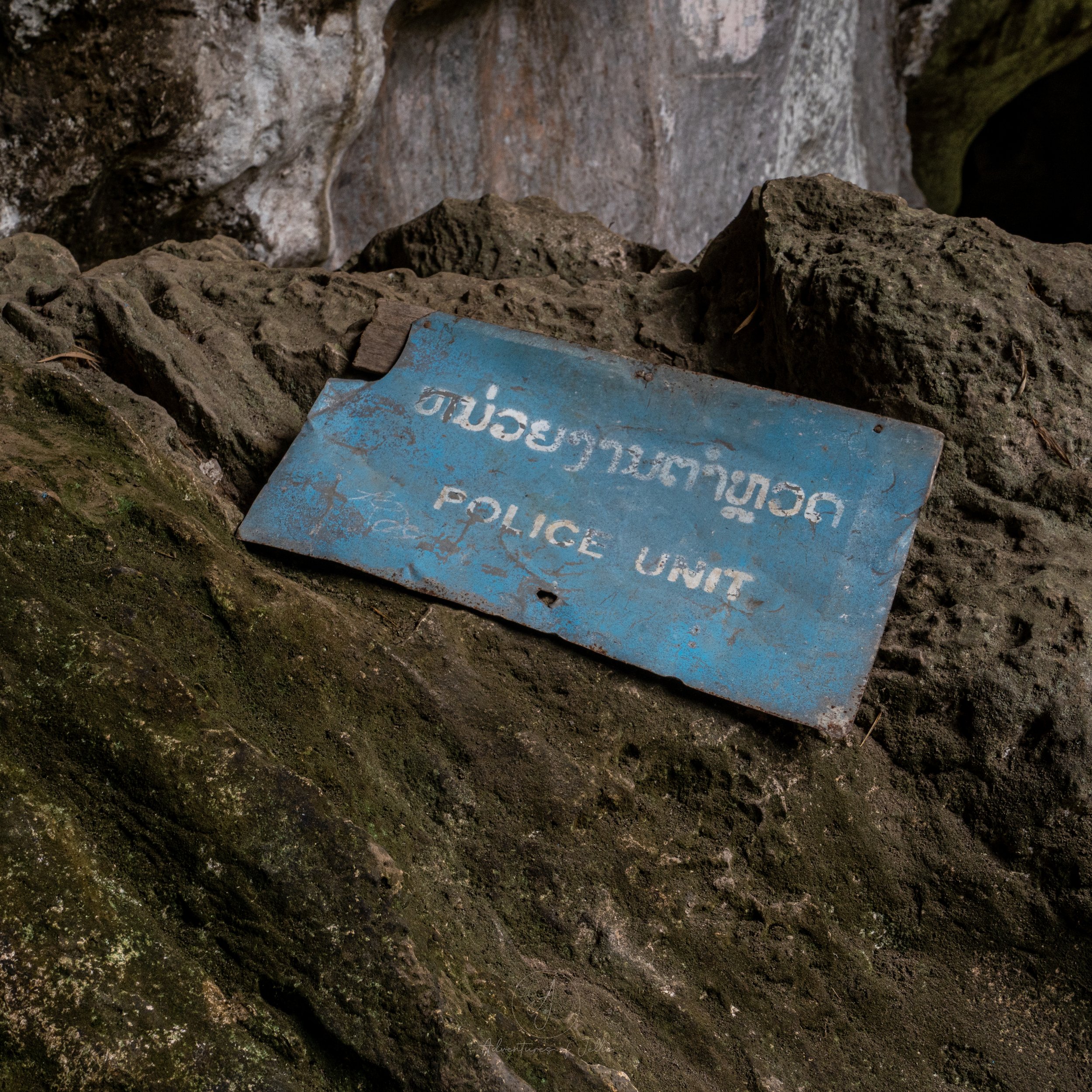
The second cave is a short walk around the base of the rock formation below the first. This tiny cave is a claustrophobic’s nightmare. There is no lighting so you have to bring a torch and squeeze between the gaps in boulders, seriously do not attempt this cave without good portable lighting. Your phone will be ok…ish, but we would definitely recommend torches. If you did opt for a guide they should provide you with a head torch. This cave was a communication centre and post office during the Secret War, it is much less renovated compared to the first cave and is essentially a tiny set of tunnels, just wide enough for one person to squeeze through, that wind deep into the mountainside.
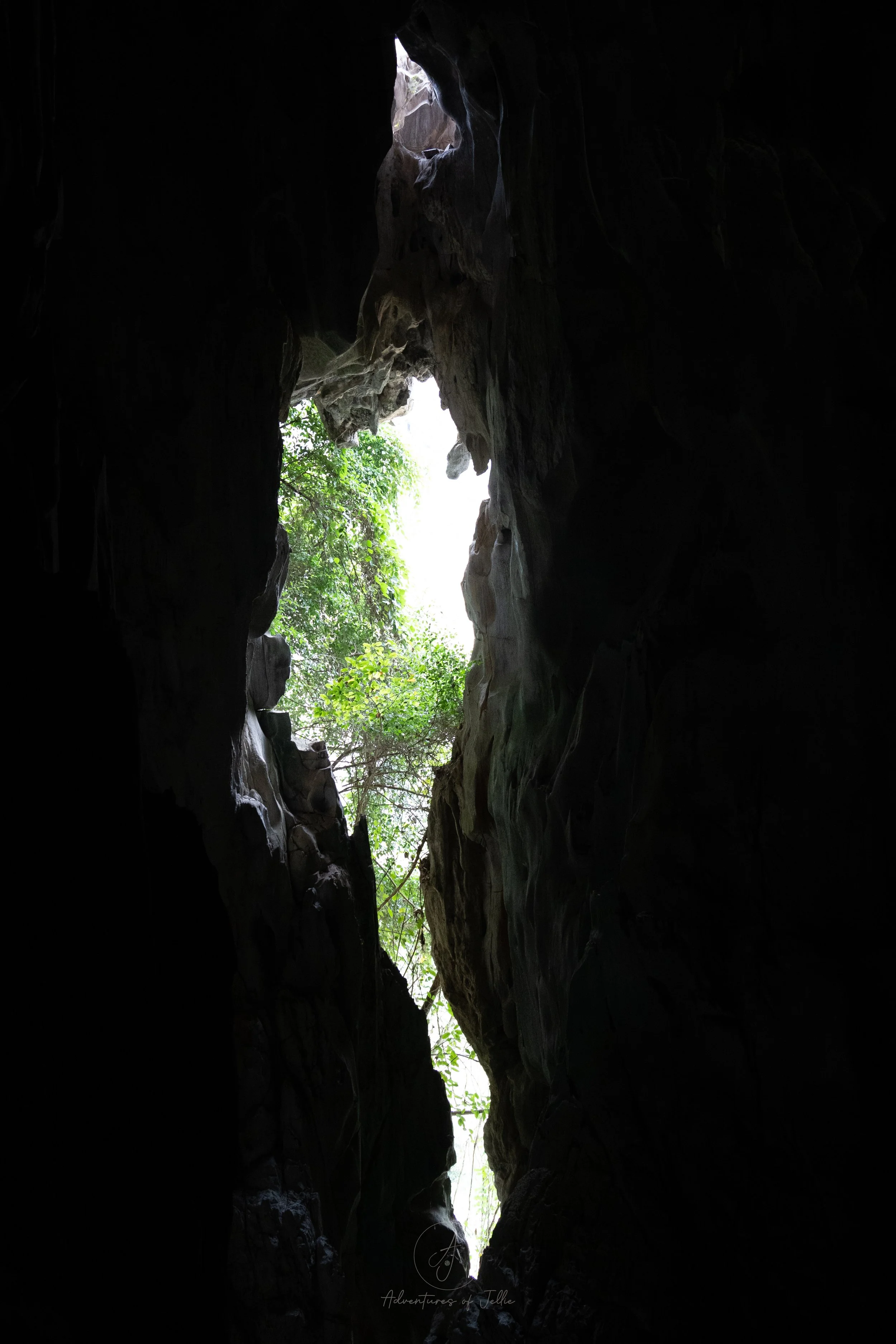
The last of the light as you enter the cave!
The Phathok Caves were well worth the short walk from town but we have to say we actually preferred the outside scenery to the caves themselves. The green of flooded rice paddies set against the grey of the surrounding mountains, with the farmers planting a fresh crop, was beautiful and provided a strange contrast to the dark caves and their sad history.
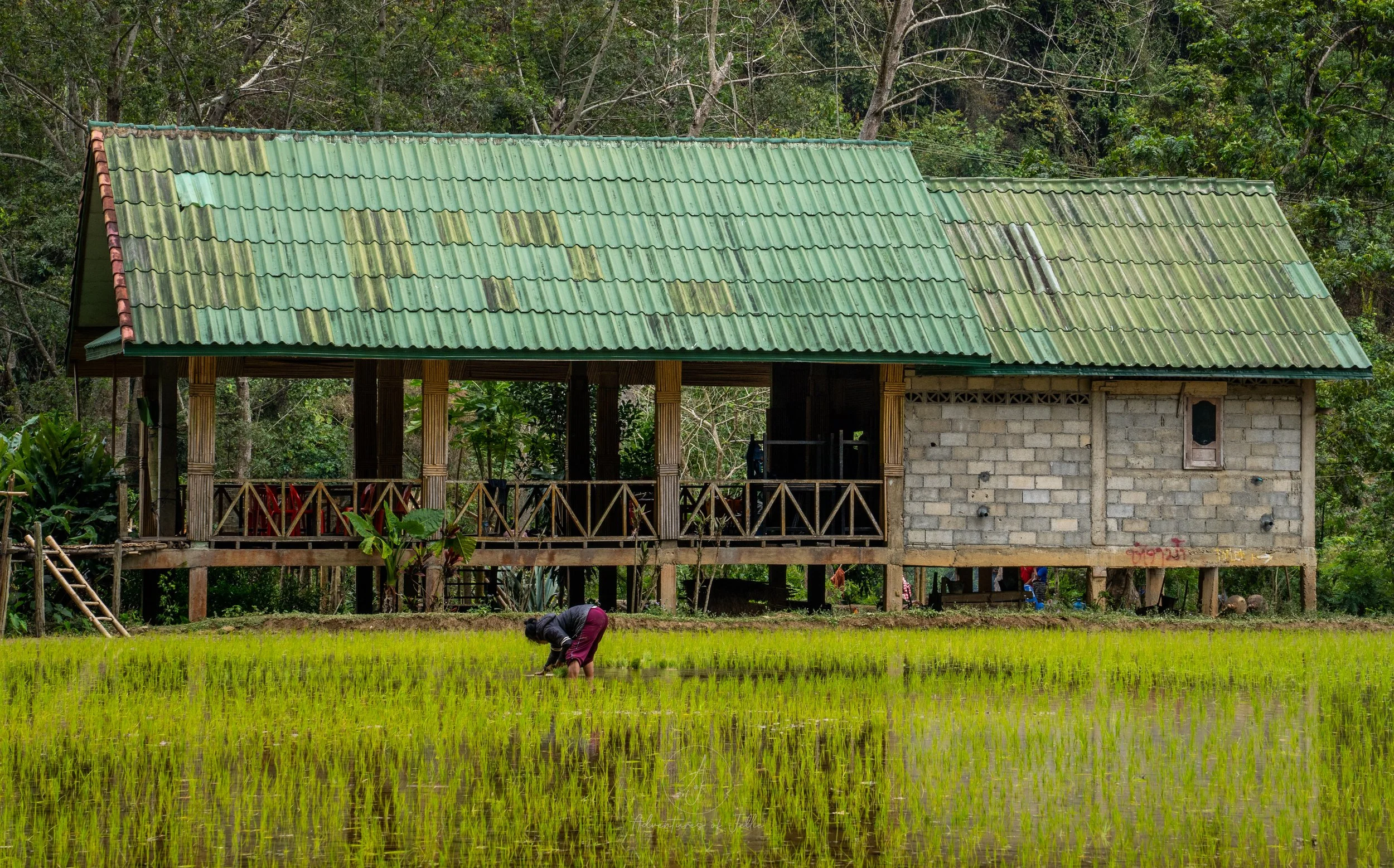
When we first visited there were three caves to visit at this site, however on our most recent visit this has changed. The third cave is now accessed via the Ban Pha Toke Museum (see below).
Visit the Ban Pha Toke Community Museum and Pathet Lao Hospital Cave
From Nong Khiaw, the Ban Pha Toke Community Museum is around a 4 km walk or a short scooter drive away. If you’re heading to the museum straight from the Phathok Caves it’s just under a km down the road. Entry to the museum, cave and grounds cost 50,000 kip per ticket. Once you’ve bought your tickets you will follow the curving path down until you reach the pretty grounds of the museum.
From here you have two two choices, one is to head over the bridge to the Pathet Lao Hospital Cave or two, head straight for the museum. We decided to go to the cave first. To reach the cave, cross the bridge over the clear stream and make your way up the path that leads to the cave entrance. As you approach the large cave opening you’ll see a Buddhist shrine and inside its cavernous depths you’ll find old wooden beds and cooking utensils left over by the 150 plus locals who sheltered inside during the Secret War.
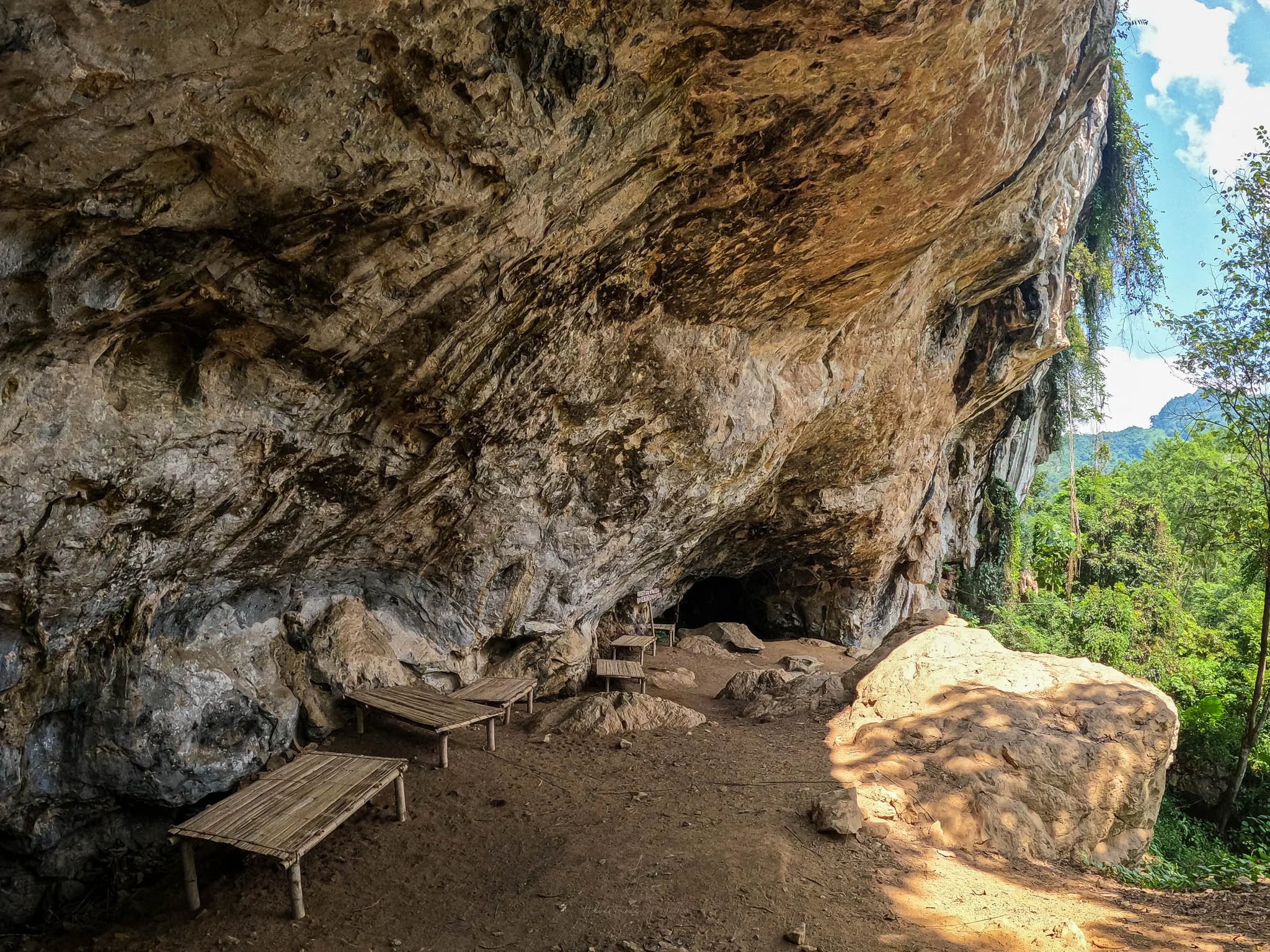
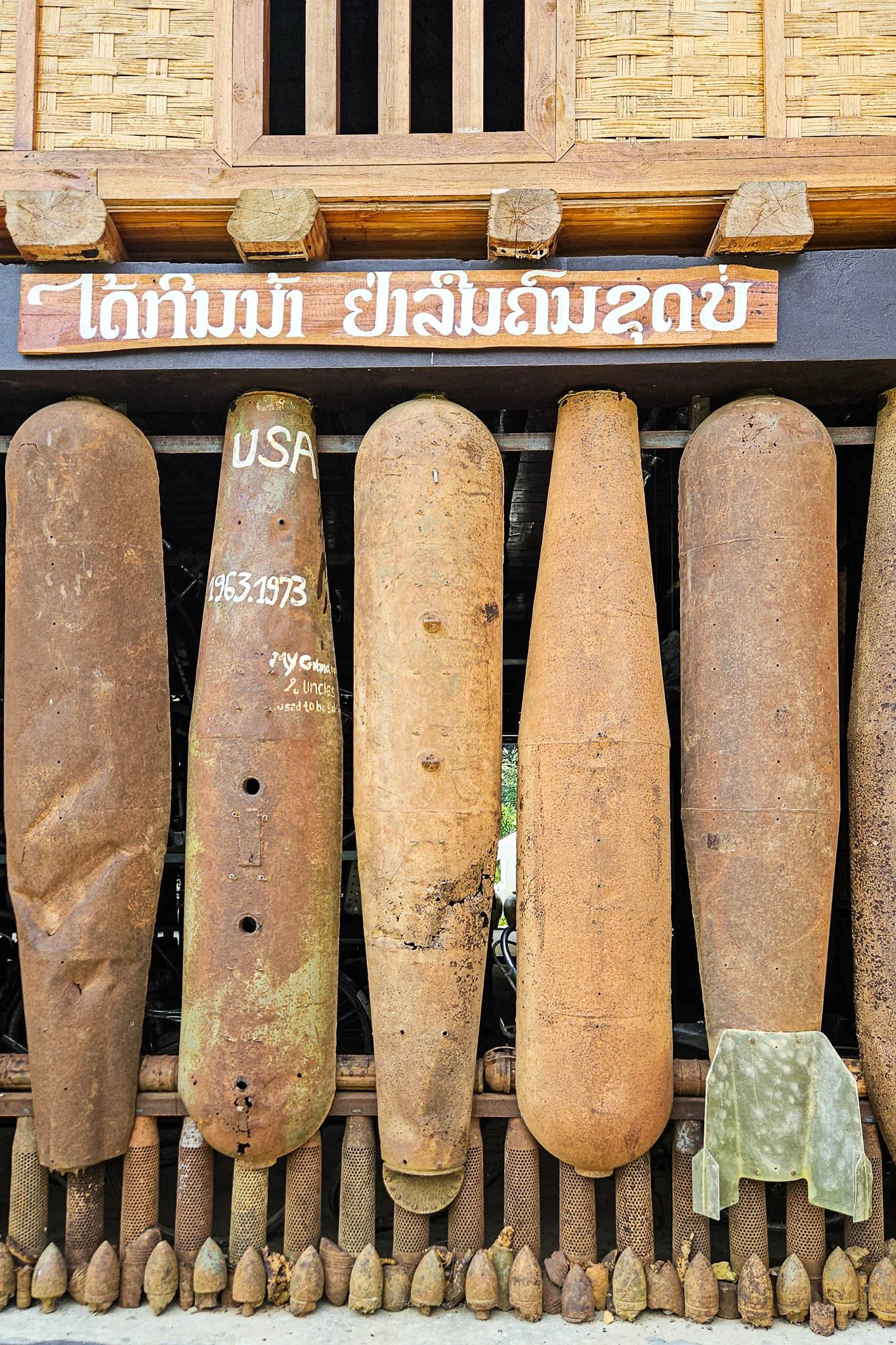
After the cave we headed back down to the museum. Outside, the museum building is made up of old bomb casings and cartridge tins, now recycled to be the supporting structures to hold up the Laos style building. Inside, the museum is absolutely jam packed with old bombs, artillery shells, bullets, mines and other military paraphernalia all left over from the Secret War. It is a small museum but well worth visiting to learn a little more about what the locals experienced during the Secret War.
The Ban Pha Toke Community Museum is set amongst very pretty gardens and plantations. There is a small path that circles through the trees back up to the carpark. Since our last visit, there is a new restaurant on site which we will definitely have to check out next time we are in Nong Khiaw!
The Secret War
Throughout this article there will be a lot of references to the Secret War. The war ran from around 1959 to 1975, and can alternatively be called the Laotian Civil War. It is referred to as the ‘Secret War’ as during the course of the war, the USA lent its support to the Royalists and conducted the largest bombing campaign in history (by volume). However, due to the ongoing Vietnam War, none of this was made public in the West. This is a very simplified (and possibly ignorant) summary but Google can provide a more in depth look at this fascinating but distressing conflict, the remnants of which still plague Laos today.
Since our visits to Nong Khiaw we have also visited Vieng Xai and Phonsavan both of which were incredibly important in the Secret War. Check out our articles and make sure you visit the UXO centres in Luang Prabang and Vientiane.
Explore Nong Khiaw’s bustling Morning Market
If you have been following our travels for a while now, then you will know that there is nothing we love more than exploring a local market. On our first trip to the town, the market was held all along the main street, but the Morning Market has now expanded and has relocated to a shiny new base near the Hive Bar.
The Morning Market is a very busy, very local affair as hundreds of locals gather early in the morning to buy fresh fruit and vegetables, bags of curry paste, slabs of still beating meat, dried noodles, sweet treats and more! If you’ve never been to a Laotian market, then you’re in for a treat. It’s a complete overload of colour, noise and smells.
We’d recommend heading here for breakfast where you can pick up delicious sticks of caramelised meat straight off the coals alongside bags of sticky rice. If you’ve never tried this traditional Laos breakfast, be prepared to never be satisfied with cereal again!
Nong Khiaw’s Morning Market opens early from 6 AM in the morning. To see the best of the market we would recommend getting there as soon as it opens as by 9 AM it is pretty much closing up!
Kayaking on the Nam Ou River
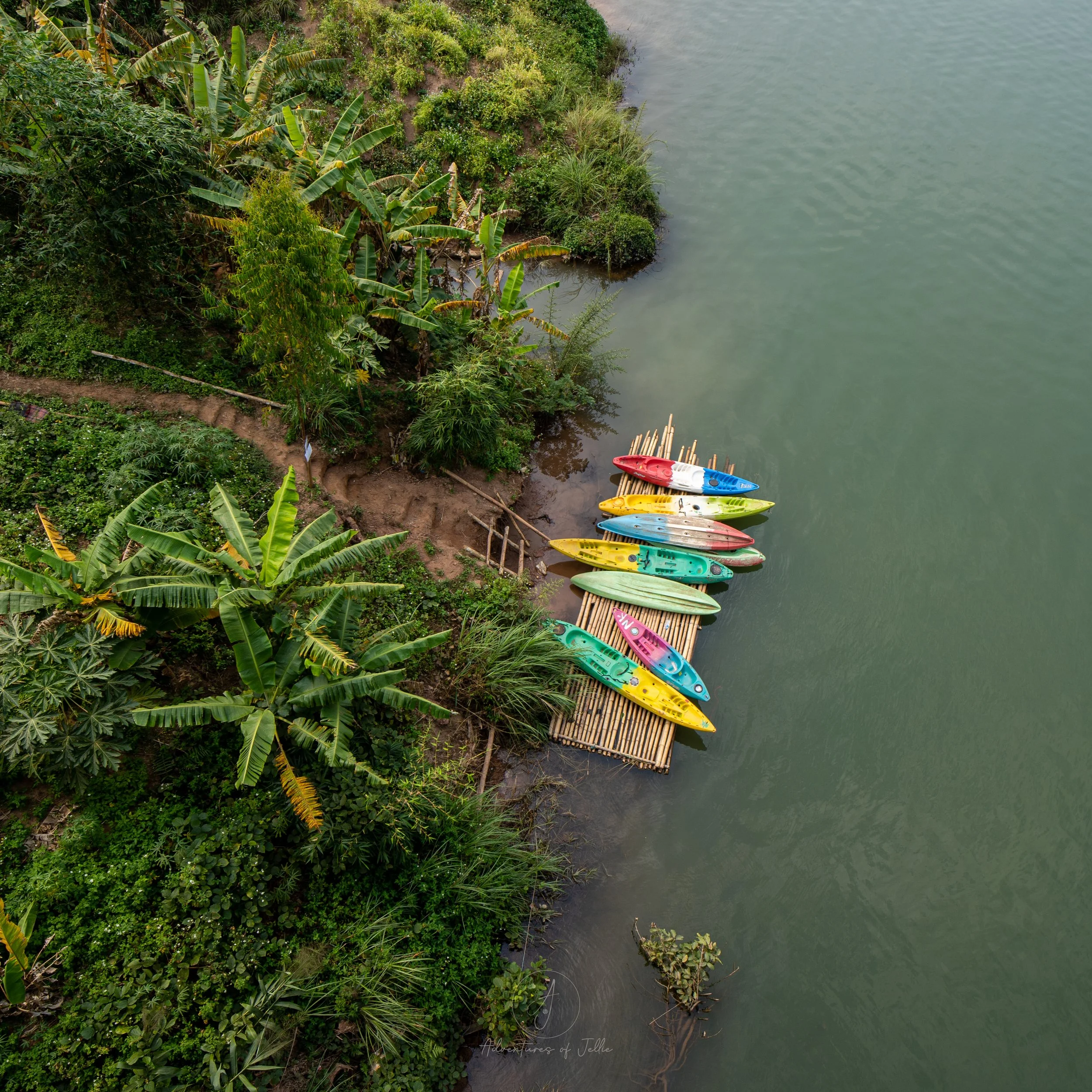
The Nam Ou River flows through the heart of Nong Khiaw. The town is bifurcated and joined by the river and the bridge across it. Flowing from east to west, the river links the town to many local attractions as well as towns and cities further afield. From Nong Khiaw you can rent a kayak and enjoy the river, paddling to the Pha Kuang Cave, or north upstream to the villages along the river side.
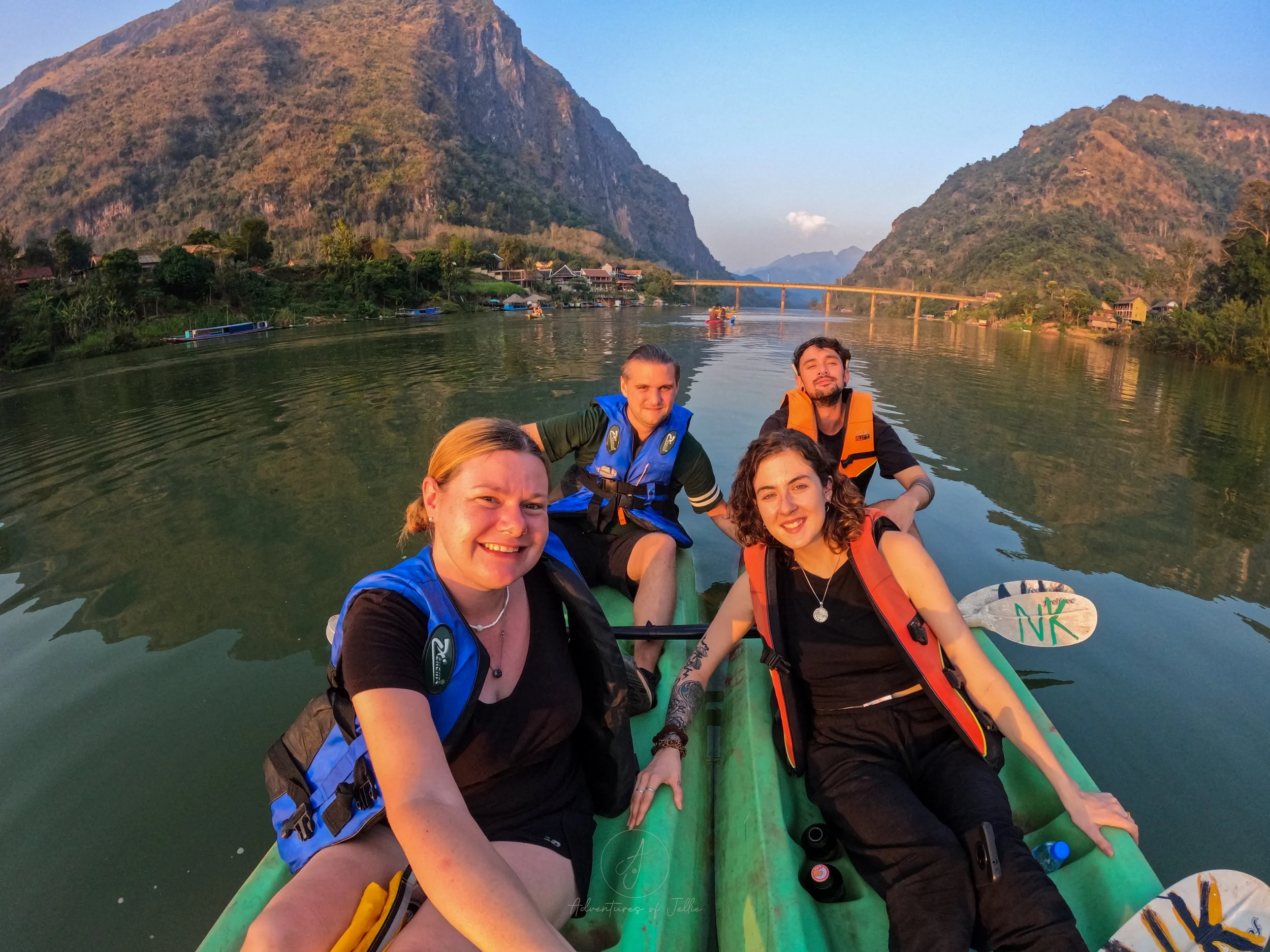
We had a great evening in the kayaks, where we and some new friends enjoyed watching the sun go down, from the centre of the Nam Ou River. Looking west from the Nong Khiaw Bridge, the sun sets directly over the river, so watching the sun slip down below the horizon whilst floating on our kayaks with a bottle of beer in hand was a memorable way to start an evening!
We rented a kayak, oars and lifejackets (for two people) for 60,000 kip but had to leave a 100,000 kip deposit. The prices may vary across town, our advice would be to shop around to find the best deal!
The easiest place to access the river is from the eastern side of Nong Khiaw bridge where there is a set of steps carved into the river bank (located here).
We have only kayaked during the evening, but would love to rent a kayak for the whole day and explore the riverbanks! There would be plenty of spots to drag your kayak up to the bank and swim in the cool river.
We have only kayaked during the evening, but would love to rent a kayak for the whole day and explore the riverbanks! There would be plenty of spots to drag your kayak up to the bank and swim in the cool river.
Climb the 100 Waterfalls
One of the main reasons we wanted to come back to Nong Khiaw (other than to hike the viewpoints, soak up the laidback vibes and enjoy a Beer Laos’ or two) was to climb the 100 Waterfalls. On our first trip to Nong Khiaw, we had seen the trek advertised on every tour agency, but due to it being an abnormally dry spell in the peak of the dry season, the waterfalls were in short supply!
As soon as we were back in town, we booked ourselves onto a trip. The 100 Waterfalls Trek was fantastic! We hiked through small villages, across picturesque farmland and climbed up and over many, many, many waterfalls! To read more about our day climbing the falls, make sure you check out our full 100 Waterfalls Guide here.
If you are planning to do this trek, plan to get very wet and wear shoes you can hike up rocks and through water with!
Take a boat upstream to visit the Tad Mok Waterfall
Sitting north up the river between Nong Khiaw and Muang Ngoi is the beautiful Tad Mok Waterfall. There are plenty of tour operators who offer trips to the waterfall, however we would really recommend hiring a boat and exploring the falls by yourself!
The boat will drop you off at Tad Mok Village and from there it’s a short walk across paddy fields to the waterfall. We’ve written a full guide on how to visit the waterfall, what to expect and where to charter a boat in our full Tad Mok Waterfall Guide.
Take a day trip to Muang Ngoi
Sitting an hour and a half away upstream, Muang Ngoi is another beautiful riverside town full of hiking trails, caves, viewpoints and water-based activities!
You could easily visit Muang Ngoi as part of a day trip by arranging a tour through one of the many tour operators in town, but honestly, to really get the most out of Muang Ngoi we would highly recommend you spend at least a night or two staying there. Muang Ngoi is absolutely stunning and is possibly even more laidback than Nong Khiaw!
We’ve written a full in-depth travel guide to Muang Ngoi which covers everything you need to know. Read our complete Muang Ngoi guide here.
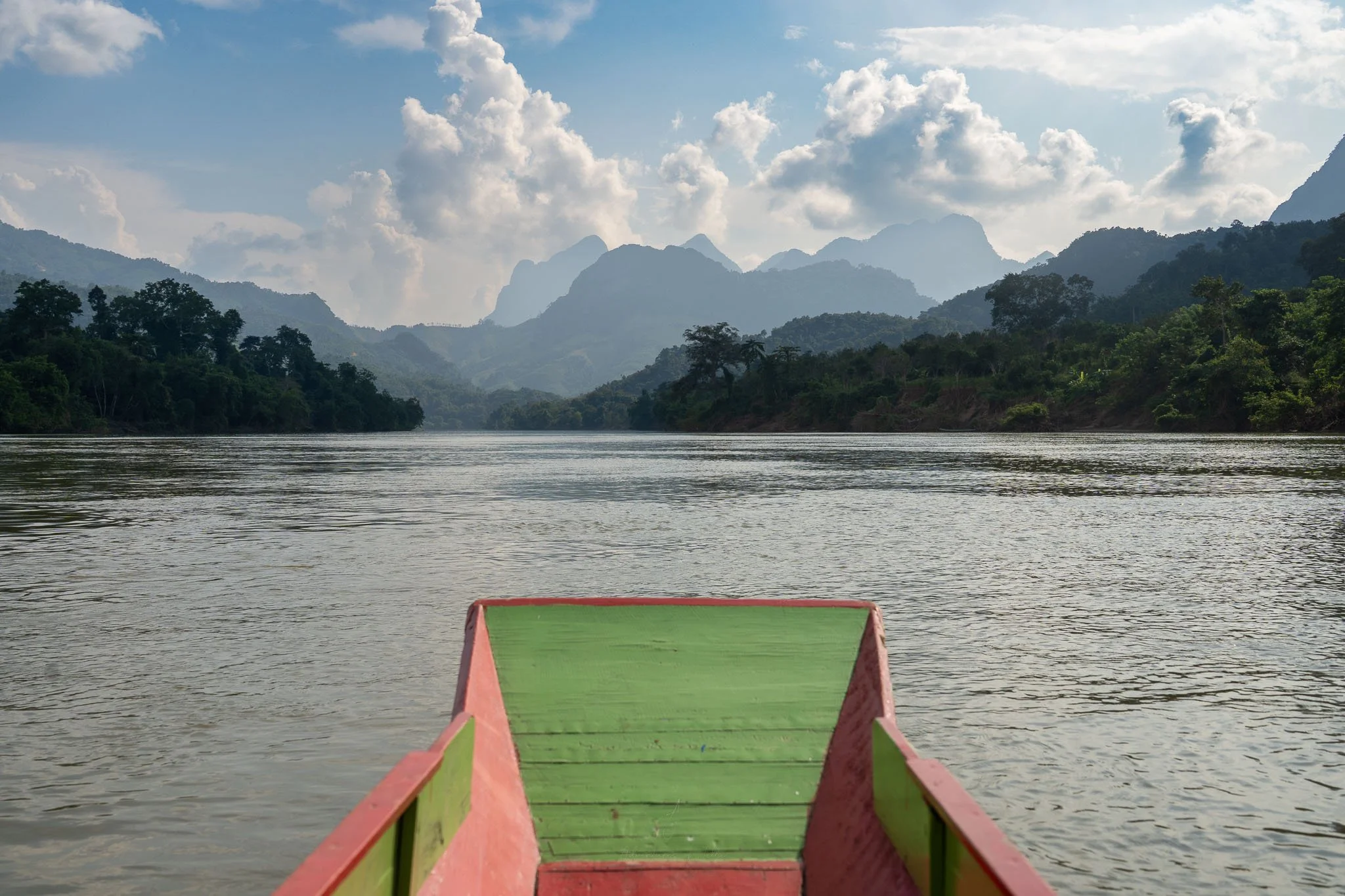
Taking a boat trip up or down the Nam Ou River is an absolute must do in Nong Khiaw!
Exploring the local villages surrounding Nong Khiaw
On the southern side of the bridge and striking out north, is a dusty road. This road follows the river upstream and goes through the small villages of Ban Had Sao, Sop Vanh and beyond. To give our legs a break from the mountain hiking, we decided we would explore this flatter route on foot.

As soon as we had left the town of Nong Khiaw, we quickly realised what a bubble it was. Nong Khiaw is beautiful and fun, but not the average Laotian town. Walking along this northern road, gave a brief window into the rural mountain lives of the locals. Rice paddies stretched in stepped plateaus on one side, whilst water buffalo wallowed in the mud.
As we reached the first village of Ban Had Sao, children escaped from their lessons and came to say hello. This swiftly became a demand for sweets and money, at which point their teacher dragged them back inside. If you strike inland from Ban Had Sao there is a waterfall that's apparently worth seeing, however as we were visiting in the dry season, we were told the waterfall was pretty much non-existent and so we continued north.
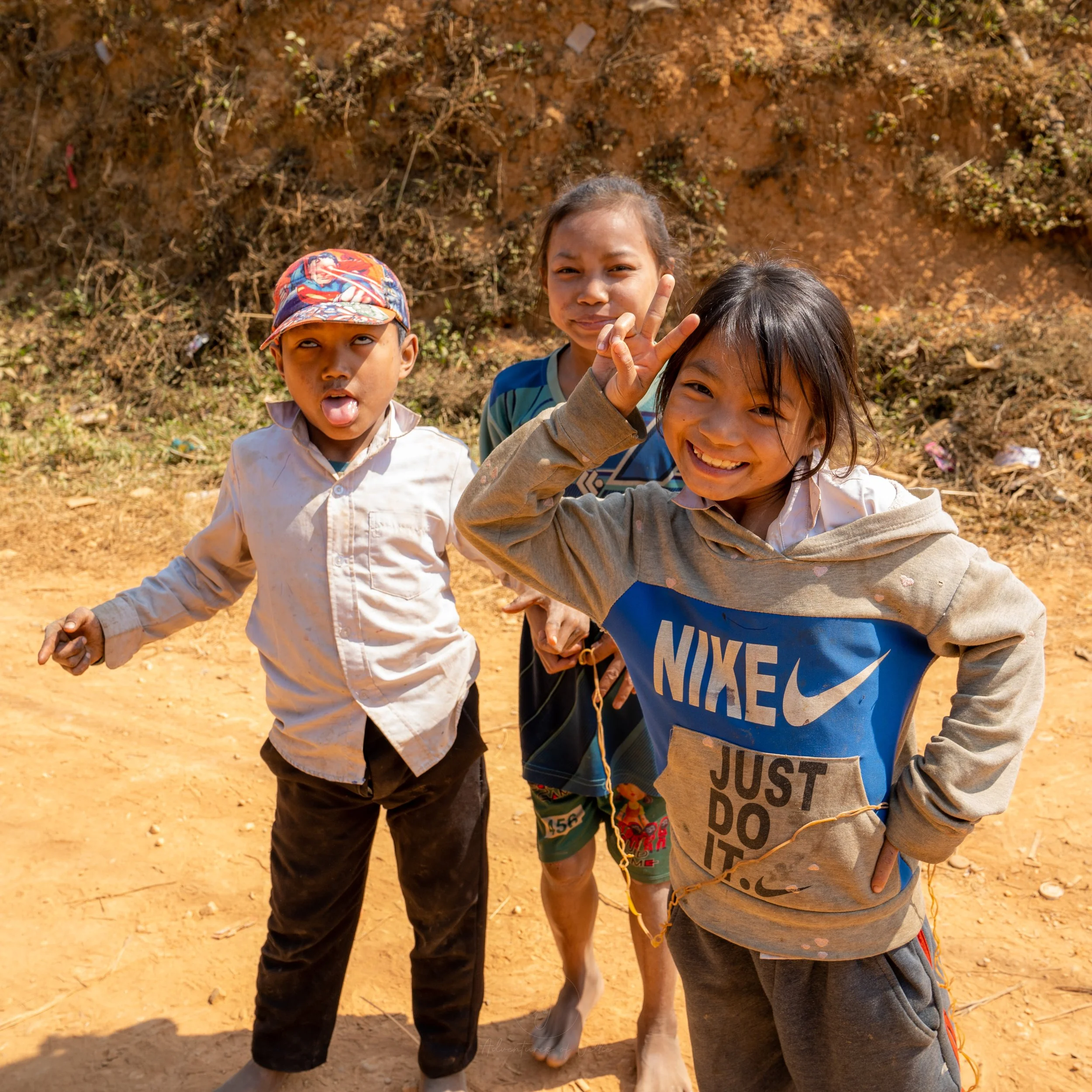
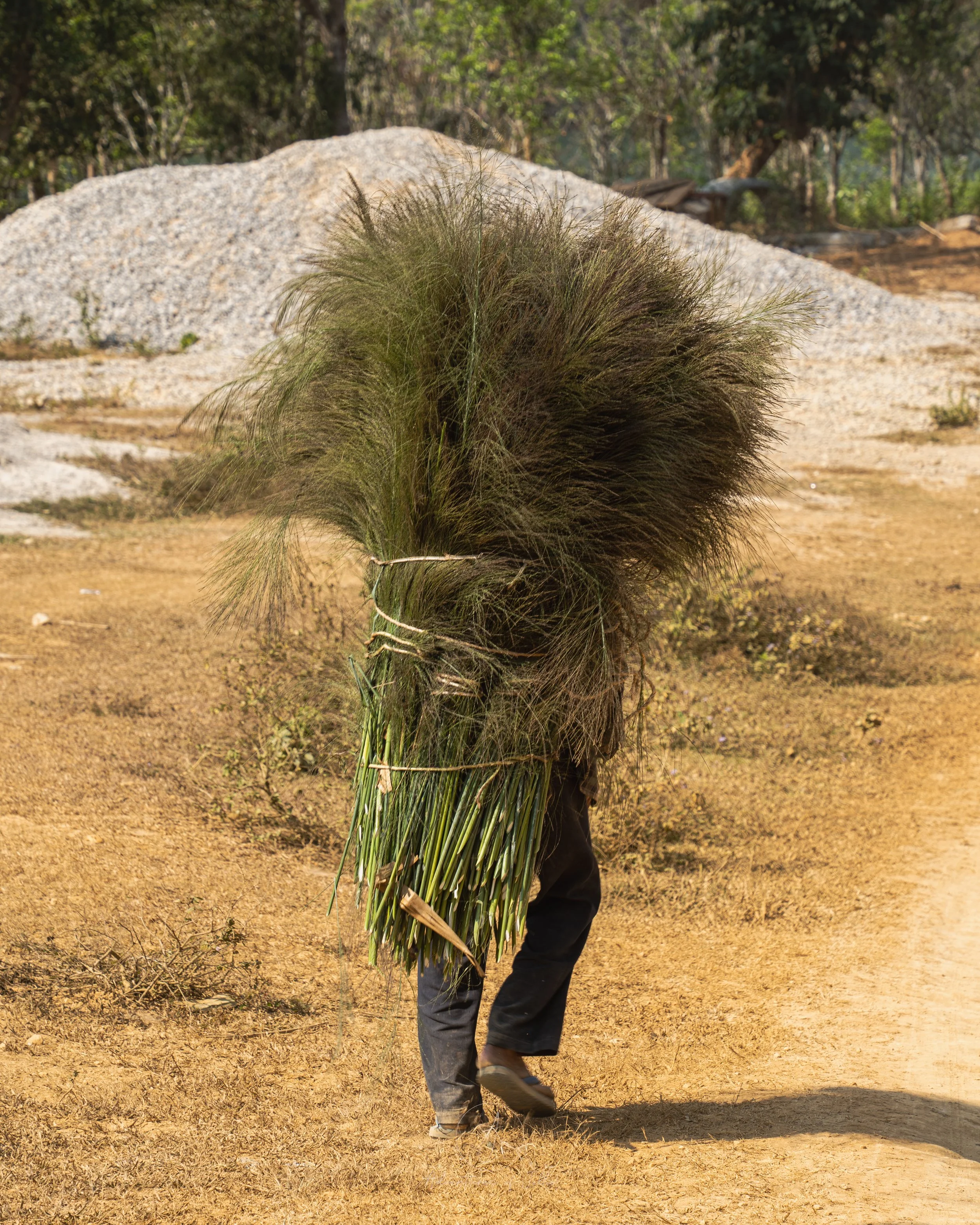
Passing isolated farms, more cheeky children and an elderly gentleman carrying what appeared to be an entire haystack on his back, the road continued on to Sop Vanh. The village of Sop Vanh was very quiet, with a couple of shops and an ornate Buddhist temple. As with all roads in Nong Khiaw region, there’s not really a circular route to do, so we chose the temple as our end point and turned around to head back to Nong Khiaw.
To Sop Vanh and back was around a 12km walk, and it took us 2 ½ to 3 hours. It was a great day out, and it was nice to explore the more human side of Laos after a few days of viewpoints.
On our recent visit, we decided to do this walk again. The road is even more dustier and in even worse condition than last time we walked it. Deep crevices cover the entire road and the surface is full of loose dirt and sand. If you are planning to do this hike expect to get very dusty and only ride the road if you are very confident riding off-road!
Watch the sunset over the Nam Ou River
The banks of the Nam Ou River and the dramatic mountains ringing the horizon provide a magnificent stage for the sun to put on its daily fiery show. Wherever you are staying in Nong Khiaw, then make sure you head down to the river for a sunset.
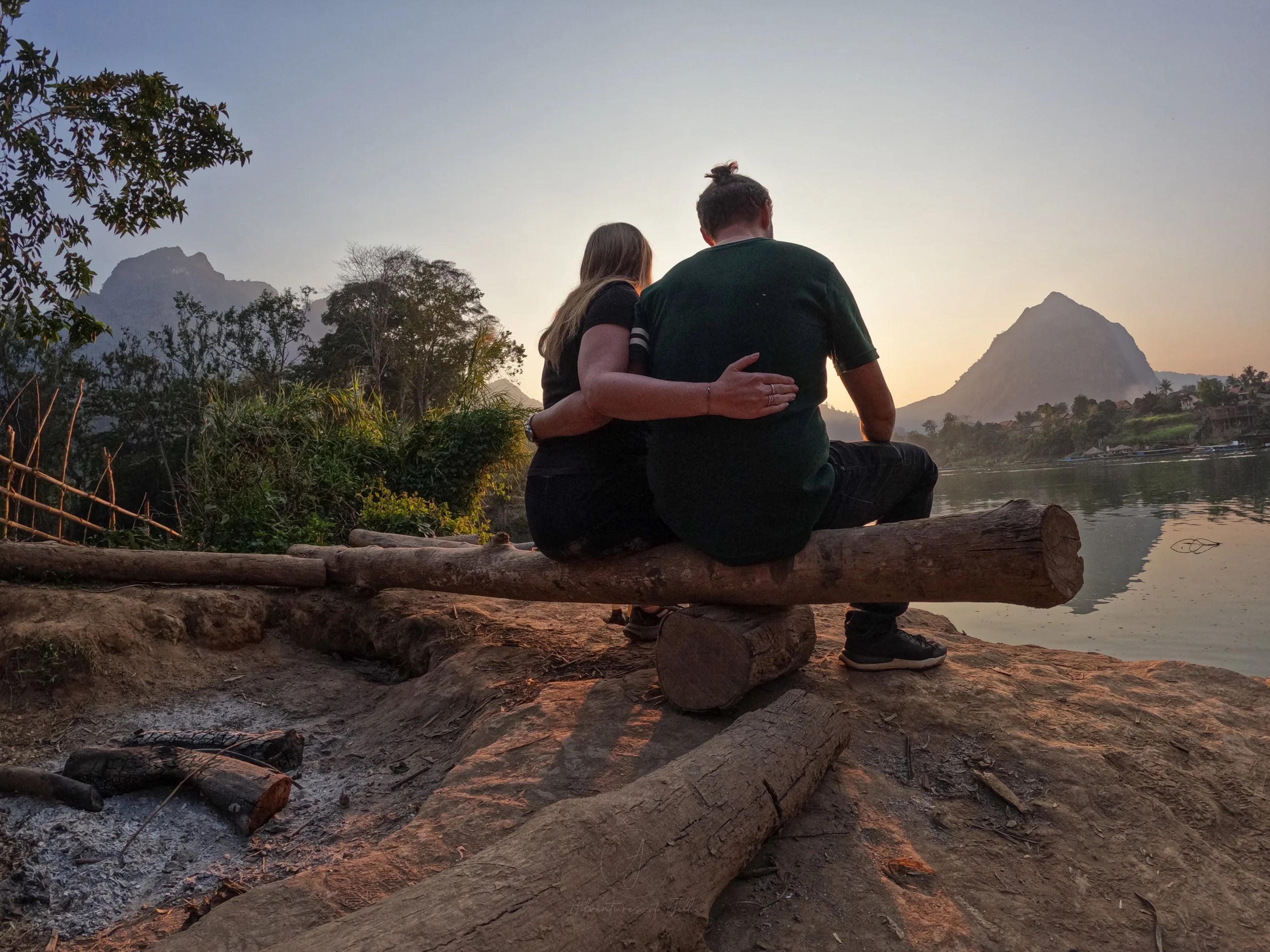
Our favourite place to watch the sunset is from the location we linked above. If you’re staying at the Meexai Guesthouse (more on this) in the ‘Where to stay’ section of this article) this spot is easy to find, simply exit the garden and turn right. If you’re not staying at Meexai, find the road that leads to the Pha Kao and Pha Noi Viewpoint (head towards Neiy Coffee & Restaurant on Google Maps) and follow it all the way down to the river. Here you’ll find a small fire pit and a log bench situated perfectly for sunset. We watched the sun go down from here a couple of times and it's a magical little spot.
It may not be the most “secret” of spots (as it’s quite clearly used by others), but we never had to share the sunset with anyone else here.
Other things to do in Nong Khiaw
Even though we’ve spent nearly two months in Nong Khiaw (a lot longer than most travellers stay in the town), there are still some things we haven’t managed to do and are on the list for next time.
Camping/Overnight Treks
All over town tour operators advertise multi-day treks that delve deep into the surrounding countryside. Almost all of these trips will involve a hike up to a viewpoint, a night camping at the peak or a stay at a homestay in a local village. Next time we visit, we are definitely going to do this as we can’t think of a more magical place to wake up and see the sunrise than from one of Nong Khiaw’s incredible peaks!
To book a tour in advance, why not check out this trip on Get Your Guide here.
For those up for a super hiking challenge (we’re eyeing this one up for next time), why not check out the overnight tours that take you above the Sleeping Lady to the very top of the mountain known by locals as “Nong Khiaw’s Everest”. The view from Sleeping Lady is incredible and we can only imagine being even higher would be phenomenal!
Tour packages from Luang Prabang to Nong Khiaw
For those who do not have the luxury of time on their hands, then you could easily book a tour to Nong Khiaw directly from Luang Prabang. Booking an experience like this would save you from having to book a ticket on the local bus and would incorporate a hike on the same day you arrive, which would give you a little more flexibility in your Laos itinerary. There are several different tour operators who run trips like these and you could easily book them whilst on the ground. If you would prefer to have everything booked in advance, then why not check out the following trips on Get Your Guide:
A 2 day 1 night trip where you hike up and camp at the peak of one of Nong Khiaw’s stunning viewpoints.
Or this 3 day 2 night trip which includes two hikes, a night in a tent and a stay at a local homestay.
If you would like to travel to Nong Khiaw in luxury from Luang Prabang, then why not check out this small boat trip and waterfall tour that picks you up from Luang Prabang, drives you to the Nam Ou river where you catch a boat upstream all the way to to the Tad Mok waterfall. The day finishes by dropping you back off in Nong Khiaw in time for a sunset beer!
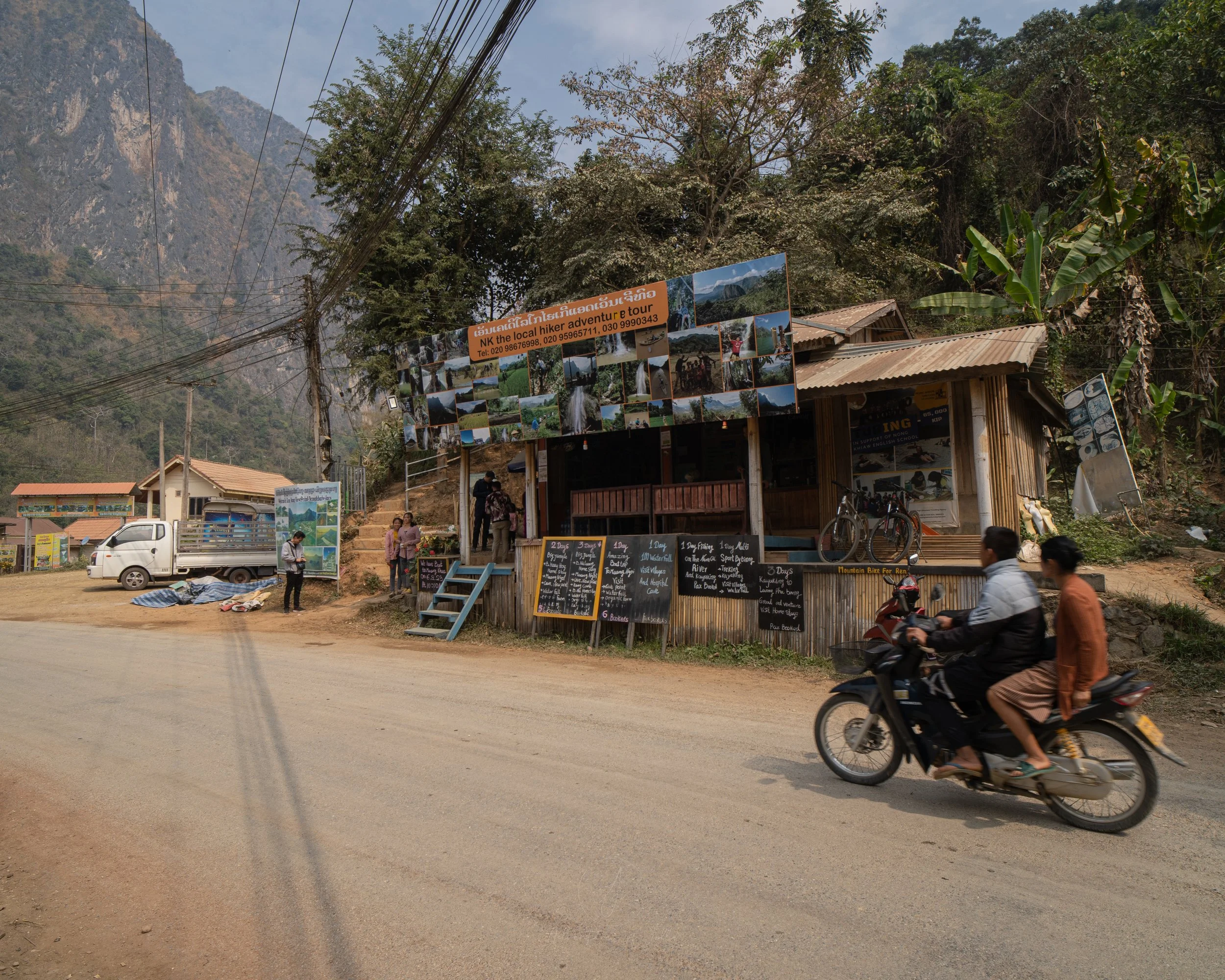
There are many tour operators up and down the main road of Nong Khiaw
Kayaking downstream from Nong Khiaw to Luang Prabang
We were so tempted by this! From Nong Khiaw you can book a three day, two night kayaking adventure that takes you all the way back to Luang Prabang via the Nam Ou River. Depending on the season, you will either stay in home stays or camp on the riverbanks.
From Nong Khiaw, you will paddle your way downstream taking in the Nam Ou and then the Mekong’s river life along the way. If you do book this experience, you will leave your bags with the tour operator and they will get driven to Luang Prabang for you.
The only reason we didn’t do this was that we ran out of time on our first trip to Nong Khiaw and so had to take the four hour bus rather than the three day kayak. The second time we came back, we travelled to Nong Khiaw from Luang Prabang. As we were travelling at the end of the rainy season and the rivers were high and rain was possible, kayaking upstream just didn’t have the same appeal!
Where to stay in Nong Khiaw?
Nong Khiaw has a plethora of accommodation to choose from, stretching along both banks of the Nam Ou river, there are lots of guesthouses, homestay’s, hostels and hotels. Before we came to Nong Khiaw we were slightly concerned about finding accom
modation as both booking.com and Agoda were not showing that many choices. This worry was completely unfounded though. As soon as we entered the town, there were so many options to choose from. Whatever your budget, there will be something for you.
Over our two trips to Nong Khiaw we have seen some especially busy days. So much so, that that our guesthouse did turn away some walk-in travellers, but during both our stays, there was never a time where the whole town was booked out.
Every time we’ve stayed in Nong Khiaw, we’ve chosen to stay at the Meexai Guesthouse on the southern side of the river. This no frills guesthouse offers private doubles, twin and triple rooms each with a private bathroom. Some rooms even come with a little terrace outside.
Meexai Guesthouse has always been a perfect stay for us. The rooms have always been clean and comfy and the family have always been super helpful and friendly. Plus the guesthouse faces west, meaning you get to see some phenomenal sunsets from the outdoor terraces. Breakfast is available to buy from the guesthouse, as well as a selection of soft drinks and beer. Meexai can also help to arrange activities in and around Nong Khiaw as well as booking tickets for your onward travel.
To book a stay at Meexai Guesthouse, click here.
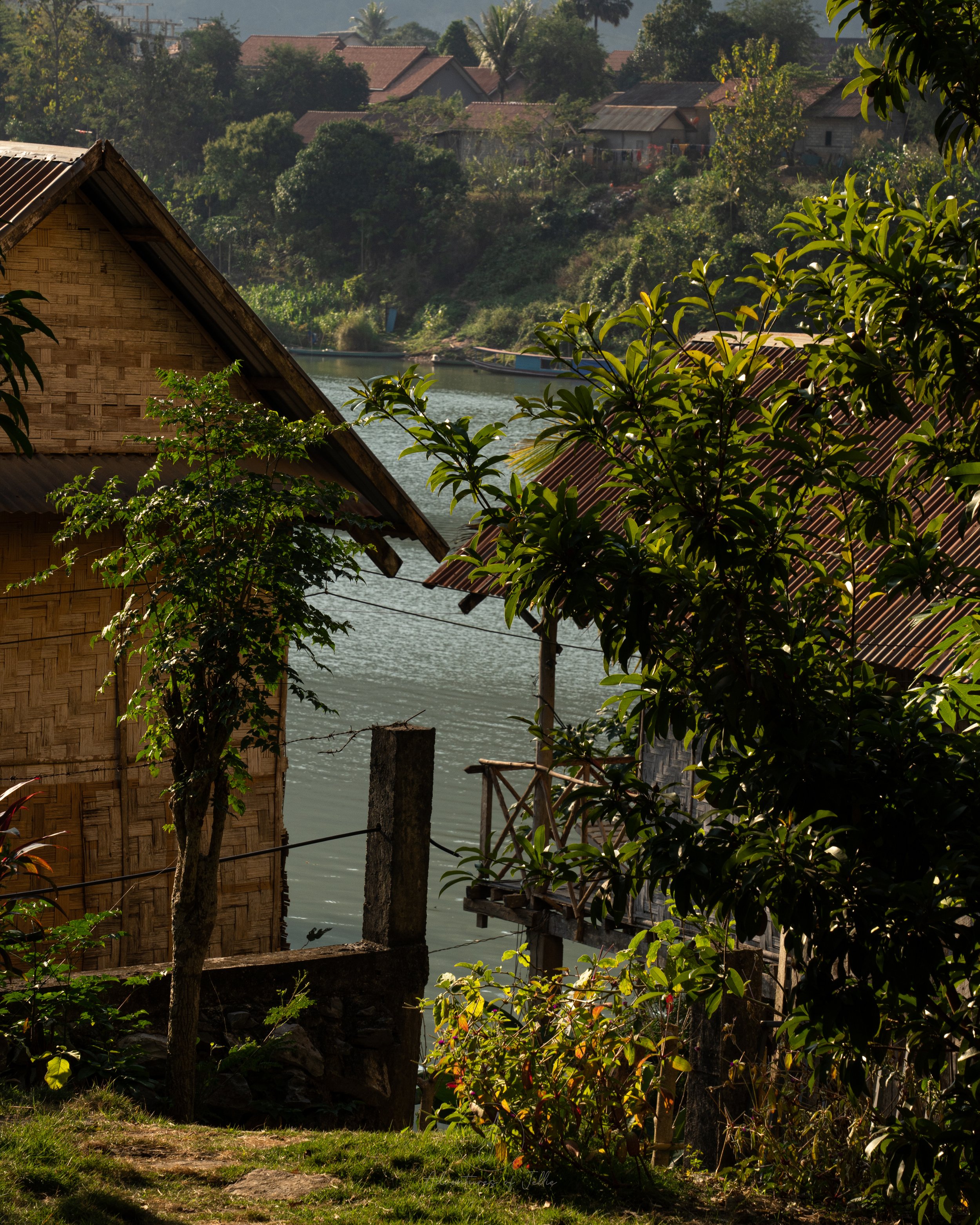
The garden and riverside views at the Meexai Guesthouse!
For those after a hostel stay, then there is the popular Eco Farm Hostel or the nearby Mountain View Dormitory. For those travellers who want a more luxurious stay, then why not check out the Nong Khiaw Float House. We have eaten lunch in their riverside restaurant a few times and have always looked in awe at their floating rooms.
To book your stay in Nong Khiaw, we would recommend entering your dates of travel into our handy map widget below.
How to get around in Nong Khiaw?
The town of Nong Khiaw is easily walkable, in fact you could easily walk through the whole town in under 30 minutes.
For those looking for two wheels, then throughout town there are plenty of places to hire a bicycle for the day. Bikes range from the bog-standard two wheeler kind with a basket at the front all the way to mountain bikes. The price of bicycle rental in Nong Khiaw seems to be standard across town, at a cost of 100,000 kip for the whole day.
Renting a scooter
For those looking to explore further a field, then you’ll need a more powerful set of wheels. Renting a scooter is easy and cheap in Nong Khiaw. There are many shops on both sides of the river that will lend you a scooter.
To hire a motorbike, you will need to leave your passport and agree to a very punitive rental agreement (basically do not break the bike!). Rental prices seem standard across town, with a full day scooter rental costing 200,000 kip per day, or 150,000 kip for half a day.
We’ve always rented a bike from the Three Sisters shop (location - approximate location as no Google Map listing) and have never had any problems with the rental. The bikes we’ve rented have worked absolutely fine and got us to and from wherever we wanted to go with no issues.
If you are planning to rent a scooter in Nong Khiaw, always, always wear a helmet! The roads are unforgiving in Laos and you are a very long way away from any hospitals!
From Nong Khiaw, if you want to stick on the tarmac roads, you can effectively go one of two directions. We enjoyed exploring both ways. The west takes you up the valley and through increasingly populous towns with the road taking you past some beautiful rice paddies. The eastern route winds through the hills, passing some of the caves and the museum (see above), through small villages and to a small waterfall (location) that you can paddle/swim in.
Hiring a scooter was a great way to see a little further afield, and a more rural, non-touristy Laos. As we passed through the villages, children waved (amongst other gestures), whilst dogs, chickens and other livestock provided a constant obstacle course on the road. With the wind in our helmets, and the countryside rolling by, we couldn’t help but think that this was a great way to spend the day!
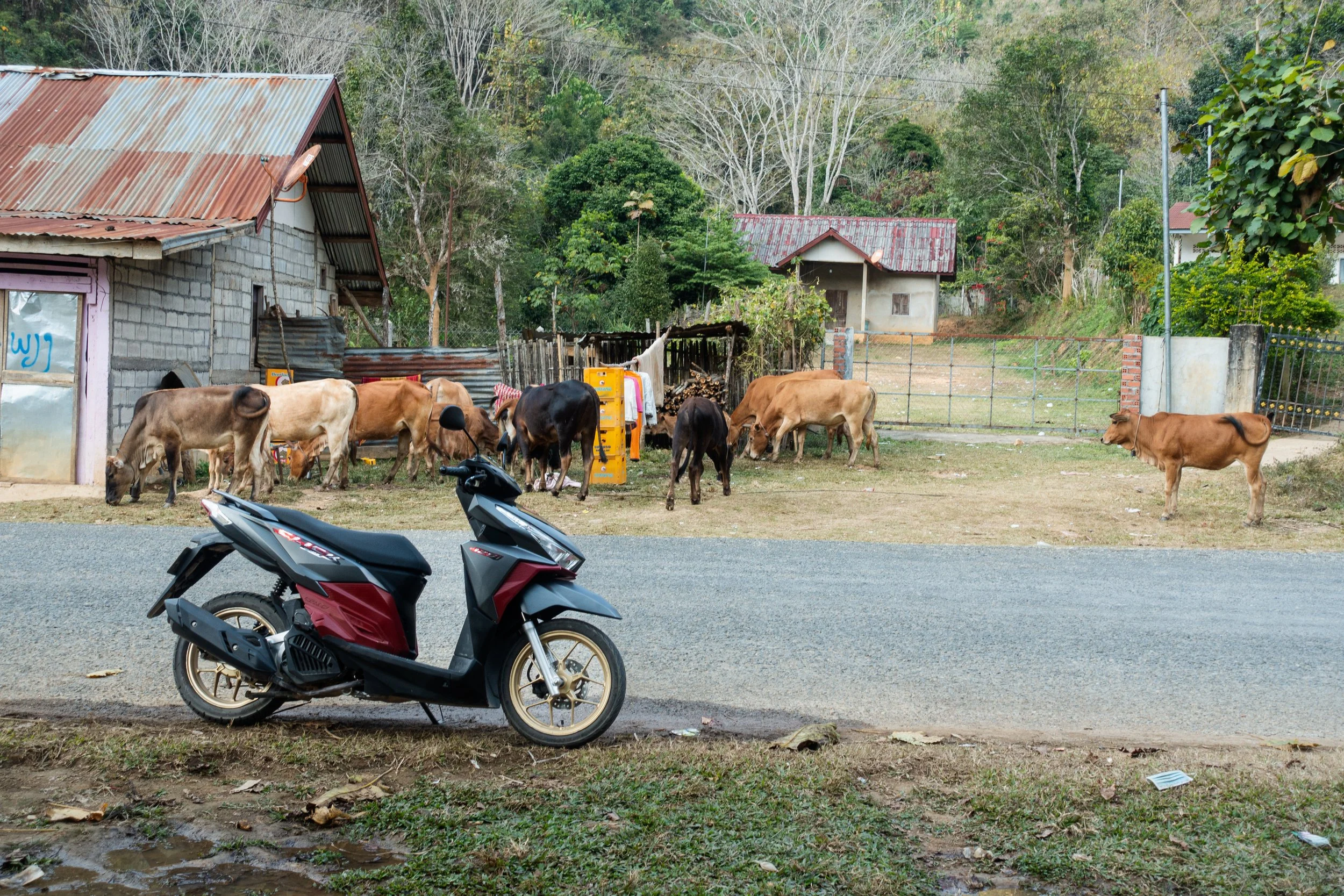
Nong Khiaw travel tip:
Bear in mind there is no real circular route so you will always end up coming back the way you came!
The roads in Laos are not the smooth perfect tarmac of the Swiss Alps, they are full of potholes, charging children and clueless chickens. Be very careful and don’t pretend you’re at the MotoGP.
If you have to get petrol just remember you don’t serve yourself, just pull up, open up your petrol tank and tell the attendant how much money you want to spend on your refill. Alternatively many shops sell bottles of petrol usually in old coke or liquor bottles, again pay what you need and the shop owner will help you fill up.
As always, make sure you’re sensible, be careful on the road, wear a helmet and remember, you’re in the heart of northern Laos and hospitals are very few and far between!
Where to eat and drink in Nong Khiaw?
For a small town, there are plenty of dining and drinking options available in Nong Khiaw. Whether you’re after some Laotian delicacies or you want something to remind yourself of home, there’s plenty of spots to head to. Here are just some of our favourites!
Where to eat with the locals?
Here’s some of our best spots in town to try out some local Laotian dishes.
Local noodle soup Laos style
(approximate location as no Google Map listing)
Sometimes great decisions are made out of pure laziness, this was the case with one of our favourite lunch choices. About two minutes to the right of our guesthouse entrance, along the main road on the southern bank of town, is a convenience store with a couple of plastic tables out front and two metal cauldrons of bubbling goodness. We sat, nodded and smiled our way through food ordering. We didn't know what was on offer or what we agreed to get, but as we've found in the past, trusting in the people who live in a place to give you good food is usually a good idea.
We ate at this tiny establishment many times during our stay and each time were given a different bowl of steaming noodles.
The first time we ate here was early in our Nong Khiaw trip. After a fun filled previous night in the bar, we shuffled out of our accommodation and decided to head to the closest possible noodle shop, to try and get our brains back online. As the bowls came out, and almost in unison, we thought “oh shit… it’s fish”. Now we know that in some countries, fish is regarded as the perfect hangover cure, but for us, this is very rarely the case. We were craving big, possibly beefy, bowls of comfort and fish was definitely not what we were craving. Oh but how wrong we were. As soon as we dipped our metal spoons into the broth, we knew we were in for a treat!
Flaked river fish, sat in the most comforting chicken based broth imaginable, swimming alongside lettuce, cabbage and bun noodles. We felt parts of our brain reawaken with every mouthful. As is quite common throughout Laos, our noodles were accompanied by a tray of fresh mint, water spinach, green beans and other crunchy vegetables and fresh herbs, as well as whole chillies for the daring and lime wedges for acidity. Mixing these accompaniments along with a potent chilli oil, led to one of the best hangover cures and possibly the best brunch choices we made in the country!
Over the next week or so we dined here repeatedly, each day the choices would be slightly different including delicious khao soi (very different from the Thai dish of the same name), a delicious tomato based broth, topped with minced pork and vegetables. The broth was light and satisfying, with sweet and sour overtones. We affectionately started to call this dish; Laos bolognaise as with the minced meat, tomatoes and noodles, it struck a strangely familiar cord… Have we been away too long?
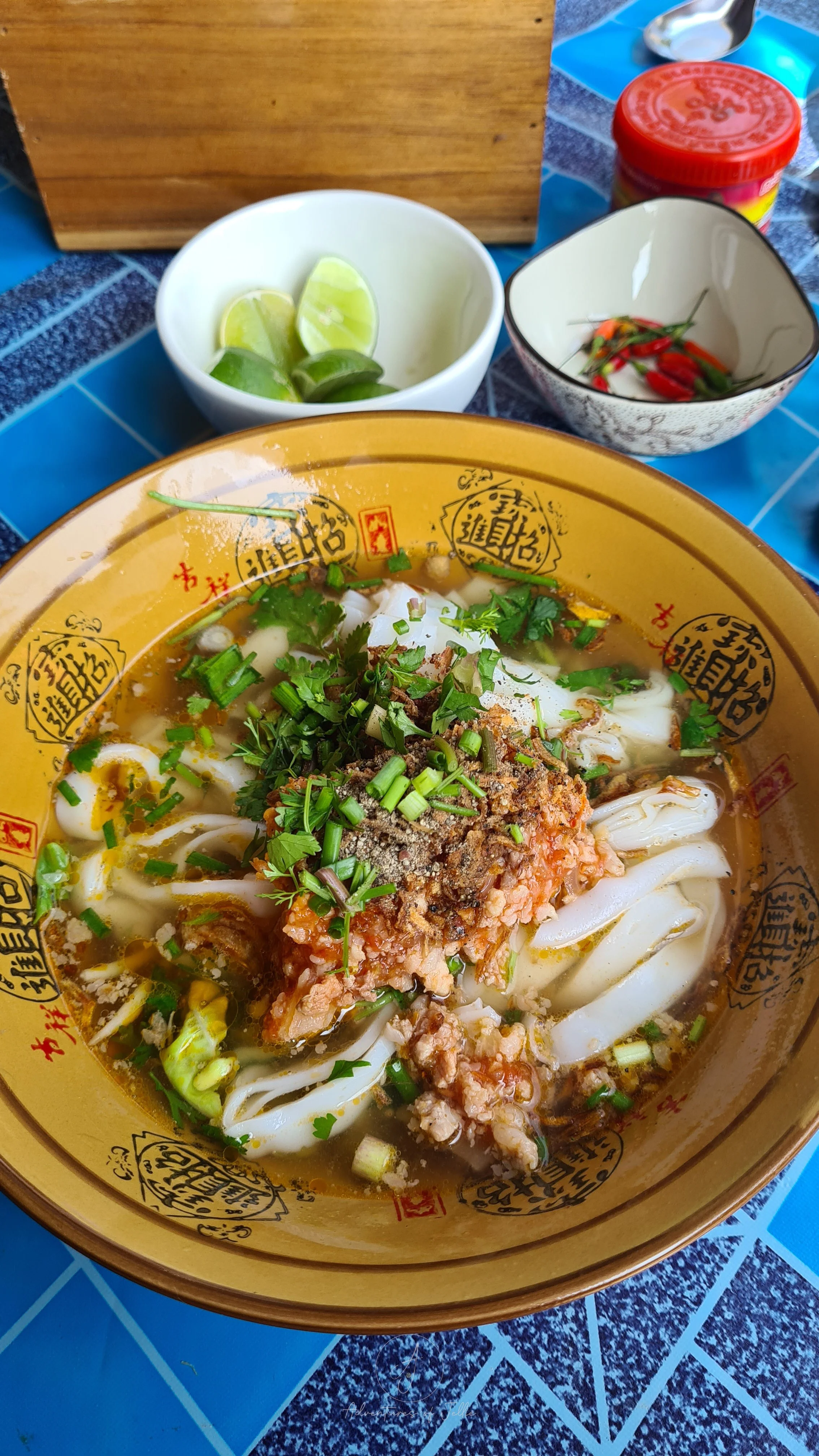
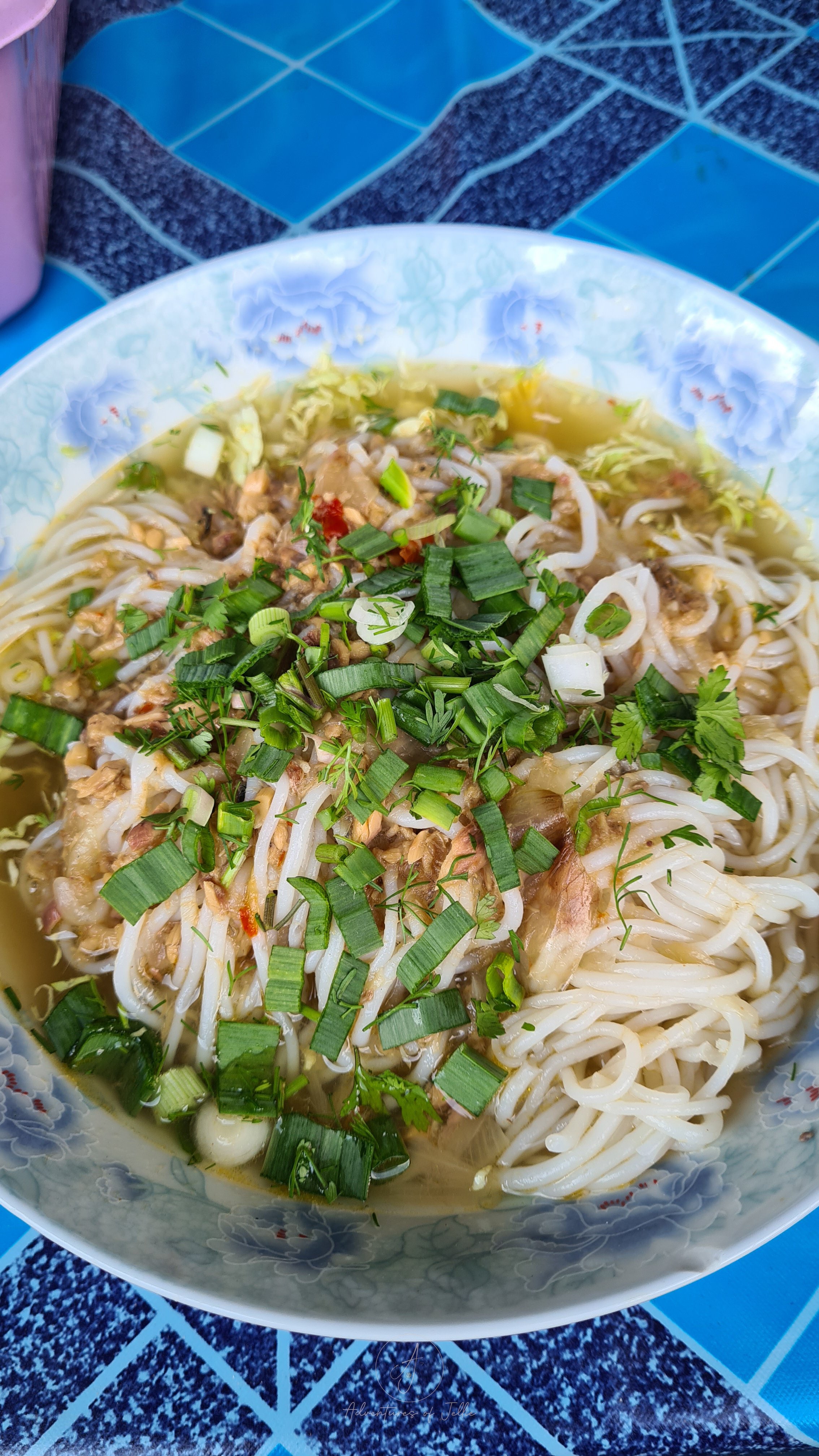
Another of our favourite bowls from here was the khao piak. This hearty noodle bowl was rich in chickeney flavour and topped with plenty of tasty leg meat, as well as one of the best blood cakes we ate in Laos. If you haven’t tried blood cake, really just give it a go. If you already eat sausages you already eat something far stranger than blood cake, and a good blood cake is meaty, smooth and rich in iron. A great accompaniment for a bowl of noodles.
The shop behind the noodle stall sells drinks as well as sweets and other sundries. On our last time here we witnessed the moves of a pro noodle eater… The lady next to us turned from her seat and grabbed a bag of rice cakes that were hanging from the ceiling of the shop above. These were swiftly snapped into crunchy bits and scattered about her bowl. Looking up we could see a variety of deep fried and crispy things hanging in the shop, any of which would have been a great addition. Next time Nong Khiaw, next time!
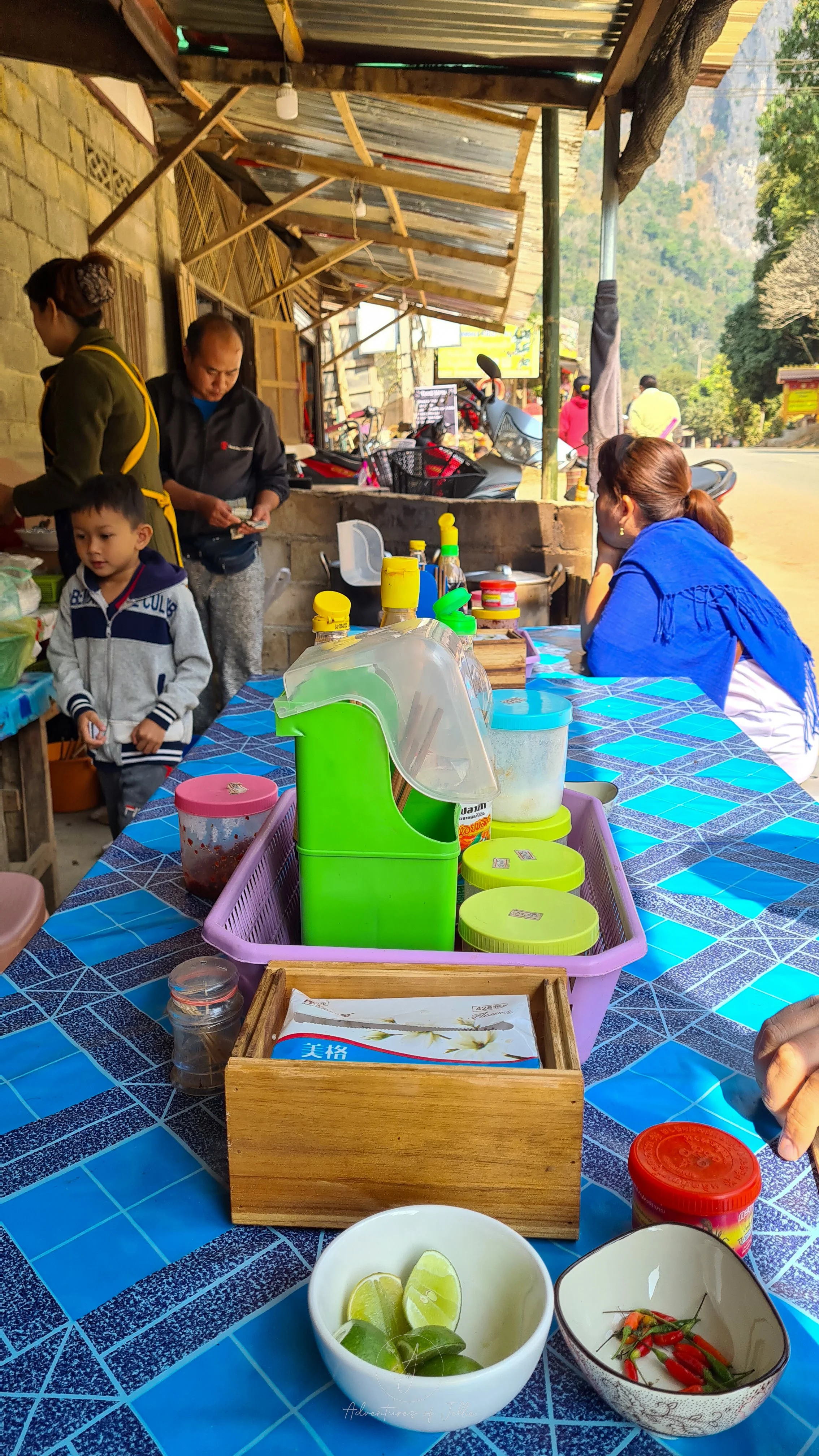
Honestly this was our favourite place to eat in Nong Khiaw, and one we would definitely recommend any traveller to check out. As you’ll see in the list below, we ate at lots of lovely places in Nong Khiaw, but there was a homely quality to sitting on these plastic chairs, outside a village shop whilst grannies laughed at us and small children buzzed around. Eating a bowl of noodles here felt like we were in the family living room. On the first day they looked surprised when we sat down, but by the end we felt like part of the family, even if we were the butt of most of the old ladies' jokes!
We are very pleased to report that this local noodle stall is still open and still selling their super cheap and super tasty bowls. On our recent return, the convenience stall part of the operation is a little smaller, but the small dining area is still open and the bowls of soup are just as delicious!
Ping Moo Restaurant
This became our go to most evenings on our most recent visit to Laos. This small roadside restaurant serves up some incredible plates of food, however, we always stuck to their phenomenal fried rice.
There’s something great about eating a well-cooked fried rice. Over our travels, fried rice has taken centre stage on many of our dinners, but honestly, the plates served at Ping Moo were up there as some of the best. Nutty yet full of flavour, Ping Moo was hearty, delicious and cheap.
Also we have to give a special shout out to the chilli oil here. It was fiery yet fragrant and lifted the fried rice up to a whole other level!
Noi & Ni Restaurant
Another favourite of ours, Noi & Ni sits in the heart of the main town and serves up some fantastic Laos style noodle soups, fried rice and noodles. We tried a huge array of their menu and our favourites were their take on a khao piak sen (chicken noodle soup) served with mama noodles and their omelette and rice. Both dishes were delicious and kept us full for the whole day!
You may have to wait a bit for your food as Noi & Ni is very popular with both locals and travellers and can get very busy at times.
Make sure you grab a smoothie from the small stall outside the front to eat with your meal, their mango smoothie was sweet yet really refreshing!
Noymany Coffee & Restaurant
We stopped here on our last visit for a final meal before we caught a long overnight bus to Sam Neua and it was a very fitting way to end a brilliant stay in the town!
As it would be our final dinner before a long bus journey, we ordered a big feast including or lam (a Luang Prabang stew) and a fish laab and enough sticky rice for two.
The or lam was delicious and completely unlike anything else we had eaten in Laos. The stew was made with a thick peppery gravy that clung to all the vegetables and chicken. Each mouthful of the stew was so aromatic. Underneath the fiery pepper, the whole dish came together with the citrus hits of lemongrass and warming chilli. We love to try new dishes and or lam was a delicious introduction to a completely different side of Laos cuisine.
The fish laab was equally as good. Morsels of sweet, minced fish melded together with the flavours of mint, coriander, fish sauce and garlic.
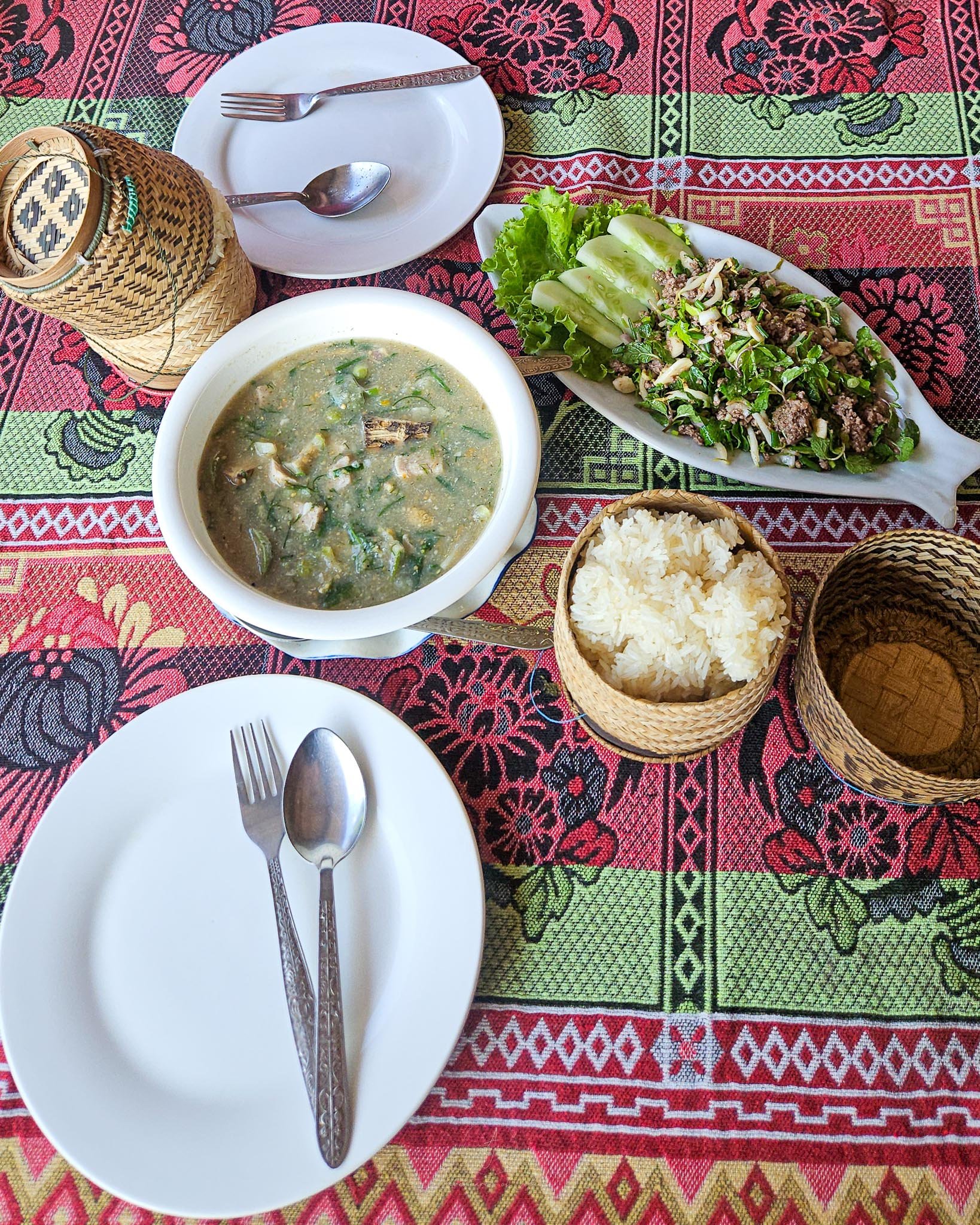
Our Laotian feast at Noymany Restaurant!
Philasouk Pharmacy Noodles
Just across the bridge on the north bank of the river is a little pharmacy, the Philasouk Pharmacy. Spread in front of the pharmacy are a few tables. These tables signal their purpose with a cruet of condiments, it was noodle soup time again. We ordered two bowls of chicken noodle soup and were quickly presented with plastic baskets full of mint, lettuce, green beans and lime, followed by two massive bowls of steaming chicken noodle soup. The noodles were wide, flat rice noodles, submerged in a delicate peppery broth. This next bit is going to sound mean, but honestly it's a compliment - the star of the show was the condiments, specifically the chilli and garlic oil. A half teaspoon of this ruby red oil laden with chilli and deep fried garlic totally changed the bowl of noodles. Fiery, smokey and a little sweet it lifted the bowl to a whole new level.
Laotian BBQ at the Nong Khiaw Local Restaurant
On our most recent trip to Nong Khiaw, we passed this restaurant on the way to Sleeping Lady and spotted a sign that piqued our interest - ‘Laos BBQ’. Being adventurous eaters we knew that we couldn’t resist trying a Laos style BBQ so that evening we ordered a BBQ set for two.
Out came two baskets piled high with noodles, vegetables, meat and seafood and in the middle of the table sat a huge steel domed grill sitting on top of hot charcoal. What followed was an evening of fun as we grilled, dunked and flipped. If you’re after a fun dining experience, Laos BBQ is an absolute must!
We’ve written a whole article on our Laos BBQ experience here.
Namlin Lao Restaurant
Namlin restaurant is located a short walk outside of the main town, down the main road on the southern bank of the river. We stopped in here on our way to the Phathok Caves and it was so good we came back twice!
The menus were delivered by the adorable toddler daughter of the owner, who was very proud of her position, smiling and chatting with us in Laotian as she passed us the laminated menus. The restaurant setting was very relaxed, a central covered area of tables was surrounded by private dining pavilions for Laotian families. Each time we visited the tourists present were always outnumbered by the locals.

Namlin offers a small menu of Laotian and south east Asian dishes at a backpacker-friendly price. Fried rice, noodle soups, laab and pad thai are all available. We can definitely recommend their chicken fried rice which came out beautifully smokey, peanutty and filled to the brim with veg from their garden. Also the pad thai was delicious and very different from its Thai origins. Peppery, and floral with Laotian herbs it was much less rich than the Thai version. This pad thai was worth making the short trip to Namlin alone!
Where to eat some home comforts - The best spots for breakfast, brunch, lunch, dinner and coffee
Even the most committed travellers sometimes need that little reminder of home. Here’s our top places to eat Western food in Nong Khiaw.
Home Cafe / Home Coffee
Lured in by their wooden signs dotted all along the high street, we made our way to what claimed to be the best coffee in Nong Khiaw and weren’t disappointed! Run by a charming family (their tiny daughter made for an adorable waitress even if she wasn’t allowed to carry any actual cups), this street side coffeeshop sells the usual array of coffees either hot, cold or frappes style.
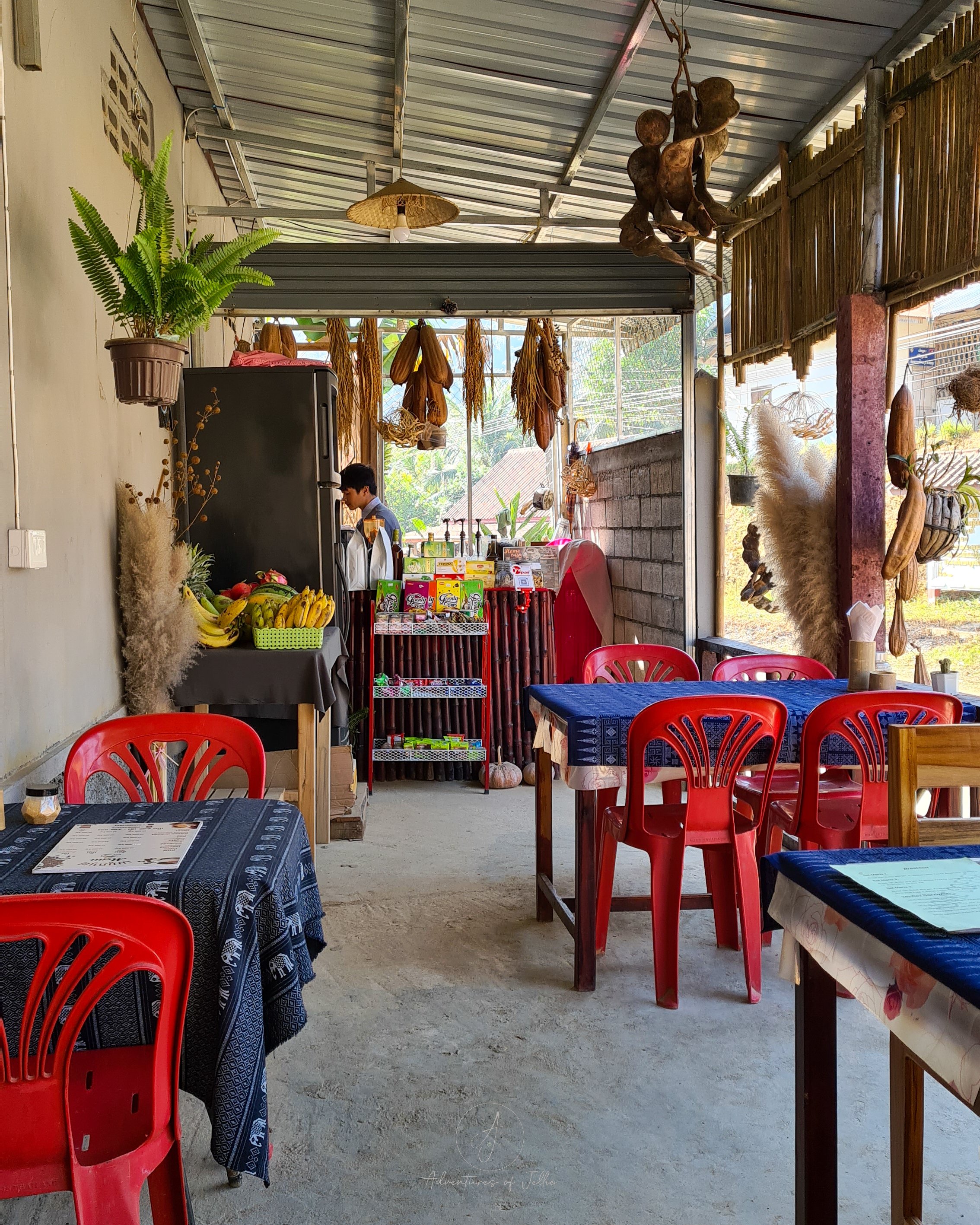
There is a limited food menu, with just a couple of breakfast options and some sandwiches. One morning, to fuel us up before hiking up Pha Daeng peak, we ordered one of their chicken sandwiches. Served on a toasted baguette filled with crispy breaded chicken, coleslaw and cheese, the sandwich was a lovely little break from the traditional Laotian fare and a great way to power us up the mountain.
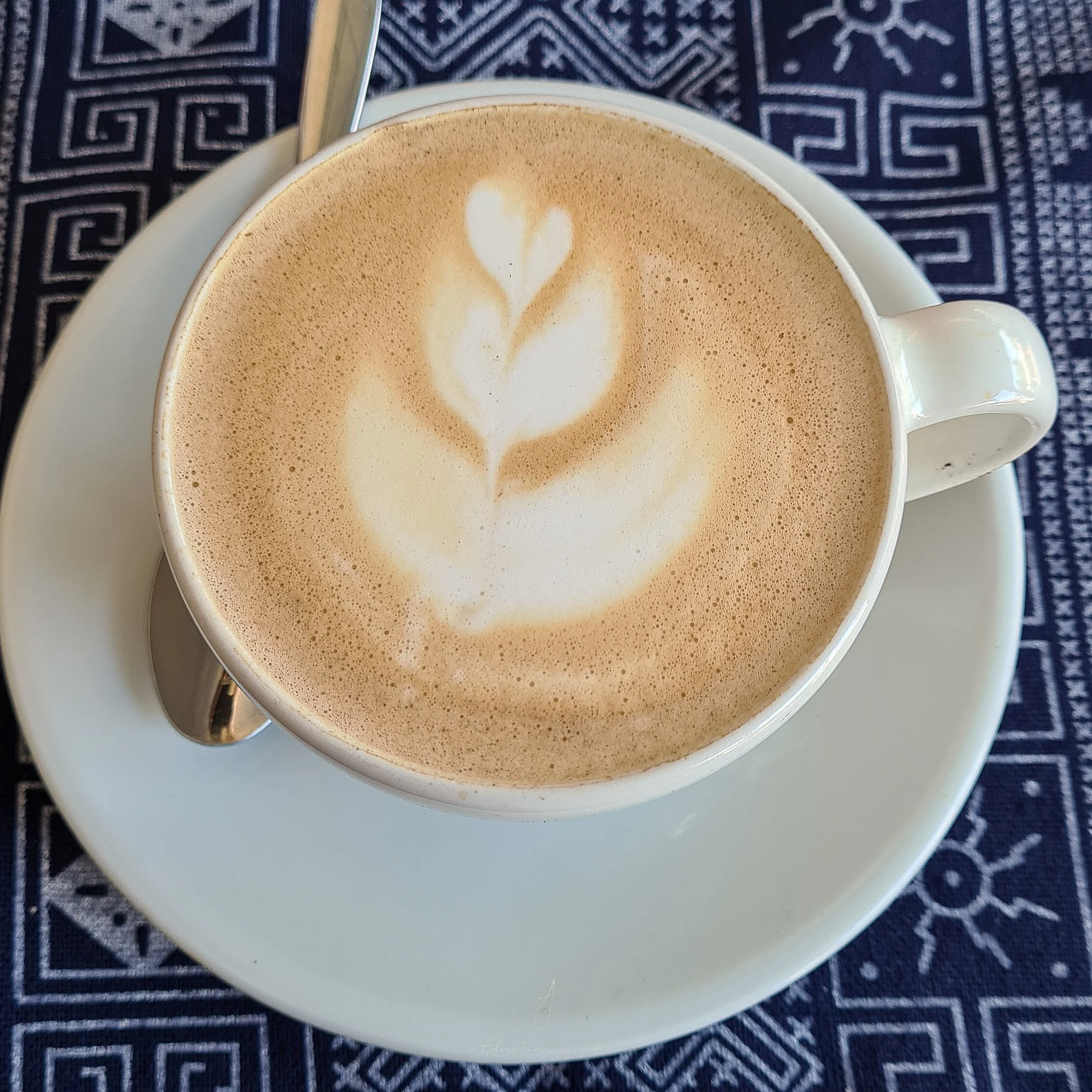
Home Cafe has become our “go to” for coffee almost every day we are in Nong Khiaw. The owners are super friendly and it’s always a really laidback affair. They also almost always give you a delicious set of bananas to enjoy with your coffee!
If you’re not into coffee we can vouch for their very moorish banana and peanut butter smoothie which is just as tasty as it sounds!
Couleur Cafe
We are, after all said and done, Londoners. We’ve been gallivanting off around the world for a big long while at this point, and were sorely missing a nice brunch. Don’t get us wrong, noodles are our favourite, and we’re now fully in the swing of having rice and noodles for breakfast, lunch and dinner, but sometimes you do just crave eggs for breakfast.
Couleur Cafe, located in town on the northern side of the river, was always popular whatever time of day. We ducked in for a late breakfast/early brunch and ordered two shakshukas from the menu.
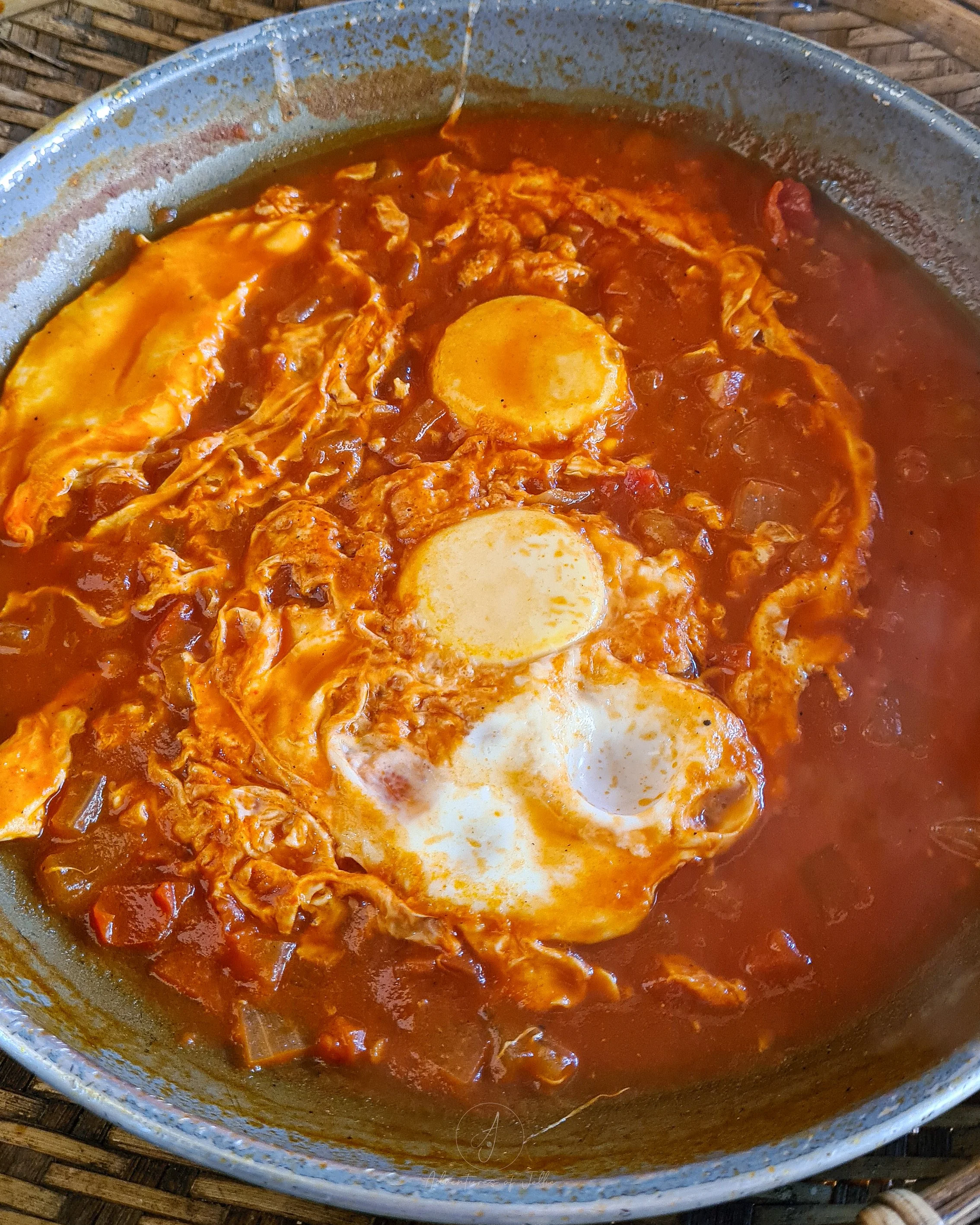
Shortly afterwards we were presented with enormous hot metal pans, filled with tomato, baked egg, paprika, oregano and chilli. This eggy feast was swiftly joined by crispy baguettes ready to be dipped and loaded in the delicious bright red mix.
Shakshuka is reliably good, but this was excellent. Crunchy baguette, loaded with just set egg and plenty of deliciously spiced tomatoey sauce, this was just what we needed.
Couleur’s menu is extensive and covers a wide range of Western and Laotian dishes. The small dining room is always popular so you may need to wait a little, but judging by our dish, it is definitely worth your time!
The cafe also serves toasties, baguettes, coffee and smoothies, plus a full lunch and dinner menu of Laotian and Western favourites. The cafe also sells delicious croissants and other pastries which are excellent for picking up for a breakfast on the go. We bought a small selection for a portable breakfast to have whilst hiking the Sleeping Lady viewpoint.
Mama Tia’s
Mama Tia’s is another fantastic brunch / breakfast spot in Nong Khiaw.
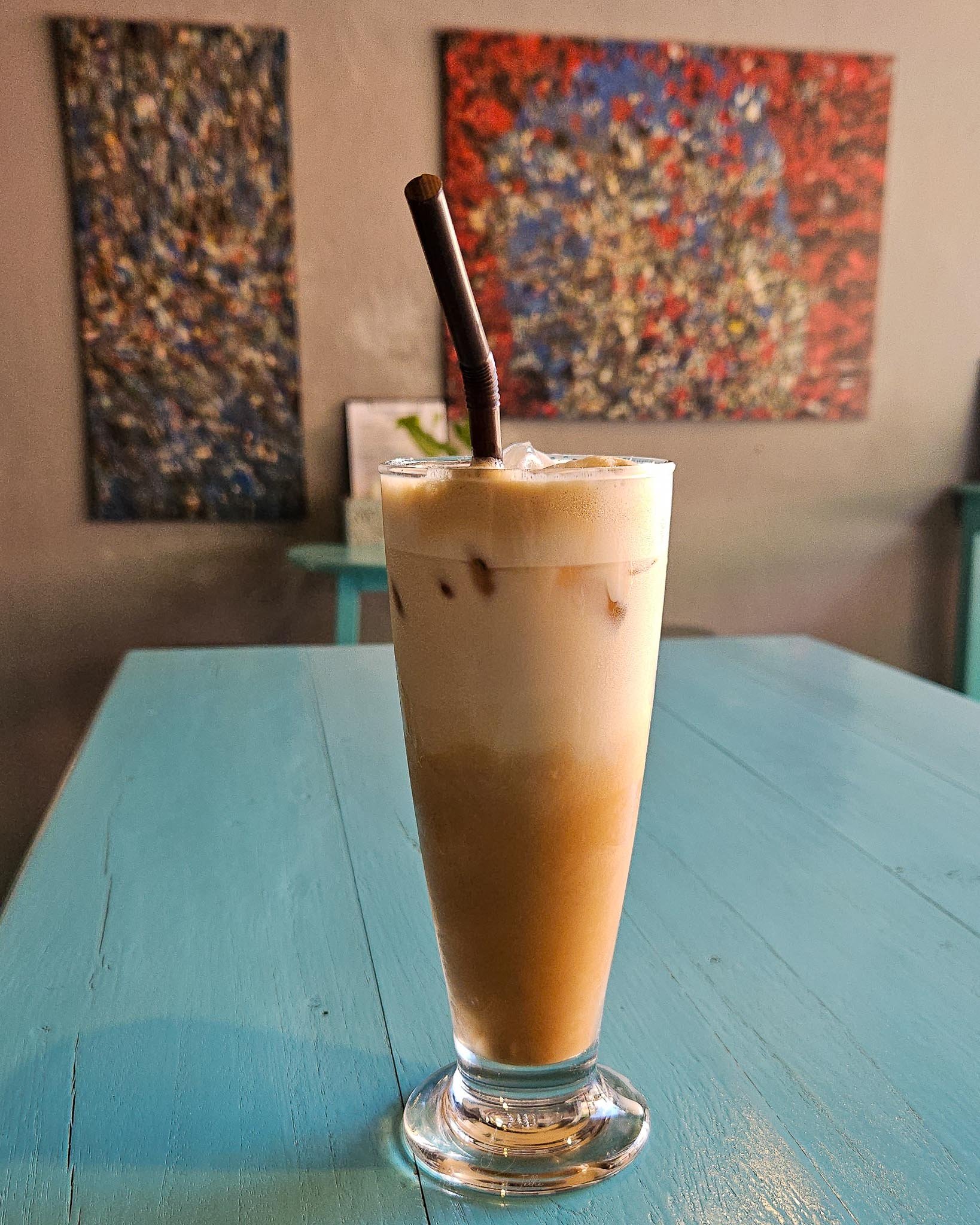
Decked out with vibrant wooden tables and colourful artwork, this small, yet very modern cafe serves up plate after plate of fantastic brunch dishes!
We would always order the shakshuka or the bacon and egg baguette alongside a coffee. Mama Tia’s gets very busy in the mornings as people fill up before catching their buses back to Luang Prabang. There may be a little wait for food, but trust us, it’s worth it when you get it.
Nong Khiaw The Float House Restaurant
For those looking for lunch with a view, then the Float House restaurant ticks all the boxes. This super modern restaurant, sits with a huge open sided window that overlooks the Nam Ou River and the towering, rocky side of the impossibly tall Sleeping Lady mountain (also known as Nong Khiaw’s Everest mountain).
The restaurant not only has one of the best views in Nong Khiaw, but it also serves up some of the best food we ate in the town.
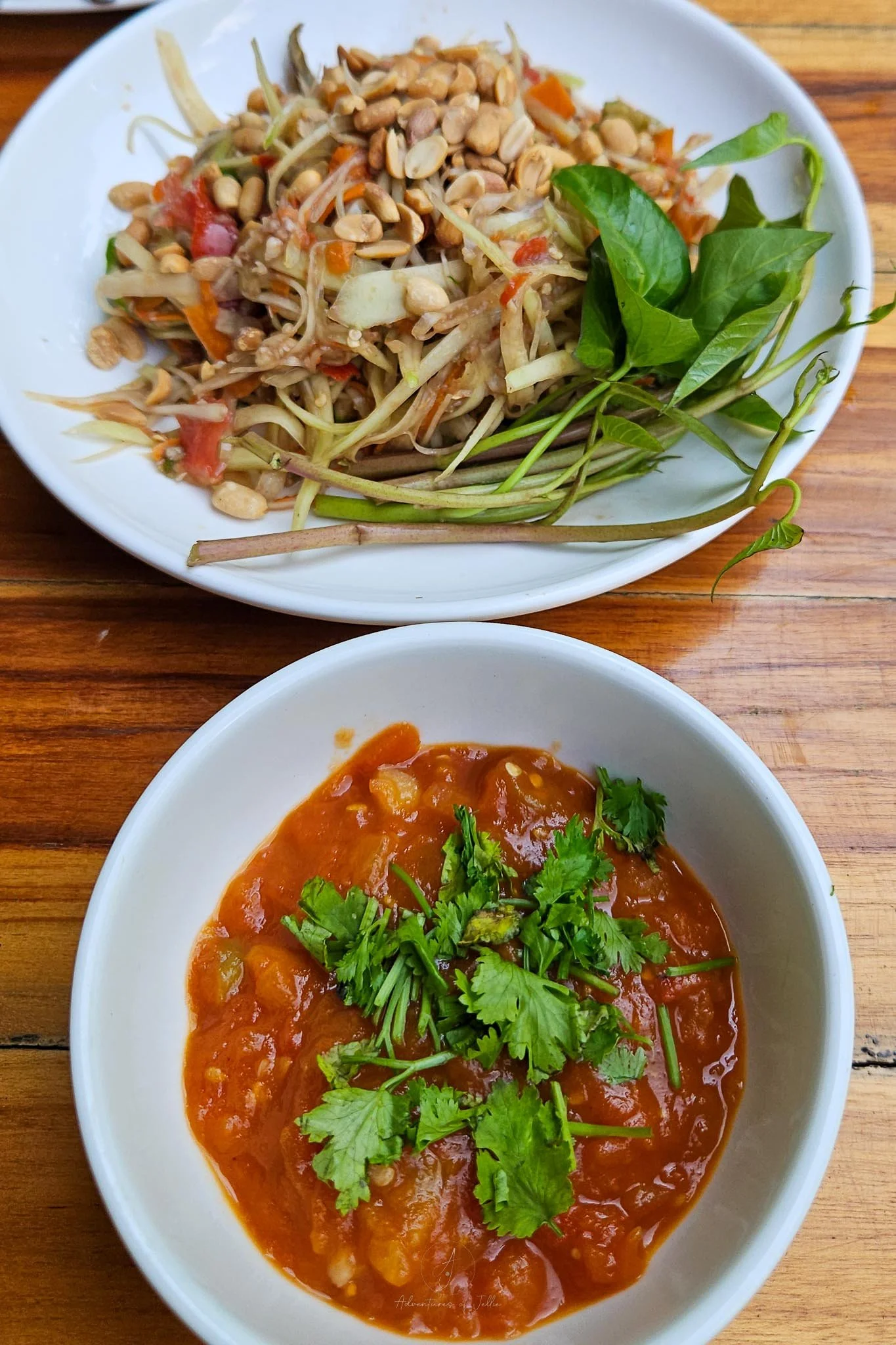
We treated ourselves to lunch a few times here on our most recent visit and never had a bad meal. Our favourite dishes on the menu were their spicy som tam salad made up of thin strips of papaya, sweet tomato, toasted peanuts and plenty of chilli to make the whole dish zing!
Our other favourite thing we tried here was a delicious tomato filled dish that was a cross between a cold stew and a dip that was smokey, sweet and peppery rich with coriander, onions and carrots that paired remarkably well with nutty balls of sticky rice.
The restaurant is a short walk from Nong Khiaw’s bridge but it’s absolutely delicious and the view is incredible!
Coco Home Bar and Restaurant
If you’re in the mood for a more upmarket dining experience (maybe you’re bored of plastic chairs?) then head in town to the northern bank of the river to Coco Home Bar and Restaurant. The restaurant is set with views over the Nam Ou river which makes for a lovely background to any meal. We visited in the evening and enjoyed a creamy red curry with chicken and vegetables, as well as a fresh and zingy laab salad. The beef laab salad we had in Coco’s was fresh, sharp and delicious and was a perfect contrast to the rich curry.
The food at this restaurant was served in the sharing style, so even if an individual item looks a little more expensive, it will be because the portion size is easily enough for two people.
We have been back to Coco’s and the food is just as good as we remember, especially the laab which was a stand out dish for us! Unfortunately there is a lot of construction going on around the river and as Coco’s is a set little further back from the riverfront, the view is getting a little more restricted. That being said, the outside dining room is still a very pleasant spot to sit in for dinner!
Chennai Restaurant and Halal Food
As the sun went down and the temperature dropped, we frequently were drawn into this cosy little restaurant in the evening to warm up with an Indian style curry. Chennai Restaurant of Nong Khiaw serves up all the usual curry favourites from dal makhani to chicken tikka masala, alongside rice, oven baked naan bread, samosas and other Indian restaurant favourites.
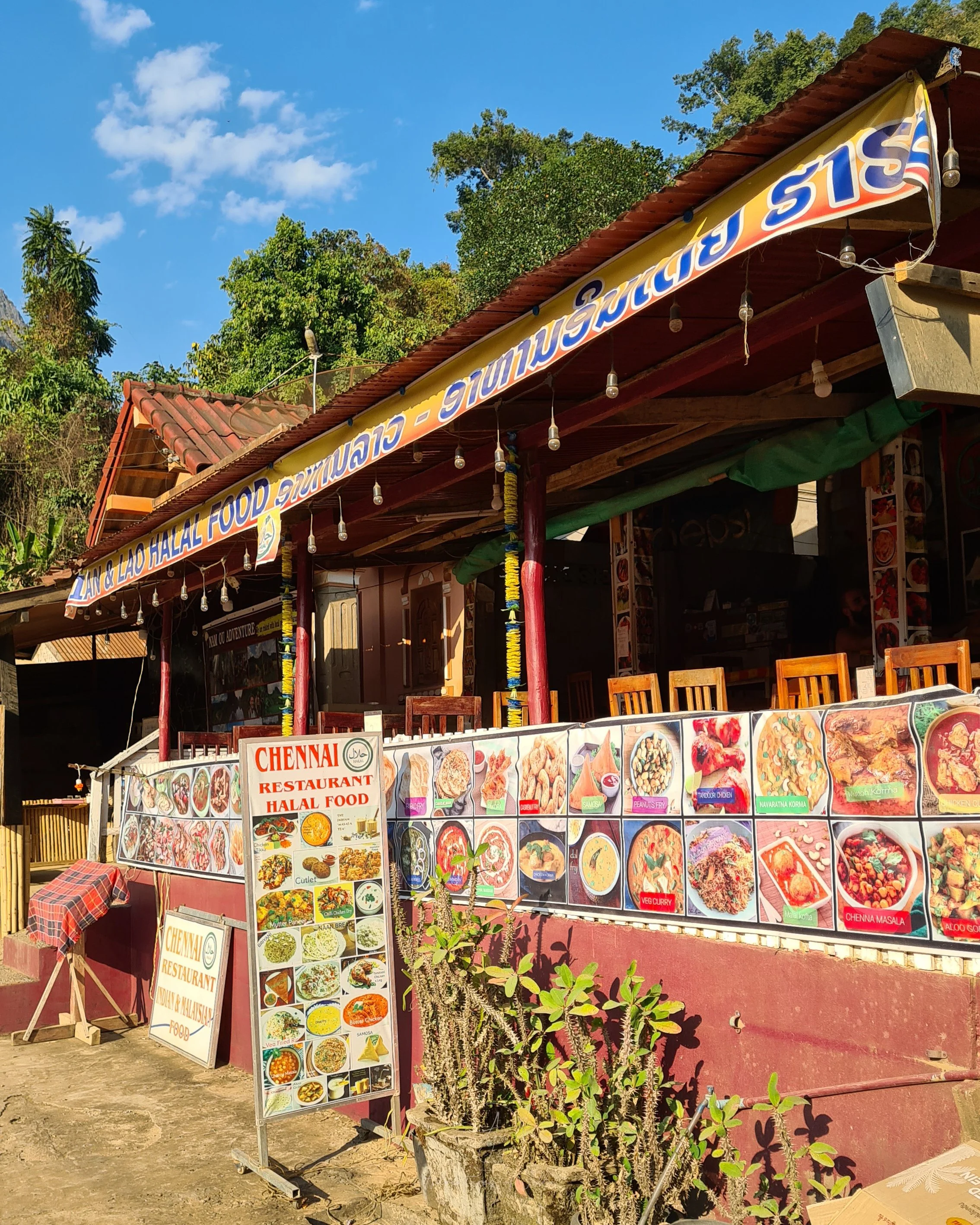
We tried a variety of their curries and were always pleased with what we got. Mildly spiced, yet hearty, these cheap, no frill curries really hit the spot, reminding us of England and our local curry houses. Just bear in mind, if it's busy the food may take a while, as all the food is prepared, cooked and served by just one family. Also sometimes not everything is always available on the menu - just remember you are dining in remote northern Laos!
Pizza and Pasta
You can find “Pizza and Pasta” on the southern edge of town, opposite Home Coffee. This French run pizza place prides itself on sourcing authentic cheeses and wines, and other French ingredients. We came here to begin a final night out with our friends before we left on our first trip to Nong Khiaw. As it was a special occasion we treated ourselves to something we had truly been craving… a cheese board!
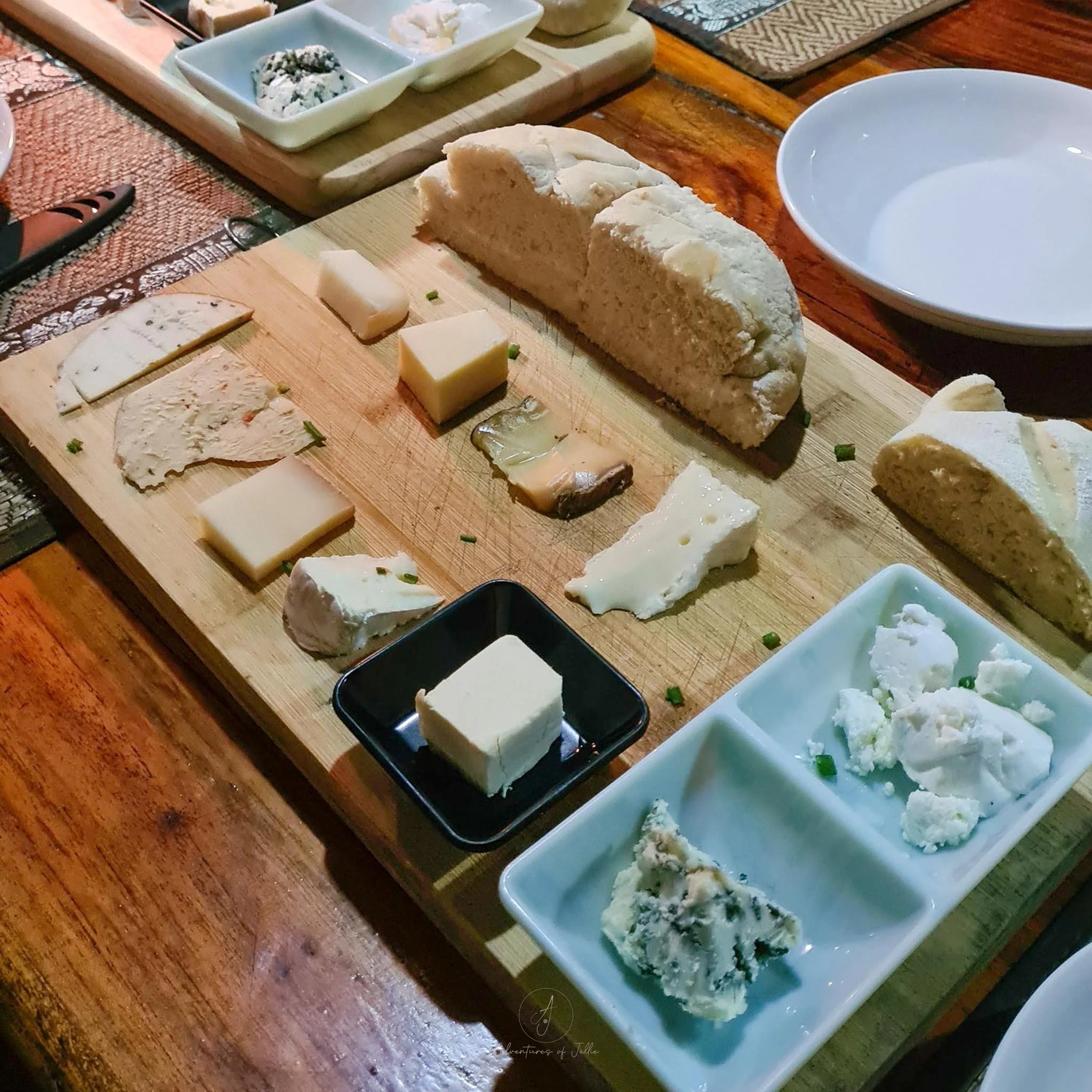
Sometimes you just need a plate of cheese!
Slithers of sharp hard cheeses, soft melting cheeses, and strong blues were presented on a wooden board, alongside carafes of wine. It was a world away from the delicious Laotian food we had been having, but was a worthy start to a celebratory night!
The restaurant also serves pizza, pasta dishes, burgers and fresh baked goods. If you’re enjoying a morning coffee at Home Coffee, you’ll frequently be able to see the owner making today’s batch of dough.
Where to have a drink - Nightlife in Nong Khiaw
Nong Khiaw has a couple of places to grab a cheeky beer from. Here’s some of our top bars for you to enjoy a sundowner drink from.
Trio Bar
The Trio Bar is Nong Khiaw’s most upmarket drinking venue. Set over two floors on the corner of the main high street / bridge, the Trio Bar serves beer, cocktails and coffee alongside a brilliant all-day menu.
We loved having a late afternoon beer here, alongside plates of bruschetta and chicken wings! Our advice would be to head up to the top deck as you get a fantastic sweeping view over the main road, bridge and river. It’s a great spot to unwind after a day hiking the peaks.
On one of our later nights in town, we stopped by here for a couple of late night beers and were even lucky enough to be guinea pigs for some of the bar's new cocktail offerings!
According to recent reviews, the owner has even set up a daily run club!
Hive Bar
Set a short walk (15 minutes) outside of town, just before the entrance to the Sleeping Lady viewpoint is the Hive Bar. You will see signs for it all over town, in the reggae bar colours of yellow, green and red.
The bar itself is decked out in the usual South East Asian reggae decor, of bamboo, makeshift furniture, and trinkets hanging from every wall. To the right of the bar, there is a small terrace, with seats facing out across the Morning Market and out to the limestone mountains surrounding Nong Khiaw. These seats are great for a sundowner beer.
The Hive Bar has great vibes, with a very laid back atmosphere, chilled out music, comfy seats and a very friendly owner. There are no set opening or closing times for the bar, in fact as you come into the bar, you’ll see written on a wall in colourful letters a phone number to call if the owner is not there to serve you a drink!
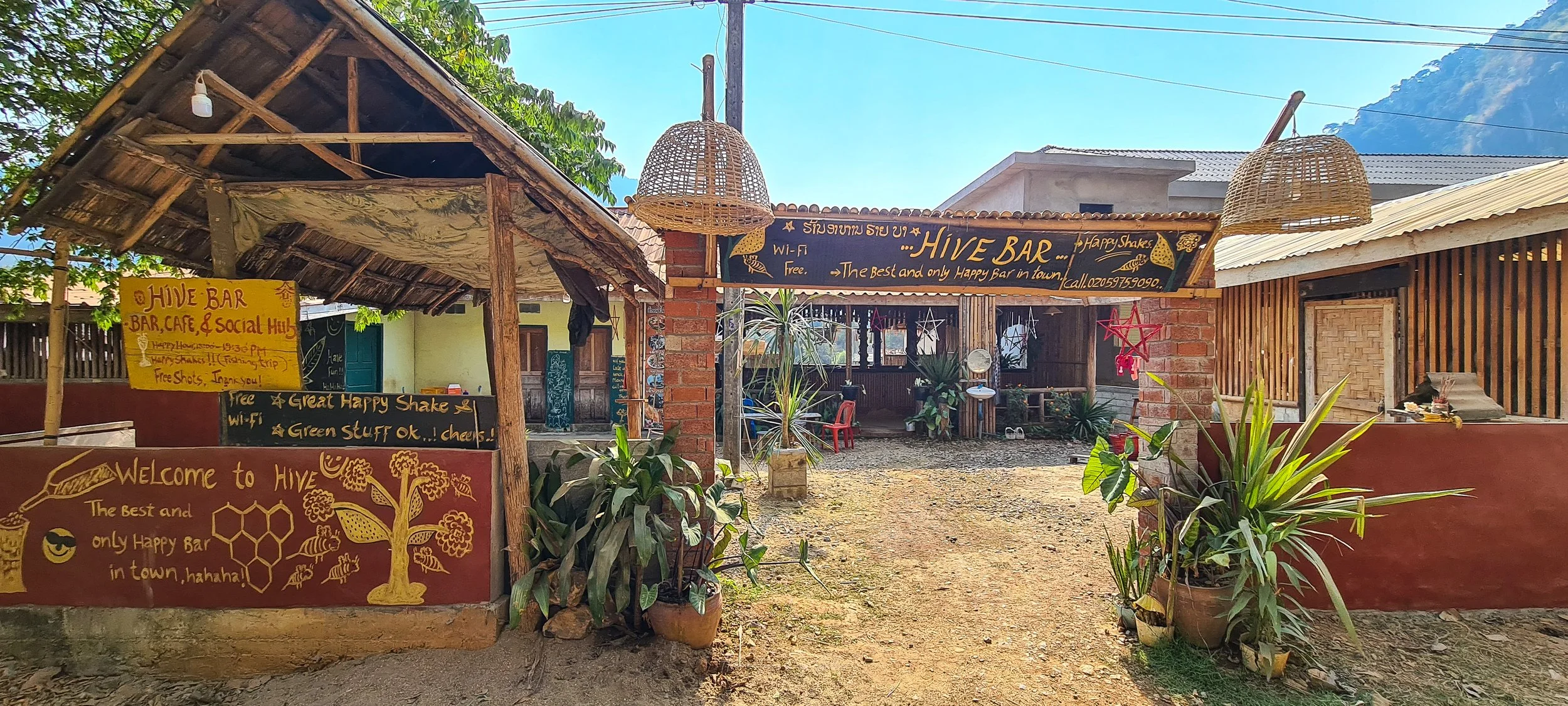
The bar also does fantastic food. We ate here a couple of times and the portions were generous and the food freshly cooked by the owner's wife. The spring rolls look comparatively expensive on the menu, but are well worth it. A towering plate full of perfectly crisp, deep fried rice paper spring rolls paired excellently with a bottle of cold beer Laos. Also worth mentioning was their fried chicken and ginger which was delicious.
As we mentioned the bar is a short walk from town, but definitely worth a visit.
Q Bar and Restaurant
Whilst in Nong Khiaw, the Q Bar was our hub, our unofficial home, our meeting place and sometimes our dinner venue. Spread over 3 floors and open to the elements on all sides, this wooden bar on the south side of the river serves cold beer, cocktails and food in a relaxed setting. The third floor is a great vantage point to watch the sun go down, whilst the ground floor has a home made snooker table and communal tables and sofas. We are biassed towards this bar as we made a load of good friends here. We enjoyed many a night of Beer Lao fuelled hilarity in this bar. On busy nights after the bar has closed, bar patrons may even decamp from the bar to a nearby field for a bonfire and bbq!
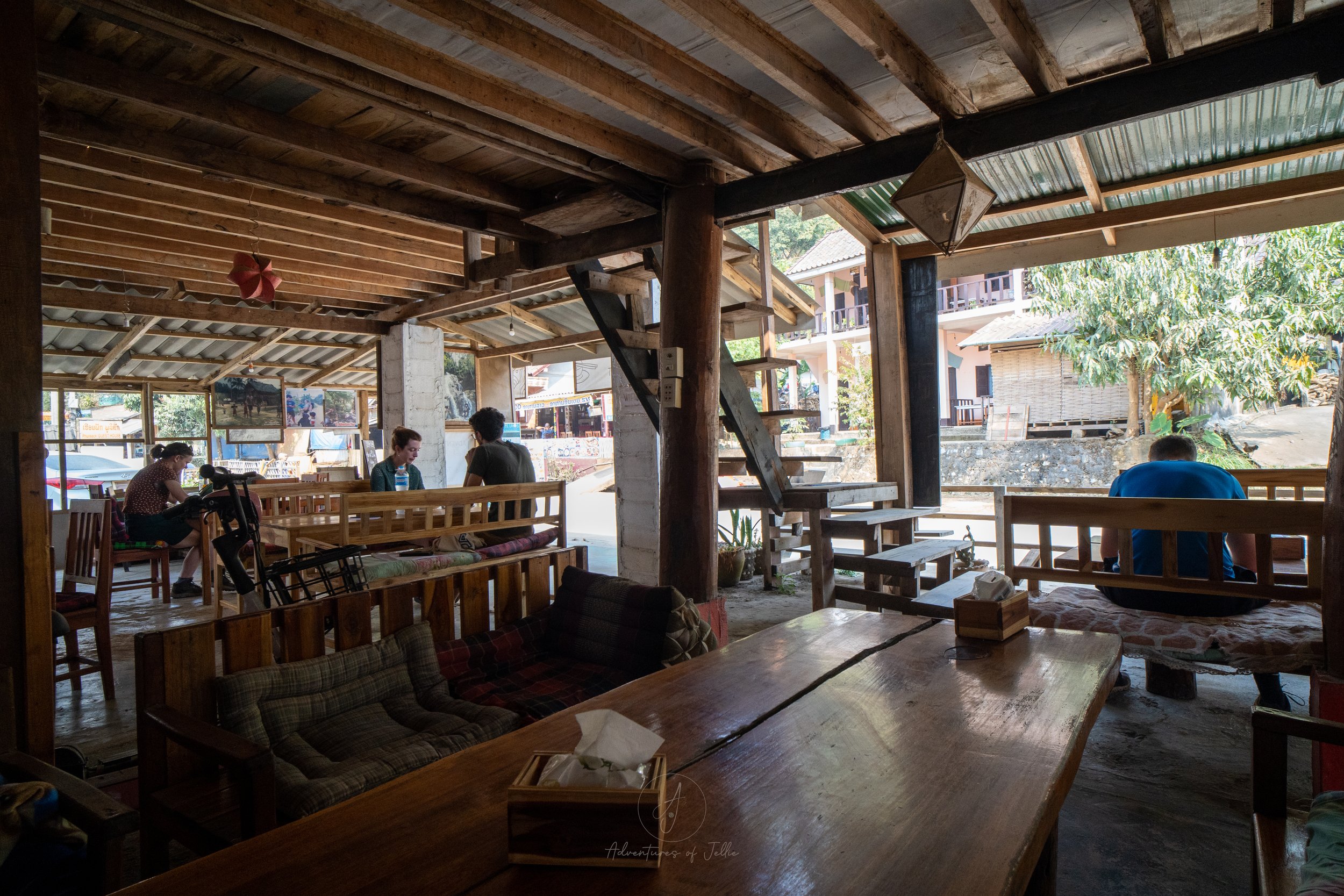
The Q Bar is everything you could hope for in a backpacker bar, offering a happy hour between 6pm and 8pm: buy one cocktail and get another one for free, a fridge full of cold Beer Laos, a chilled out atmosphere and lots of friendly travellers.
The food at the bar was a mix of Lao and Western in a backpacker friendly budget range. We would highly recommend the Laotian vegetarian hot pot. A charcoal fire is brought to your table with a steaming bowl of broth on top. You can then add mushrooms, vegetables, herbs and noodles and allow them to cook into the broth. When we were there the owner showed us how to poke a small hole into both ends of an egg, blow through and create an egg-drop soup effect! You then take a peanutty sauce, add it to your personal bowl and dole out ladles of steaming veggie goodness. Mix all this together then add chillies/fresh herbs and voila! An amazing bowl of food! We are not vegetarians but we can report that this was really delicious!
The bar also served great fried rice, noodles and warm soups to warm you up as the temperatures dropped in the evening.
Essential services in Nong Khiaw
Nong Khiaw is a very small town but it has almost everything a traveller could need.
ATMs
There are two ATMs in town. One is located in town (location) just outside the BCEL Bank and the other is on the other side of town, just next to the bridge (location).
We would recommend withdrawing as much cash as you can before you arrive. Nong Khiaw is almost 99% cash based and the ATMs can very often run out of money or break down and it can be days or even a week before they are refilled with cash or fixed.
Pharmacies
Nong Khiaw is well stocked with pharmacies selling all first-aid basics. There are two pharmacies basically next door to each other, the Philasouk Pharmacy (location) and the Sichan Pharmacy (location). We have bought paracetamol, ibuprofen and other basic medicine from both places. The only thing we would warn you about is to be careful if any of the young children are serving, we bought some paracetamol from a young boy who was on the desk and it ended up being very expensive! If you need specific medicines that are harder to get, make sure you are well stocked before you arrive.
There is also a small hospital in town (near the bus station). We (luckily) haven’t had to use their facilities but we’re sure it would be useful if you needed aid.
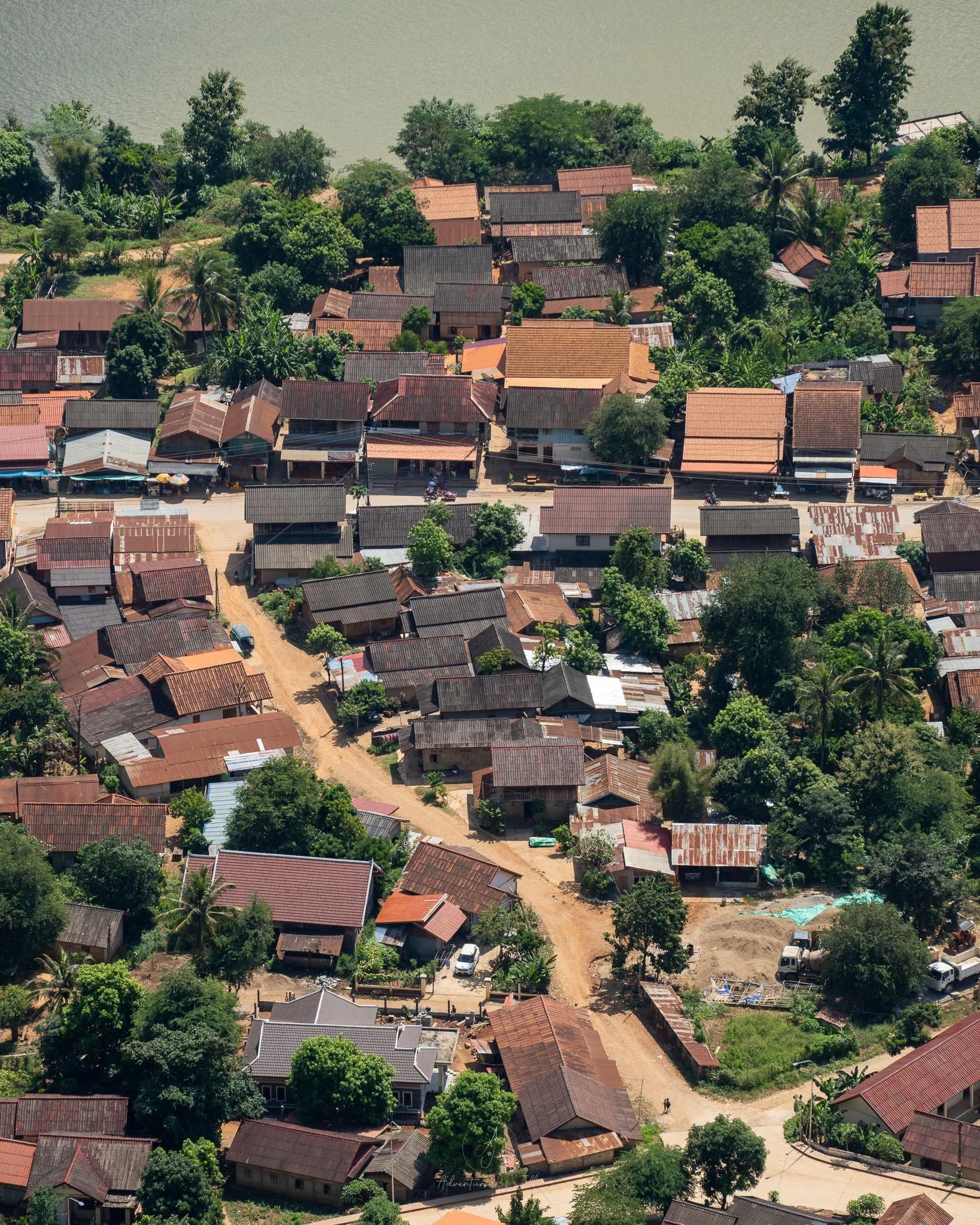
Petrol Stations
There is one petrol station (location) in town which is located on the road out towards the Sleeping Lady Viewpoint. When there is no fuel available the petrol station will close.
Mobile data coverage and WIFI
Despite feeling very remote, during both our stays in Nong Khiaw, we never had any problems with data coverage. Obviously there were times where we had absolutely no signal (travelling upstream between villages on the Nam Ou River, deep underground in caves etc), but honestly it really didn’t affect us and plus, you really shouldn’t be looking at your phone when you’re surrounded on all sides by such stunning scenery!
If you do need to get a Laotian SIM card then there are plenty of mobile phone stores in town. We needed to top up our Unitel data and had no issues finding a store to do this for us.
For times when you don’t have signal, we would highly recommend you download an offline map of the area from either Maps.me or from Google. We found Maps.me much more accurate when hiking up the viewpoints.
If you would rather have an eSIM arranged before you arrive in Laos, then why not check out the Laos eSIMS available on Holafly. We have used Holafly in both India and Thailand and had data as soon as we landed.
In terms of WIFI, almost every bar / restaurant / guesthouse in the town will have WIFI. We had no problems with browsing or streaming, but if you’re an avid gamer or someone who relies on uploading 8K videos then you may run into issues!
When is the best time to visit Nong Khiaw?
There are two seasons in Nong Khiaw. The ‘dry season’ which runs between October and April and the ‘wet season’ which runs between May and September.
The ‘dry season’ is considered to be Nong Khiaw’s peak tourist season as the weather should be dry and sunny and perfect for hiking. If you are planning a trip during the high season, check before you go about Laos’ “smokey season”. Smokey season generally runs from March to April and is where local farmers burn their fields. As the air is full of smoke, we have heard it's quite unpleasant and visibility drops considerably which is not what you want when exploring mountainous hiking trails. The views just wouldn’t be the same.
The ‘wet season’ is Nong Khiaw’s low season for tourists. From late April to June the temperature climbs and the humidity rises in the run up to the monsoon season which hits the town from July onwards. During these months it may not be possible to hike up to the viewpoints and some roads may be impassible. Also some accommodation, restaurants and bars may be closed.
The best time to visit would be between October to late February as the weather should be super warm and dry, which is perfect for hiking. Just be warned that during these months, the town will be super busy, accommodation pricier and the top beds will sell out very quickly!
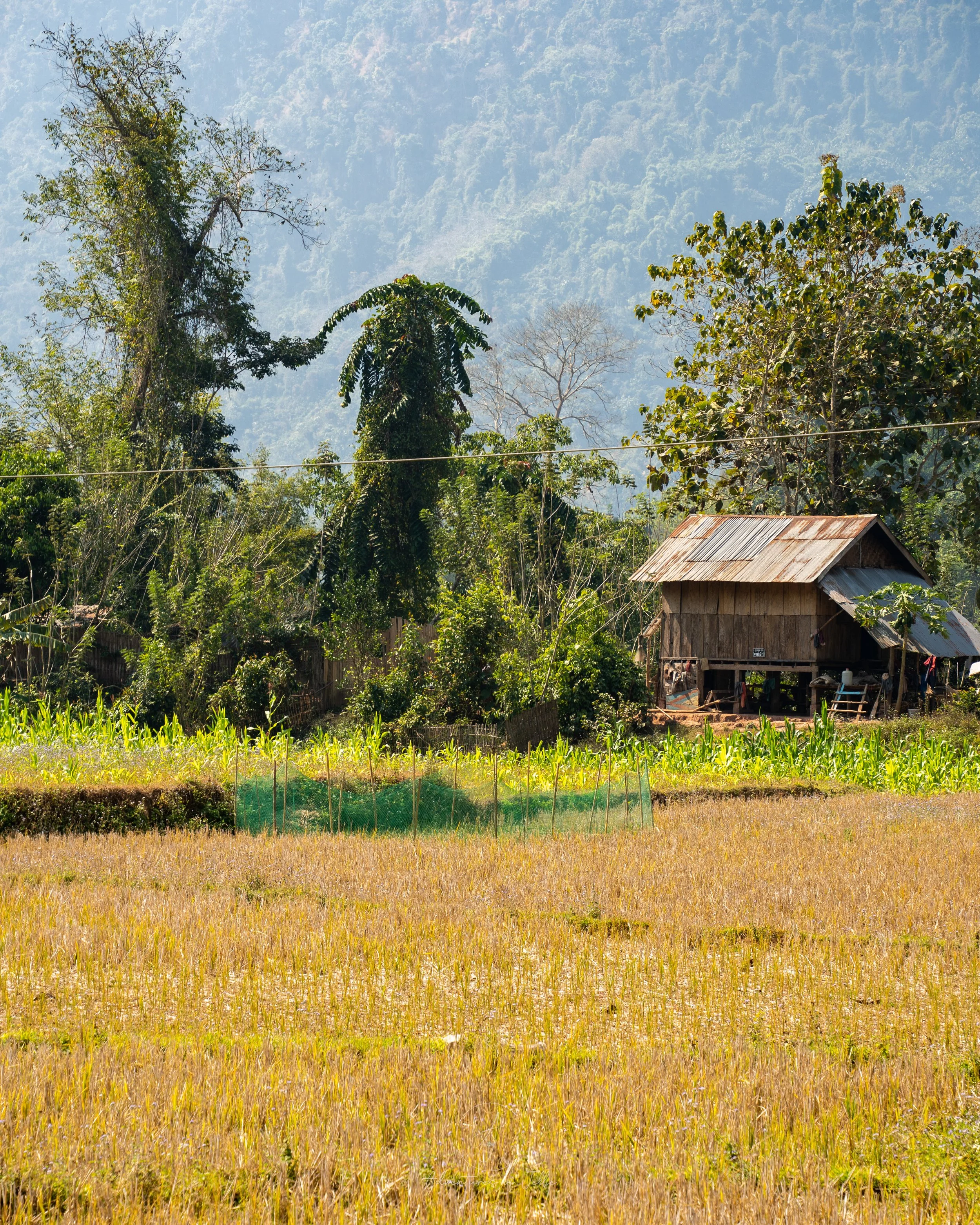
Nong Khiaw in the peak of the dry season! This photo was taken during our first trip.
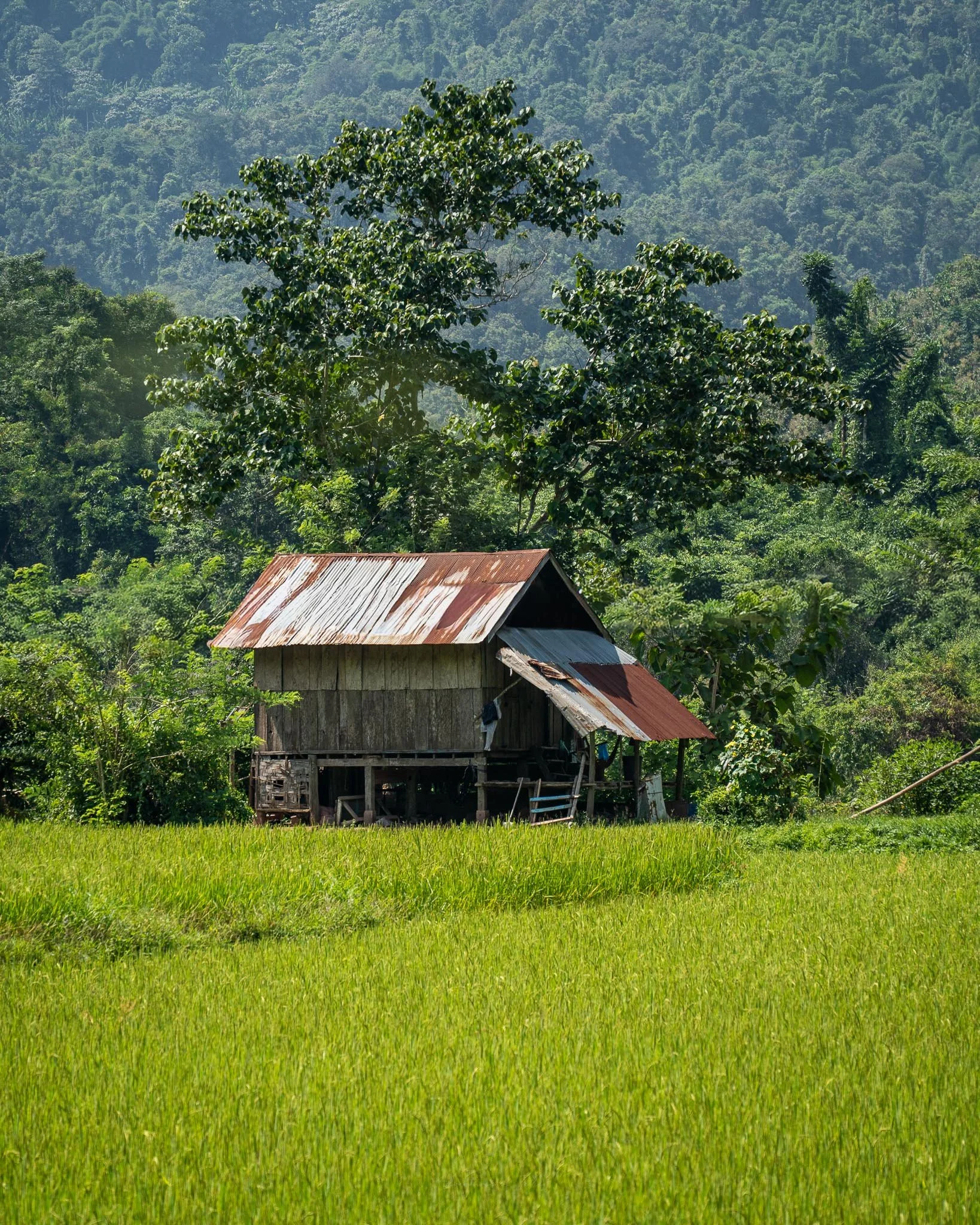
The same field taken at the very end of Nong Khiaw’s rainy season! This photo was taken during our most recent visit.
We first visited Nong Khiaw in late January and it was perfect. Hot, clear, sunny days but with much cooler nights. During our stay there was an unusual cold snap at night and temperatures did drop to around 6 degrees celsius, but by this point we would usually be huddled cosily in a bar, so we didn’t mind.
On our second trip we visited in October, just after the end of the wet season and it was stunning! The rice fields were vibrant green, the hiking trails not too busy and the weather super hot and clear. We were worried that some of the trails would be very wet and muddy following the end of the wet season, but luckily they were all completely dry. We were also lucky enough to be in town to witness the ‘Festival of Light’ celebrations, where all the locals and monks gathered at Nong Khiaw’s Buddhist temple to celebrate the end of Buddhist Lent. It was a beautiful sight to see. The whole temple courtyard was ablaze with candlelight and we loved watching the locals give offerings of heua fai (small boats made up from banana leaves, candles and incense) to the Nam Ou River.
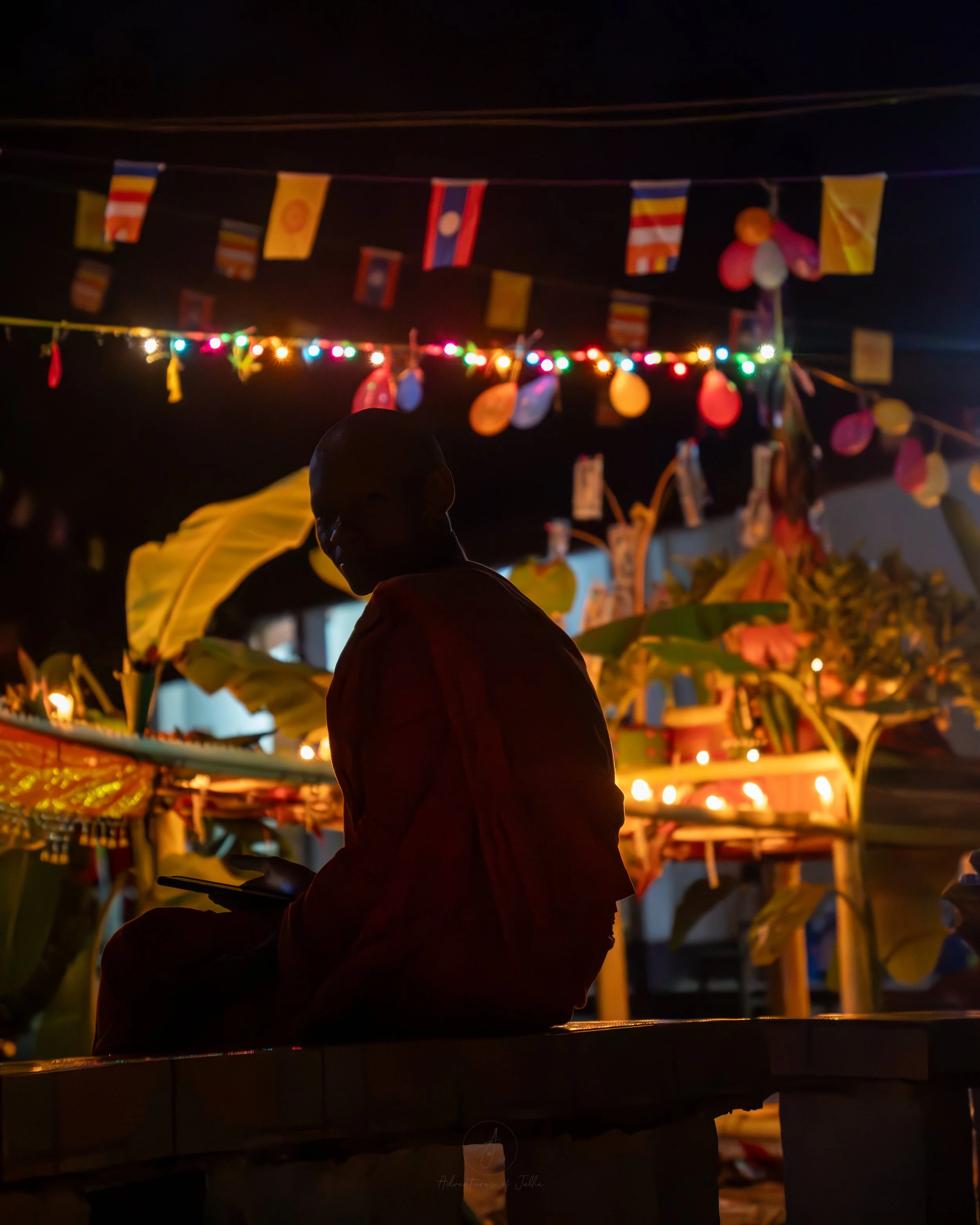
How long should you stay in Nong Khiaw?
How long is a piece of string? How long you stay in Nong Khiaw depends on how many activities you want to do whilst there. Being only 4 hours away from Luang Prabang, you could easily just stay for a couple of days and hike a few of the viewpoints.
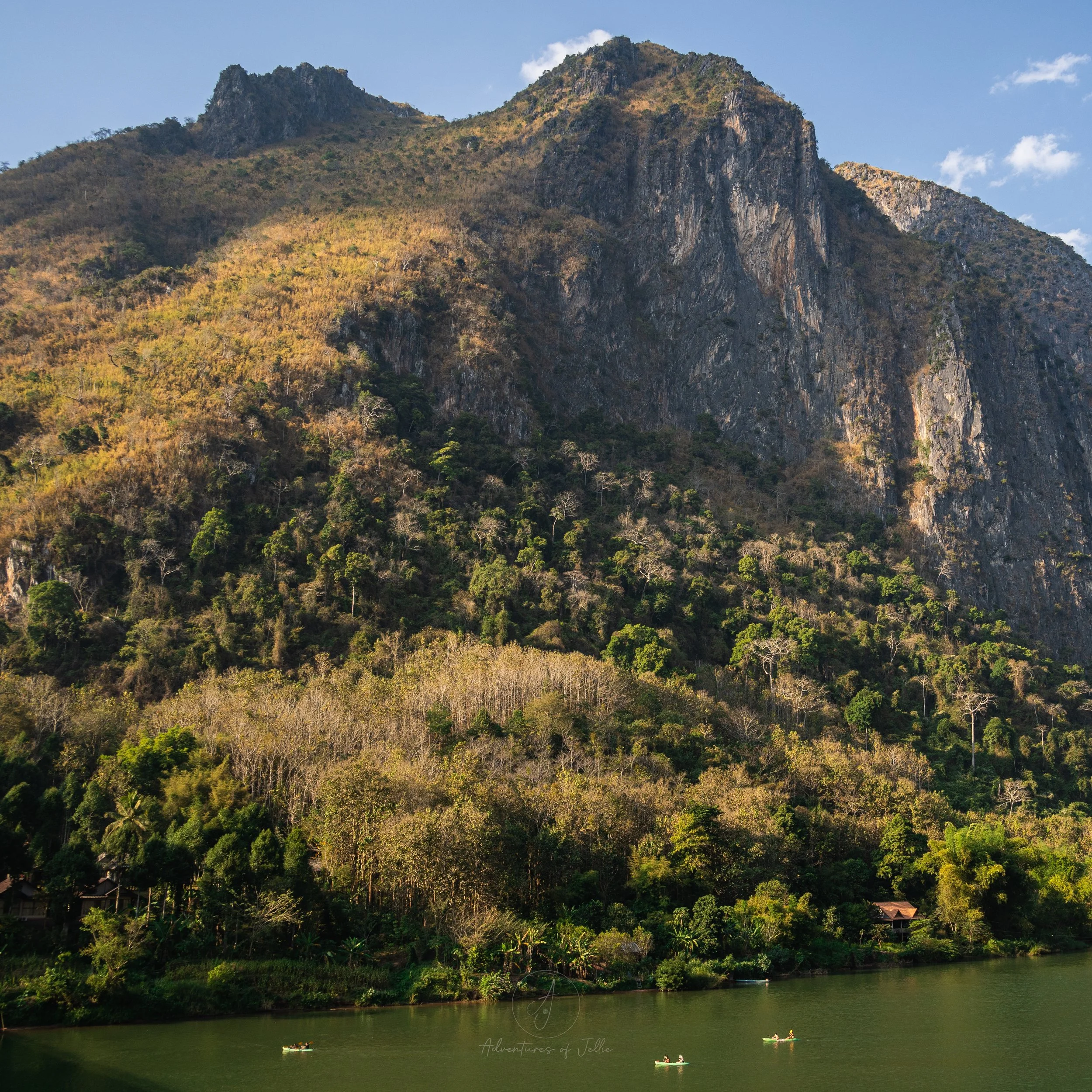
If you have some more time to spare though, you can easily spend a lot longer here. Over our last two trips we’ve spent nearly two months in Nong Khiaw and both times we’ve been there, we’ve met others that have stayed even longer!
A month or two may be a little long for some, but if you wanted to do all the viewpoints, the caves and a few multi-day trips as well as boating to other villages, then we would honestly recommend booking at least a week.
If you are super active and are an expert hiker, then you could probably fit the main four hikes into two days but these would be very busy days!
Honestly though, this was one of our favourite places, and if you're lucky with the weather and find a good group of friends, then it's worth slowing down and savouring the place!
Where to go next?
From Nong Khiaw, you can theoretically head north, east, south or west. Most travellers usually head back to Luang Prabang to catch the fast train south. The UNESCO World Heritage City sits on the banks of the Mekong and is full of historic temples, a bustling night market and the incredible Kuang Si Falls. If you are heading to Luang Prabang, make sure you read all our Luang Prabang travel guides before you arrive!
Buses depart from Nong Khiaw to Luang Prabang every day. If you’ve bought your ticket via your accommodation, it will almost certainly include a tuk tuk pick up to take you to the bus station. To pre-book your bus ticket to Luang Prabang in advance, click here.
From Luang Prabang you can head down to Vang Vieng or onto Laos’ capital Vientiane.
If you’ve been enchanted by laidback riverside vibes, then make sure you head upstream and spend a few nights exploring Muang Ngoi. This small town has plenty of hiking trails, riverside restaurants to relax in and is surrounded by stunning limestone peaks! Boats depart Nong Khiaw twice daily, just head down to Nong Khiaw’s pier to buy your tickets.
In case you haven’t had your hiking fix, then you could catch a bus northwest and head to the city of Luang Namtha. This is where we came from when we first came to Nong Khiaw. Unfortunately whilst we were there Ellie caught a nasty bug so trekking was off the cards, but it’s somewhere we cannot wait to return to!
Buses depart for Luang Namtha every day, to book your bus tickets in advance click here.
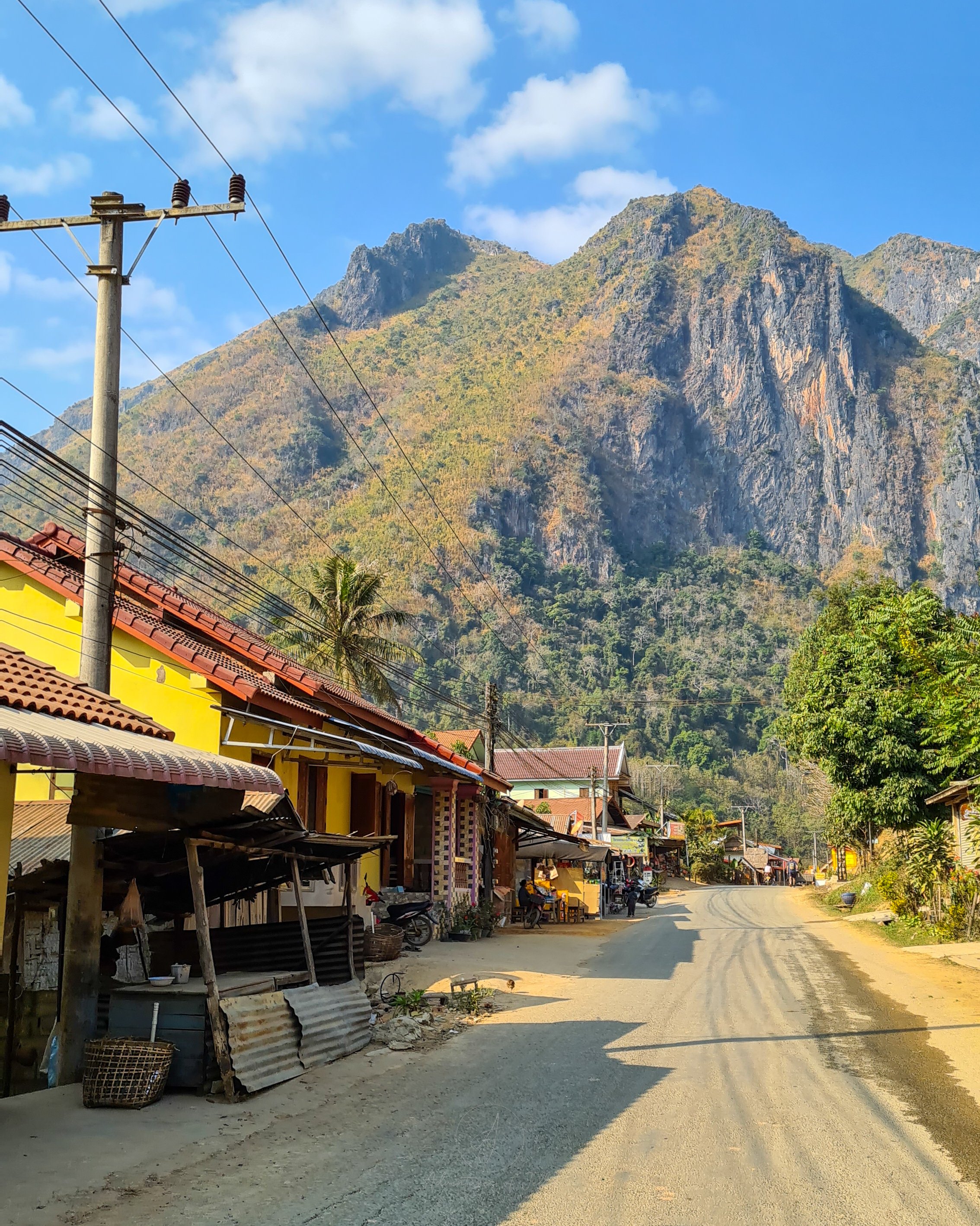
For those looking for a more extreme adventure through northern Laos, then you could follow our lead on our second trip to the town and catch a long, extremely bumpy minibus and travel overnight to the city of Sam Neua. We booked our bus tickets through the Nong Khiaw Experience Tour agency (location) who helpfully secured our tickets and even reserved us seats on the very full local bus.
Read all about our adventurous overnight journey to Sam Neua here. From Sam Neua you can hop onto another bus and take the short journey to Vieng Xai, oneof our favourite secret spots in Laos. This small town is home to a secret cave city, once used by the locals and the government during the Vietnam War. To learn more aboutthe town, its history and what there is to see and do, make sure you read our full Vieng Xai travel guide here. From Vieng Xai you can head back to Sam Neua and take a bus down to Phonsavan and the Plain of Jars.
Final thoughts
At the time of first writing this article, we had been travelling full-time, for over nine months and Nong Khiaw was without a doubt, one of our favourite places we had visited. We loved it so much that on our return to Laos we knew we had to go back. We were worried that Nong Khiaw might have changed in the years between and were worried that our good memories of the town may have clouded what the town was really like.
Luckily, as soon as we returned, we instantly fell back in love with Nong Khiaw. The stunning scenery, the laidback vibes and the incredible hikes, it was everything we had remembered. Nong Khiaw was just as special as the first time we had visited!
Nong Khiaw has the big advantage of being slightly less well-known and slightly out of the way of the normal well-trodden South-East Asian backpacking trail. The people that come to Nong Khiaw have chosen to be there and they haven’t blindly followed the hordes of other backpackers on the famous ‘Banana Pancake’ trail.
Nong Khiaw attracts those who want to hike, those who want to be amongst nature and those who want to relax amongst some of the most incredible scenery you will ever see! Nong Khiaw does not have the luxury hotels, the upmarket restaurants and the fancy bars of Luang Prabang, but what it does have is something magical. The days and nights we’ve experienced in Nong Khiaw have been some of the best. Some of our favourite memories of all our travels have been in Nong Khiaw where we’ve sat in a bar with a group of like-minded travellers all sitting communally chatting over beers and cocktails, playing pool and generally just enjoying life. Nong Khiaw is not Vang Vieng with its party scene, but it is something else entirely. It was something we feared might not even exist anymore in the world of modern backpacking!
Nong Khiaw we will be back again, but for now, all we can say is au revoir, as this is definitely not good bye forever!
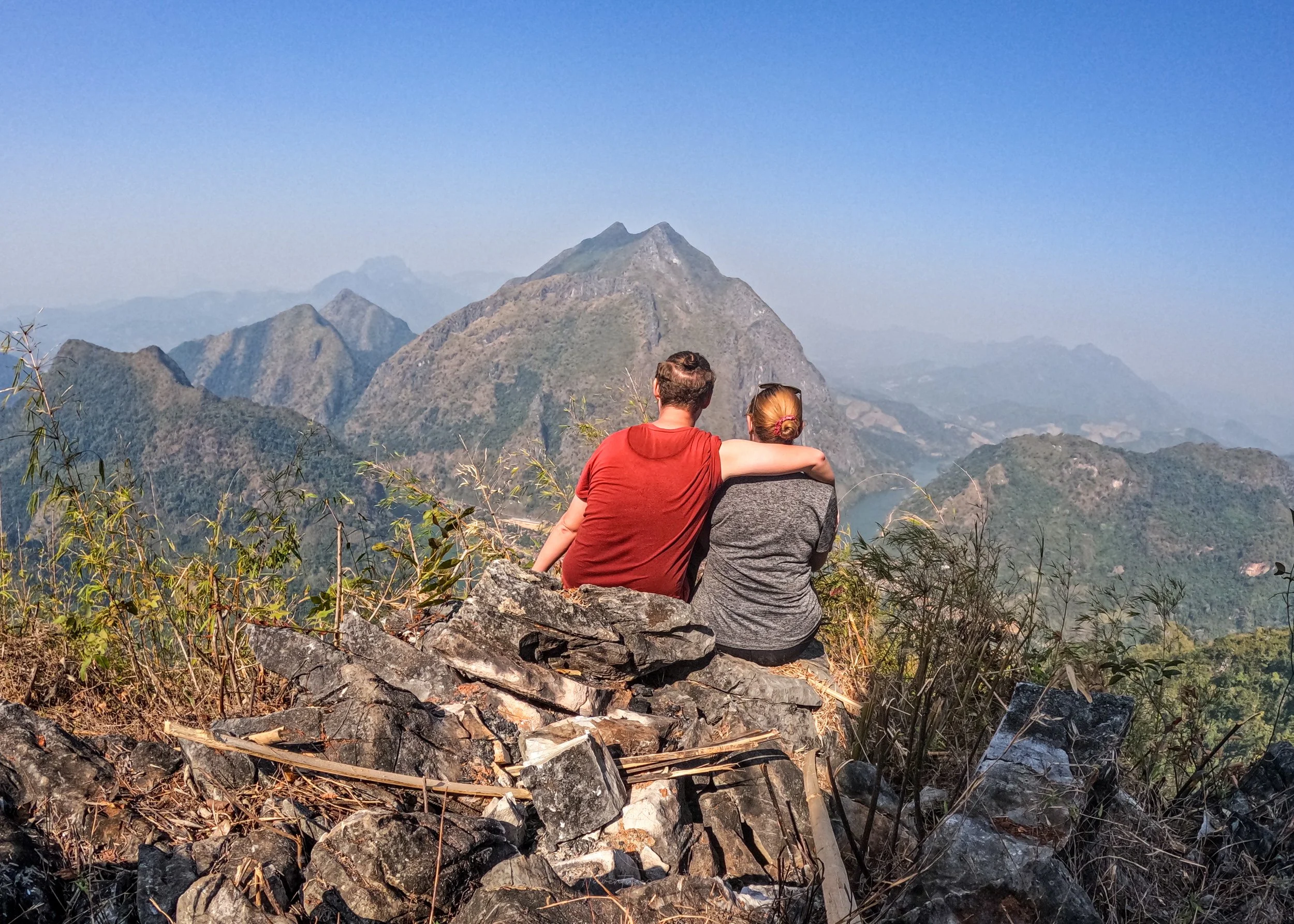
Thank you for reading,
John & Ellie x
#adventuresofjellie
Just some of our snapshots of Nong Khiaw
We have hundreds and hundreds of photos from our time in Nong Khiaw, these are just some of our favourites!
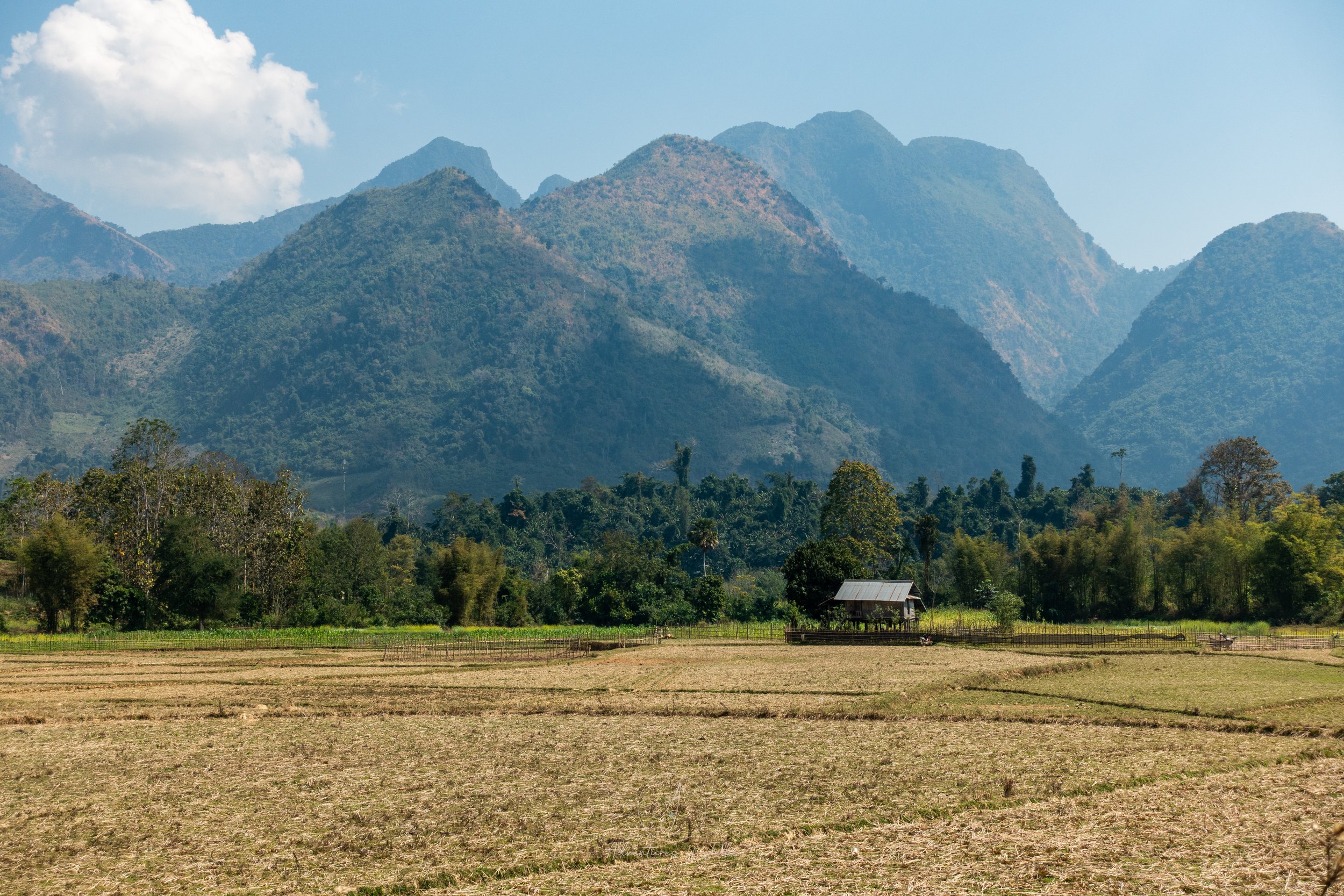
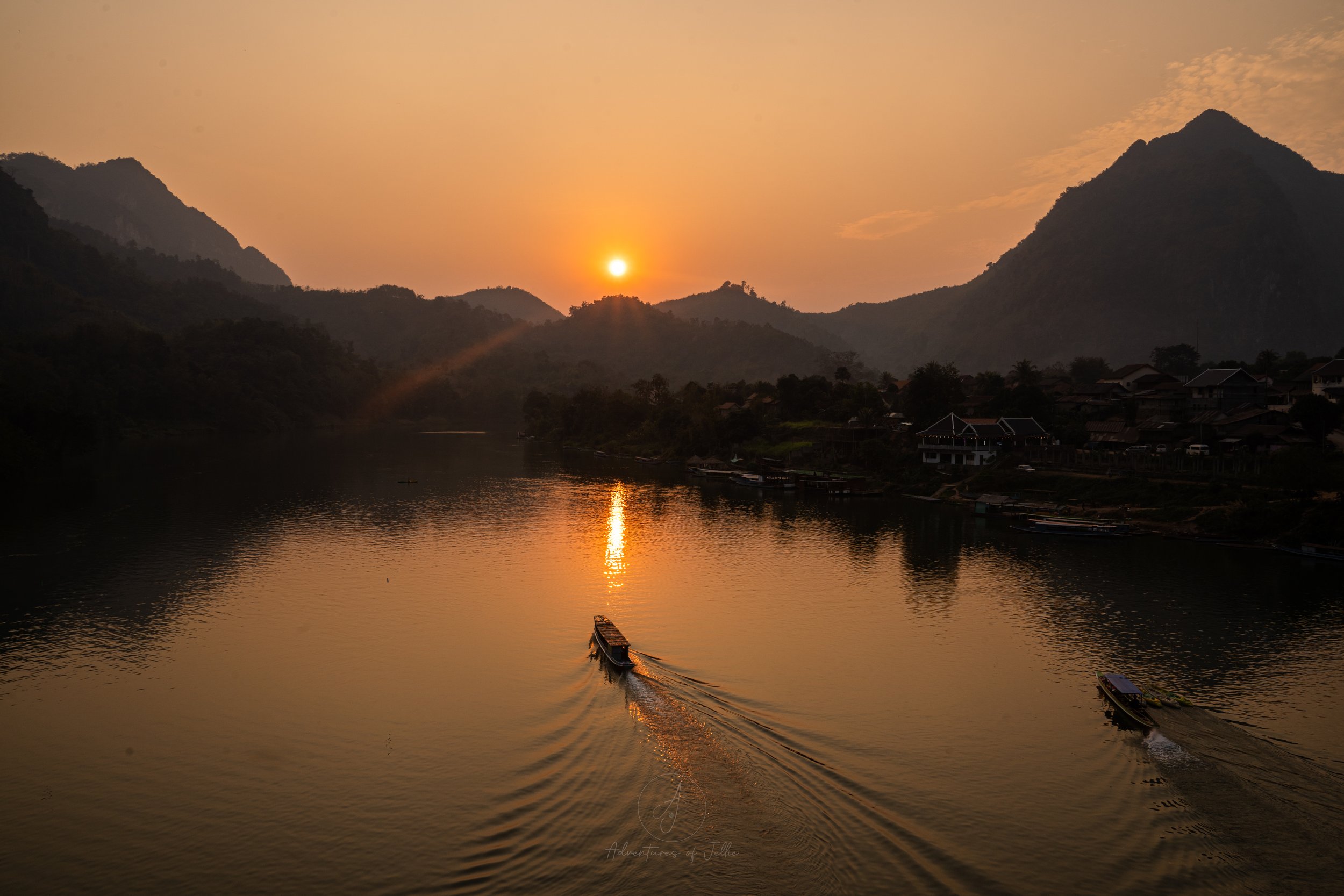
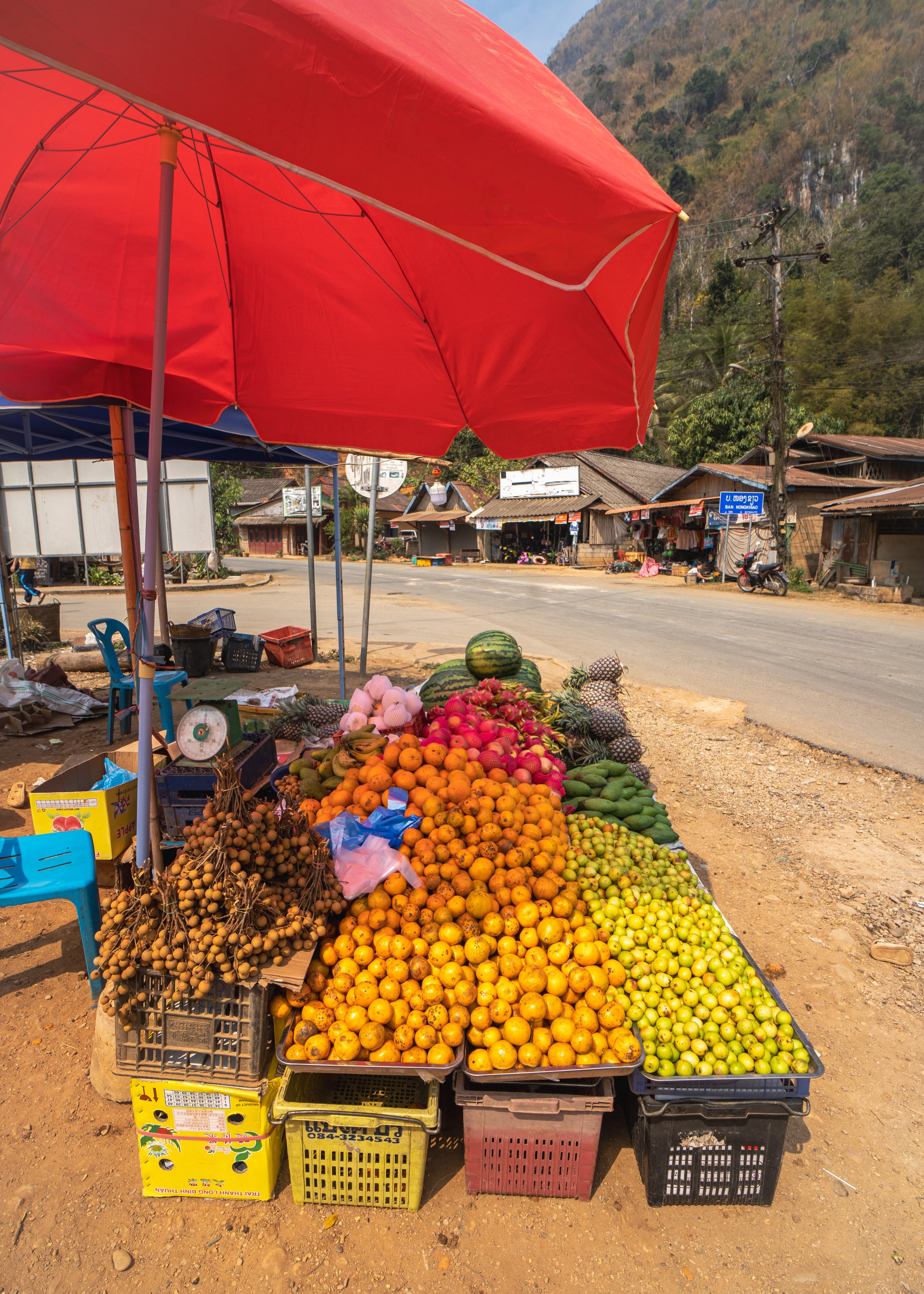
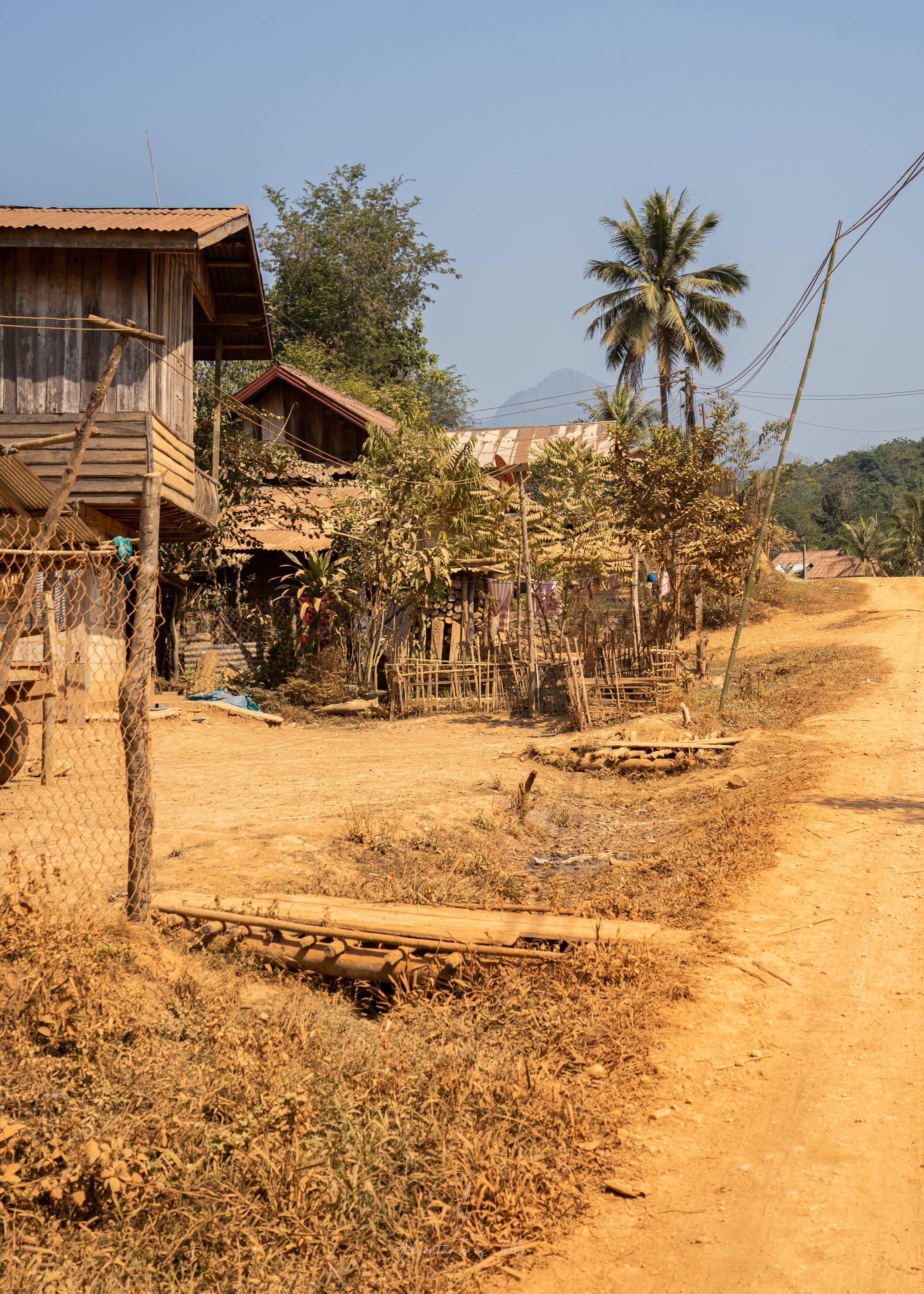
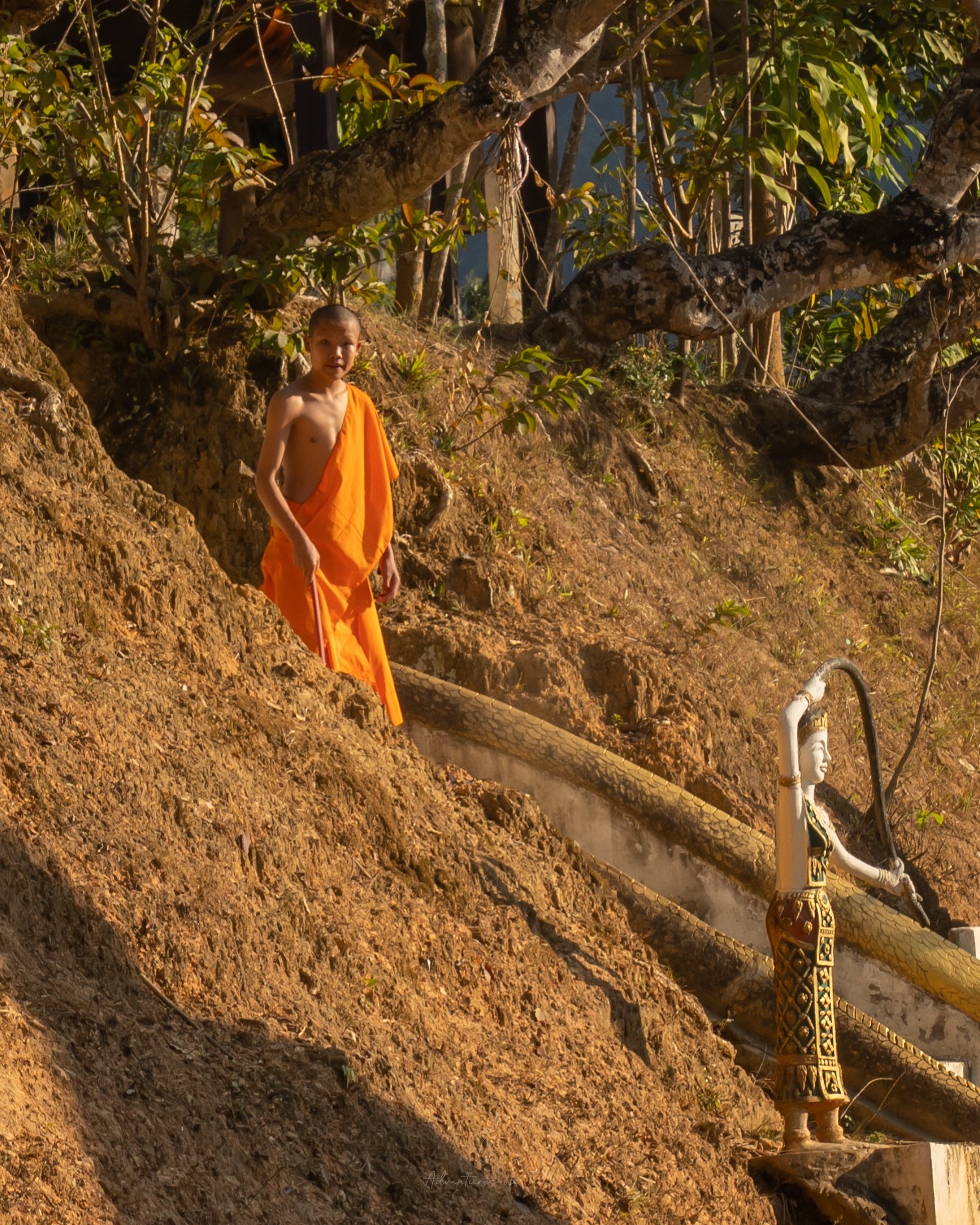
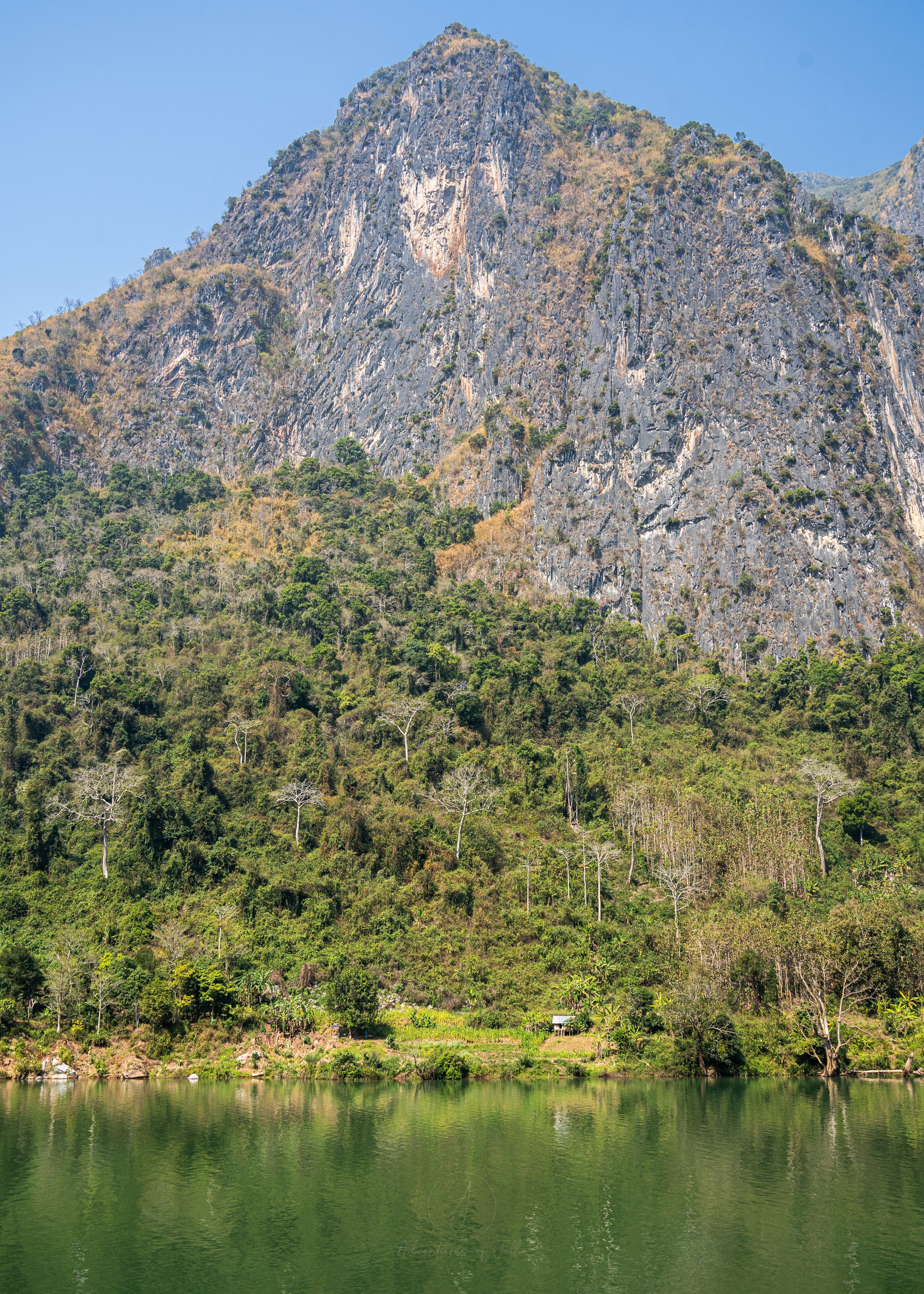
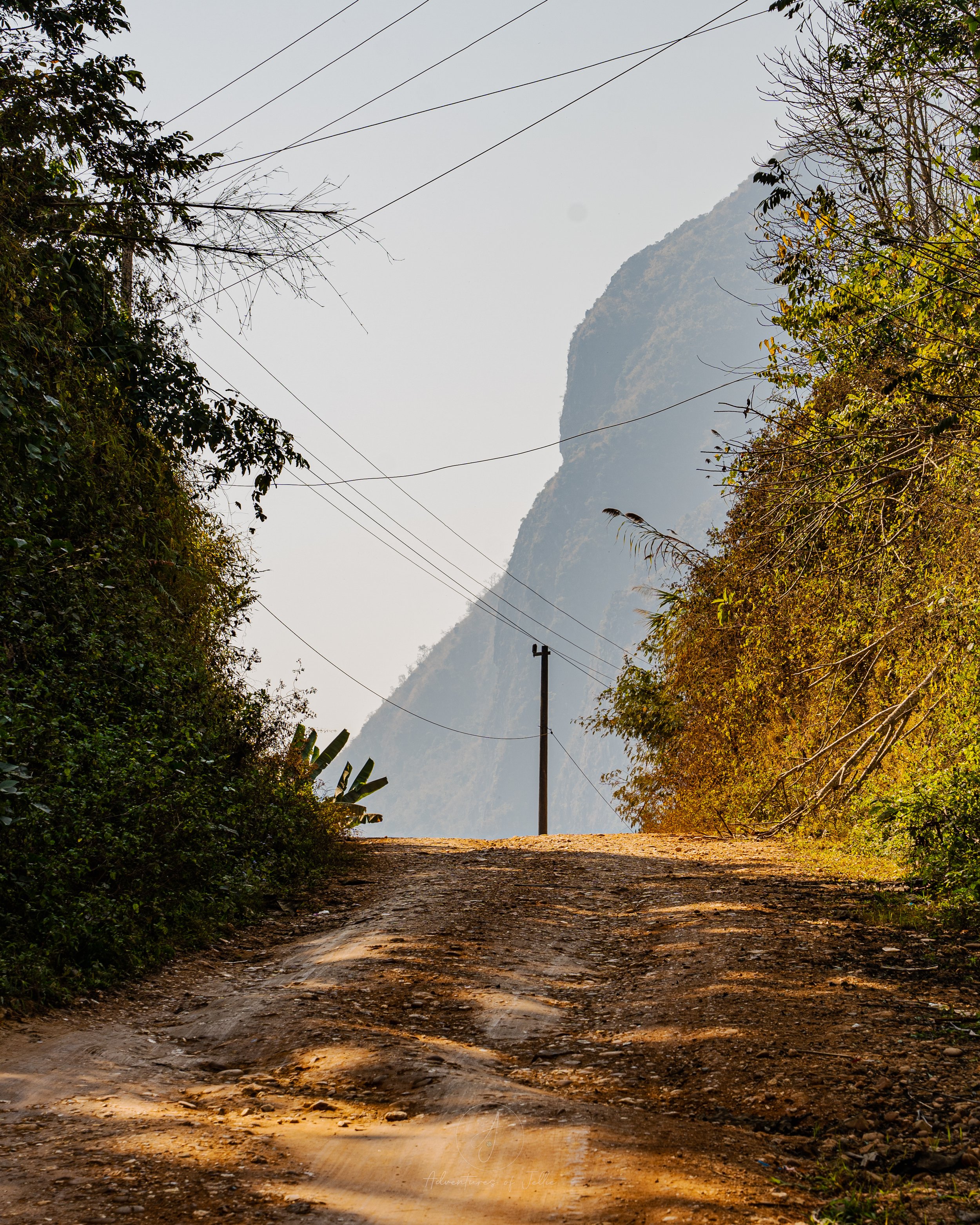
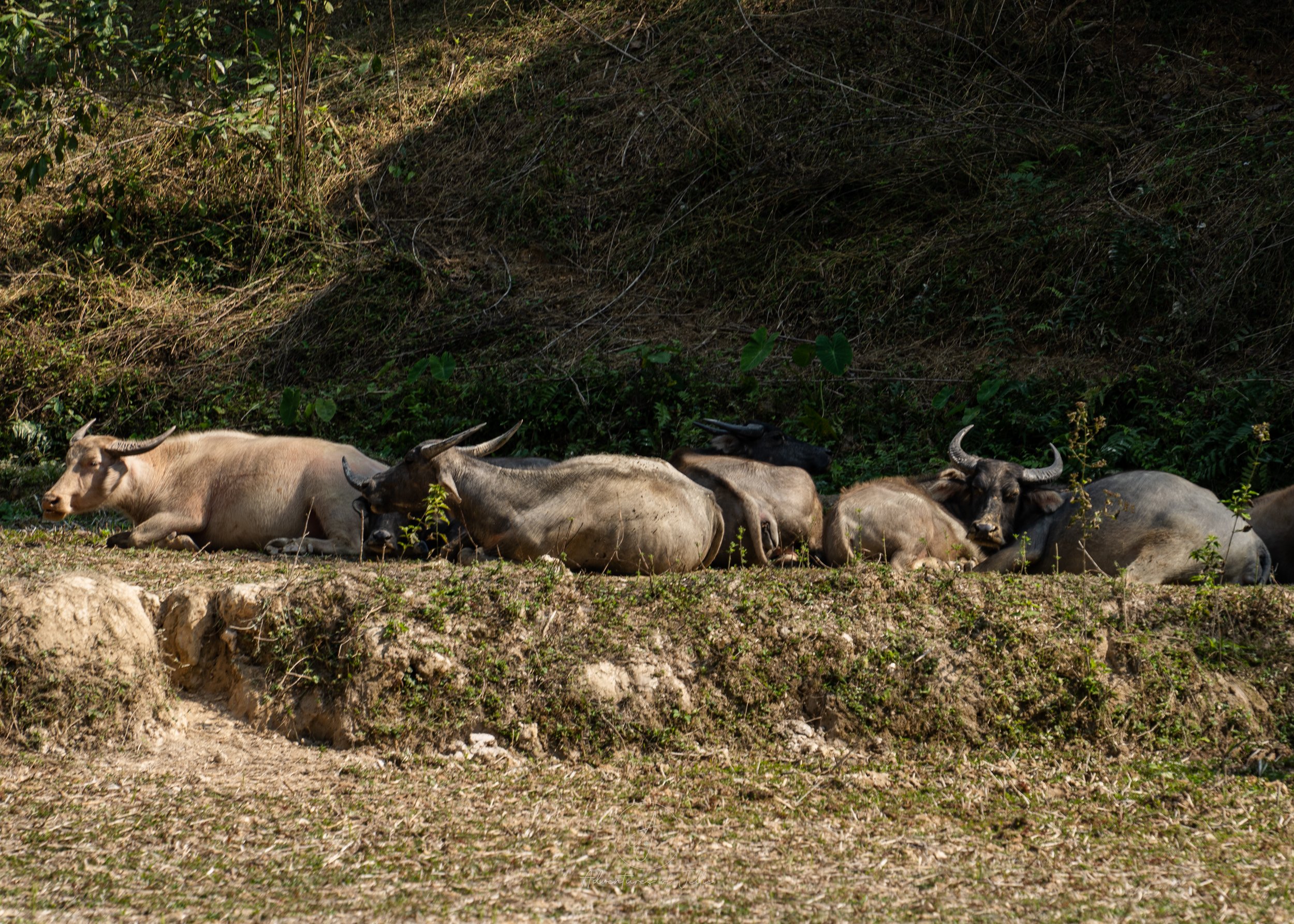
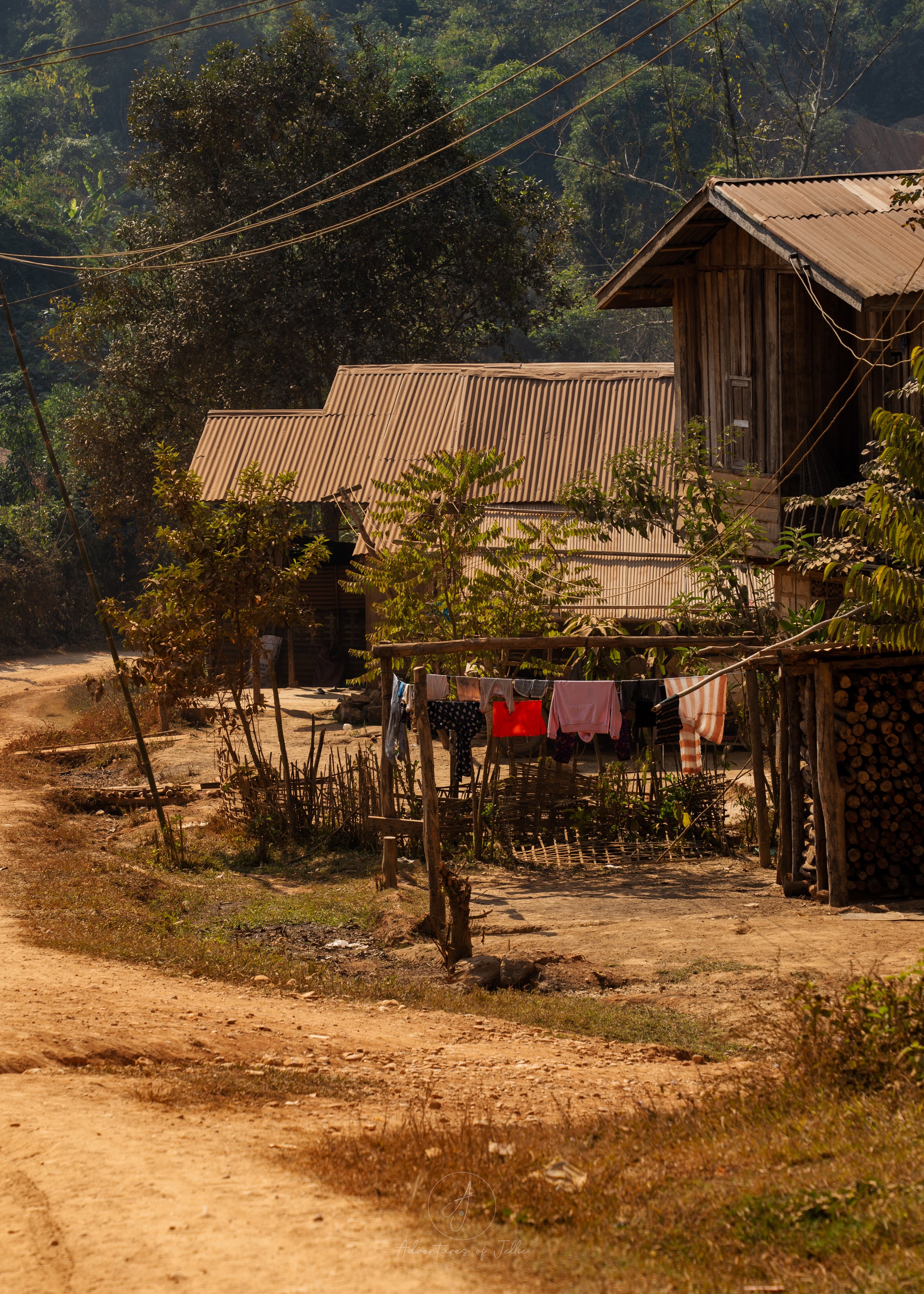
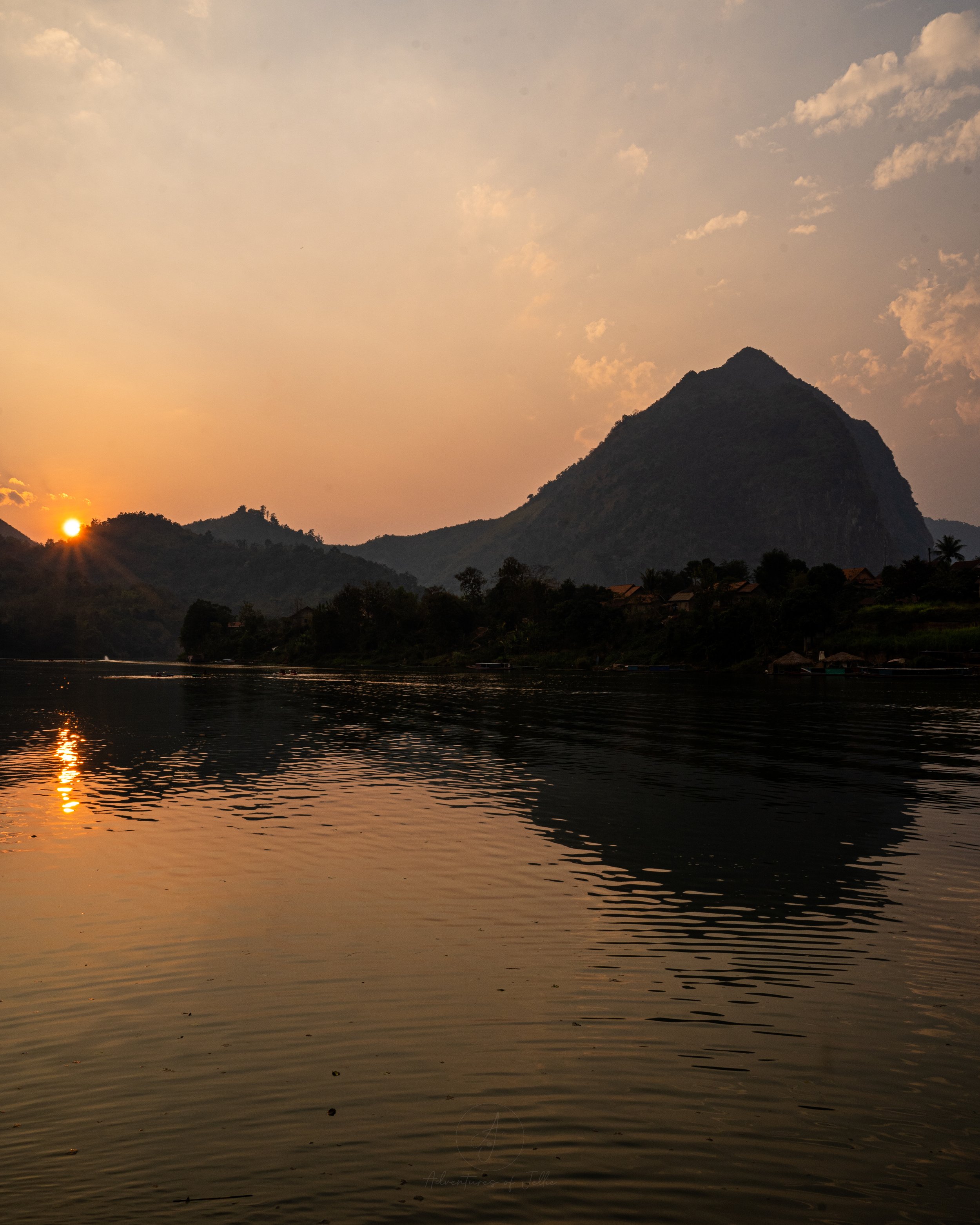
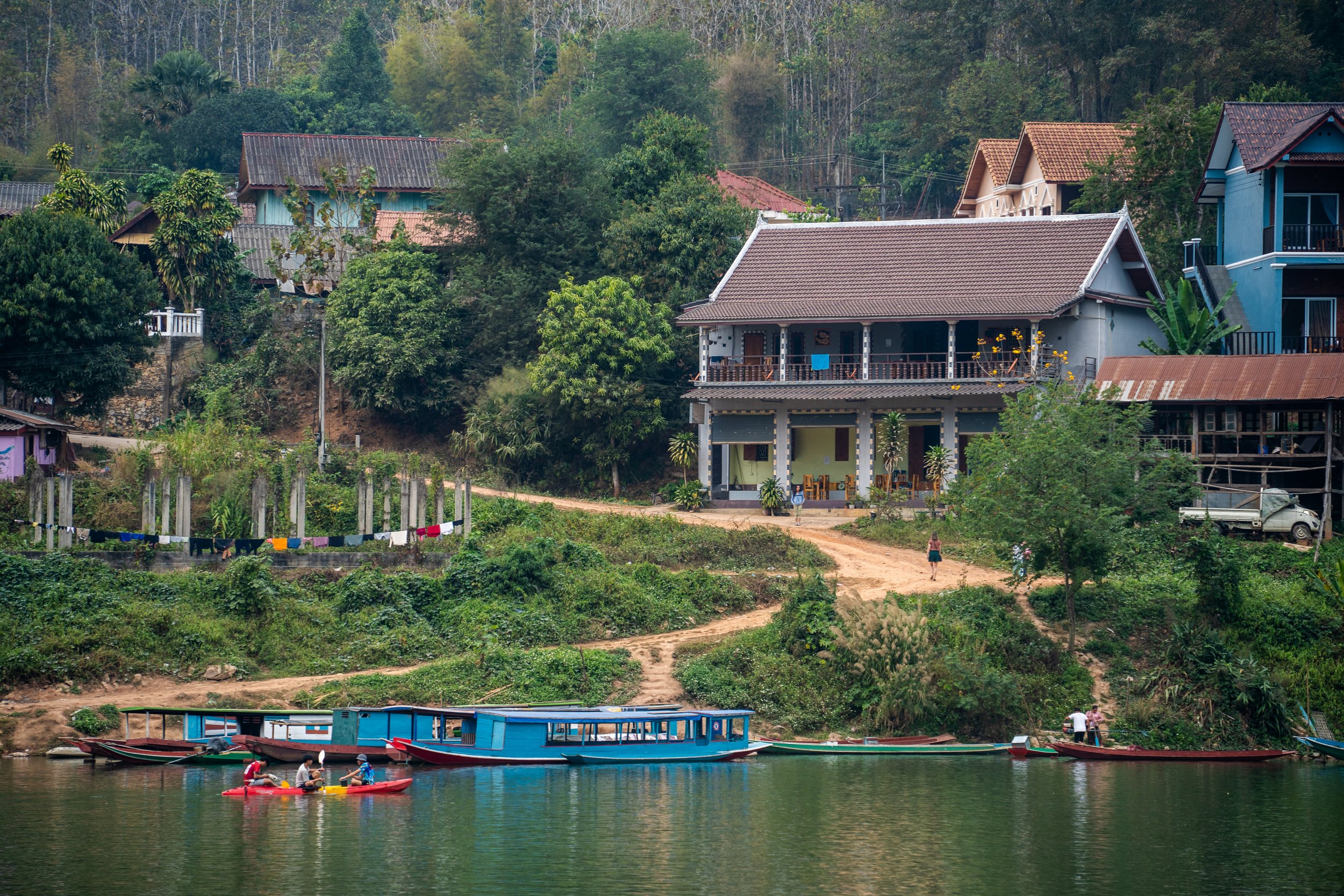
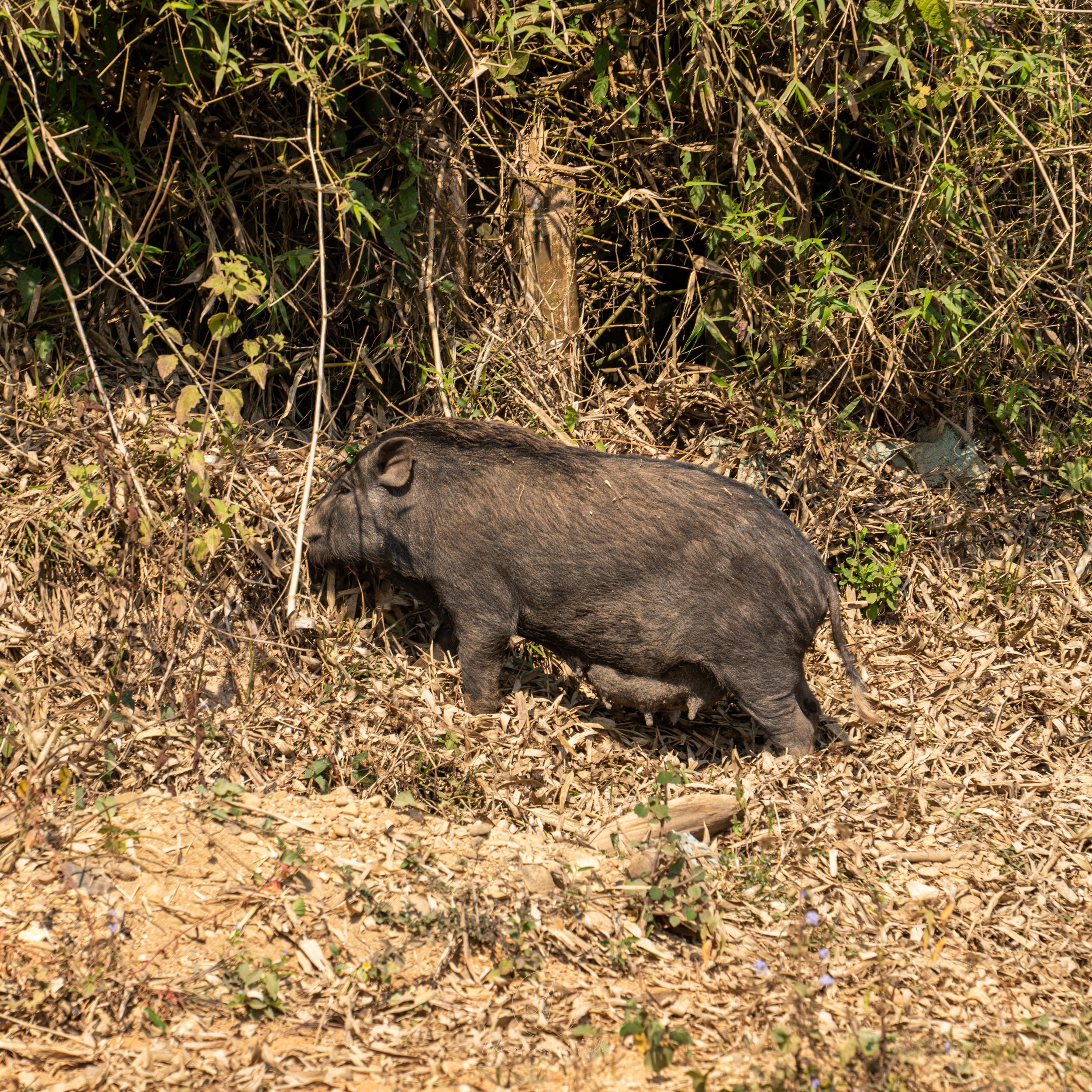
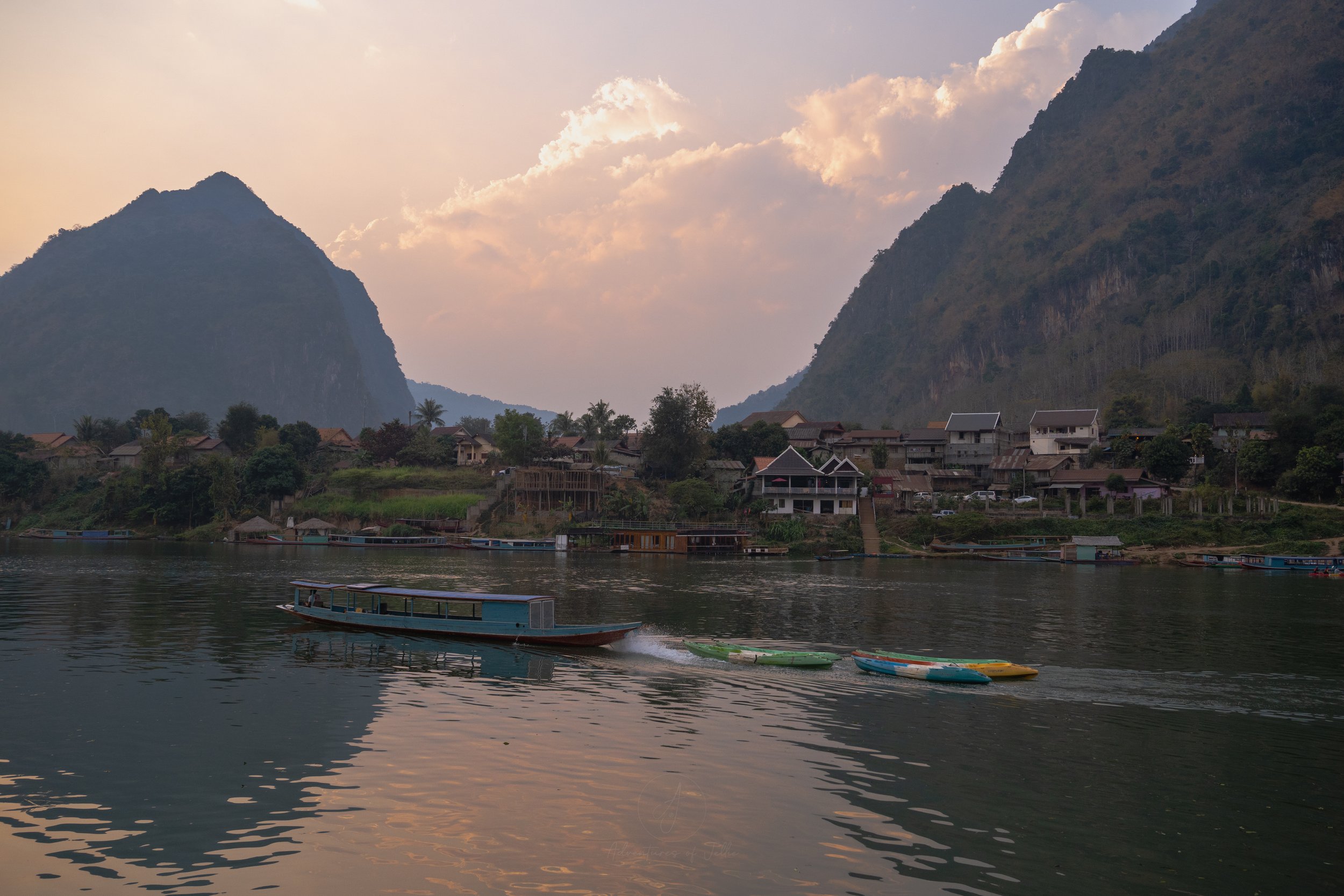
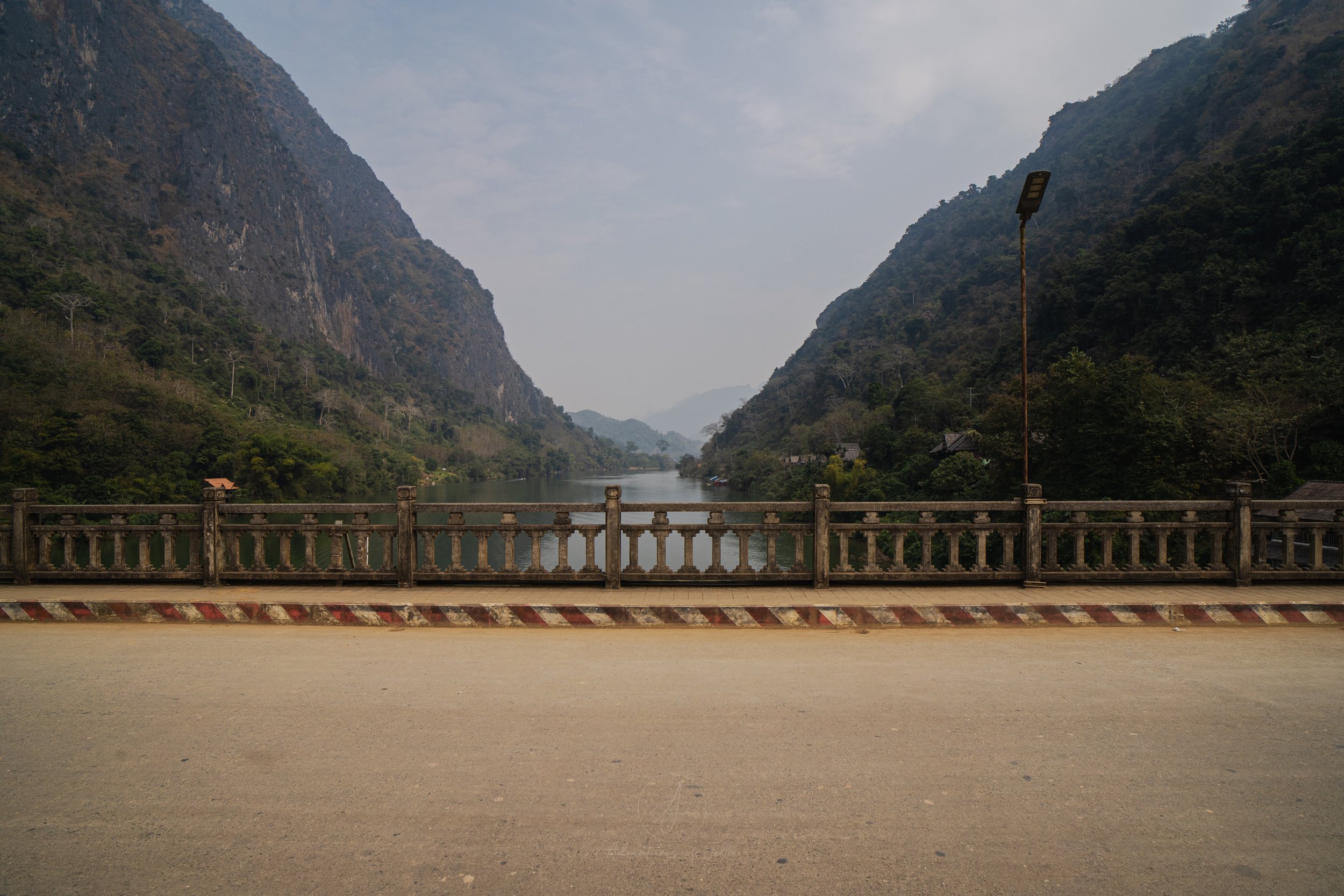
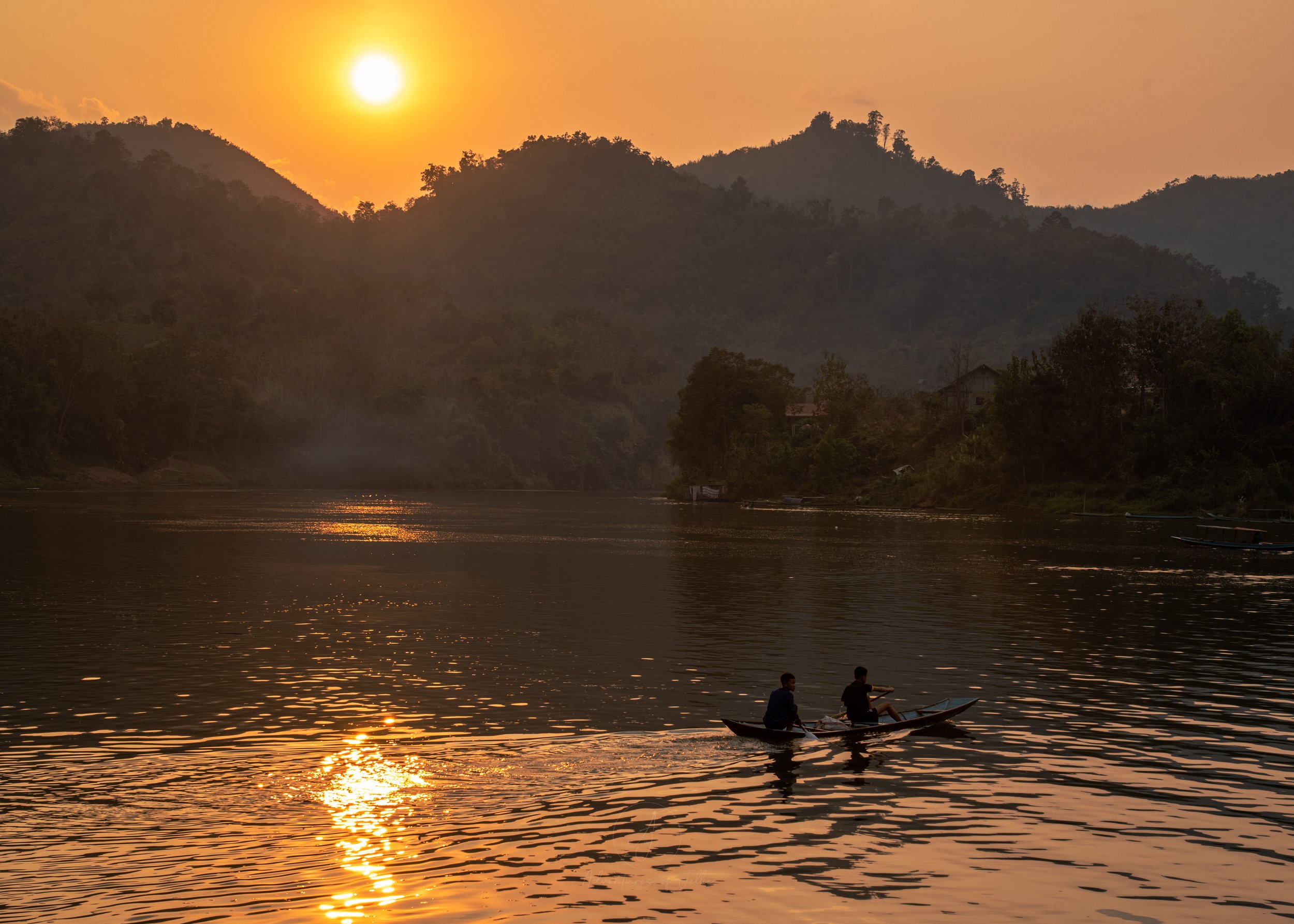
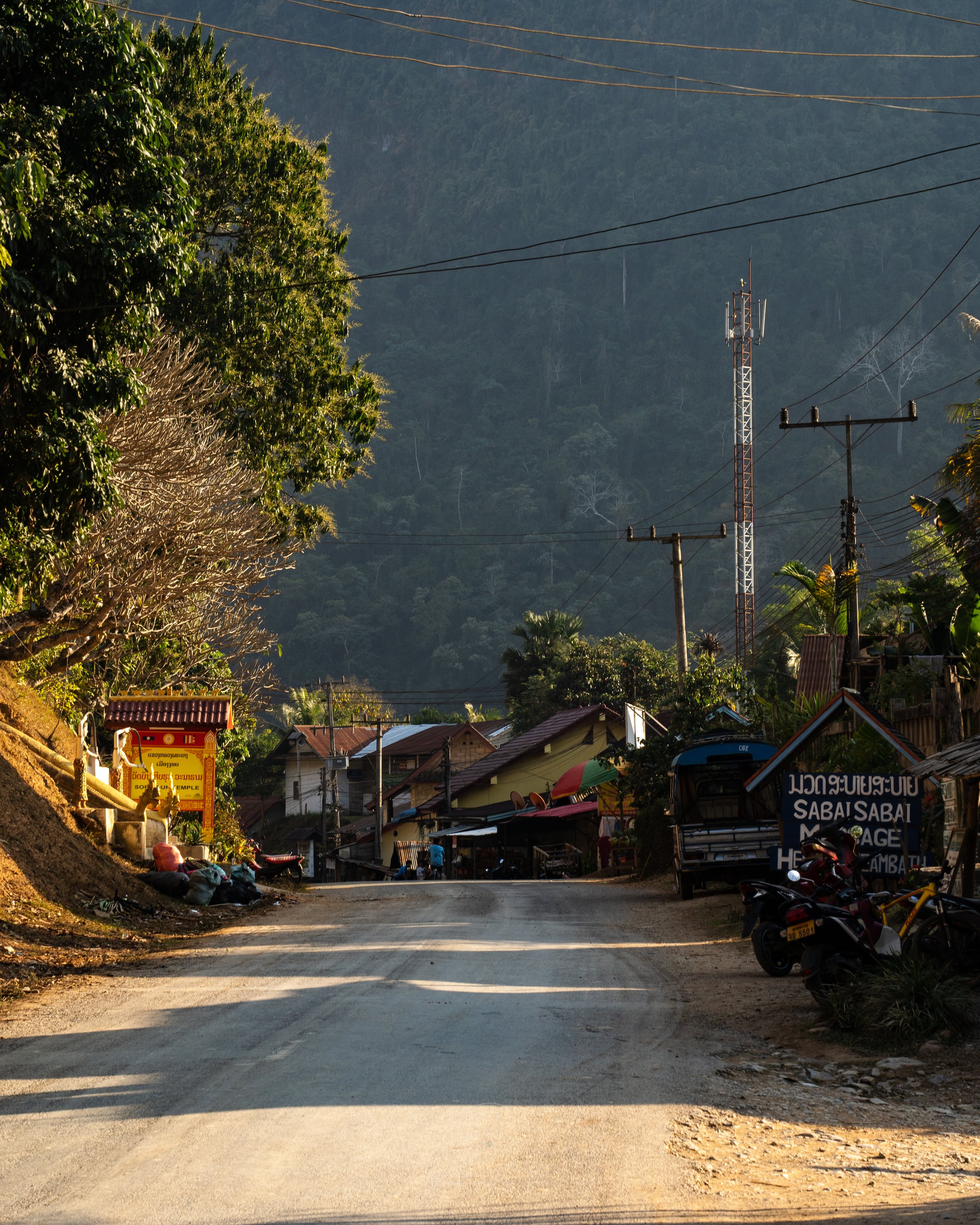
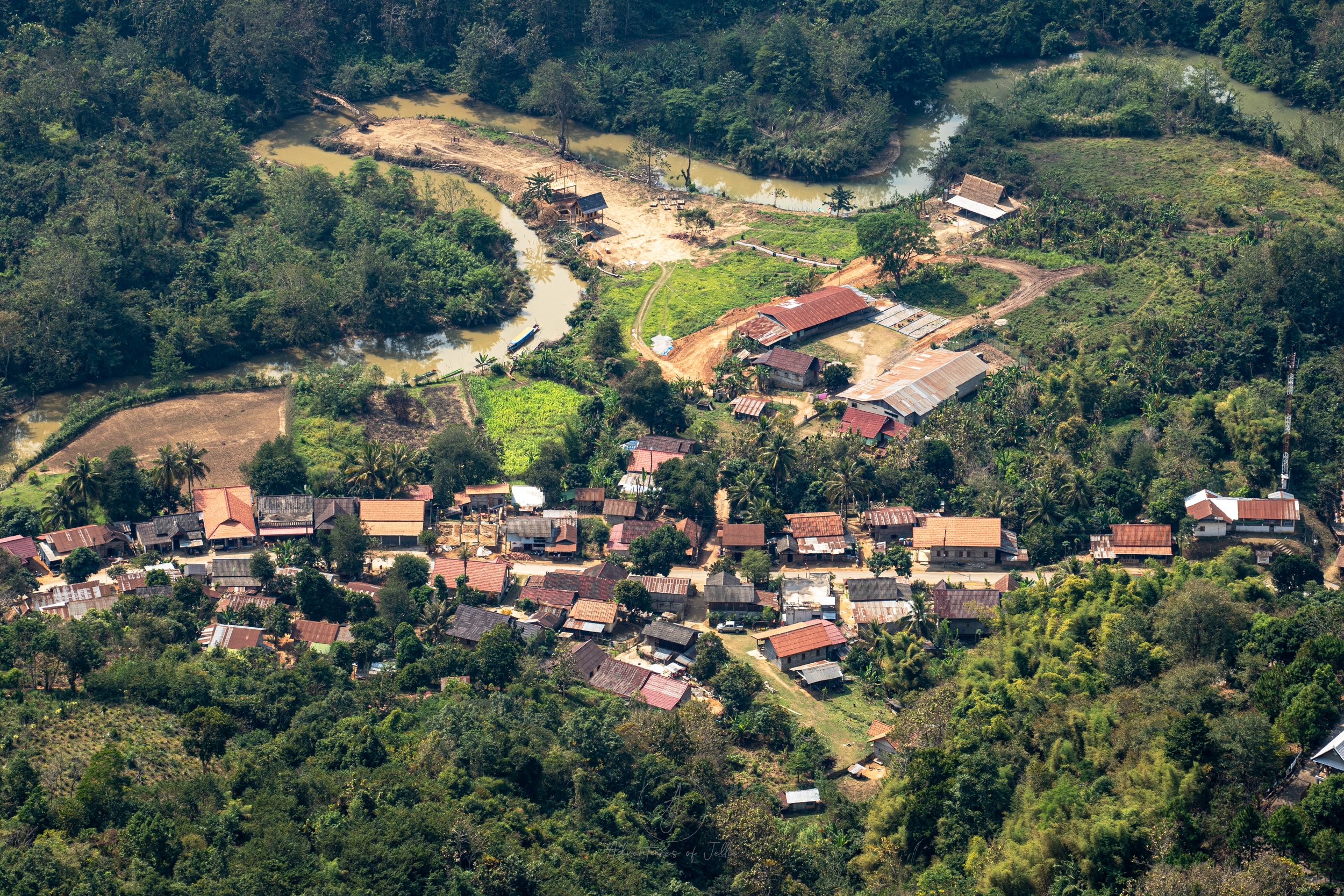
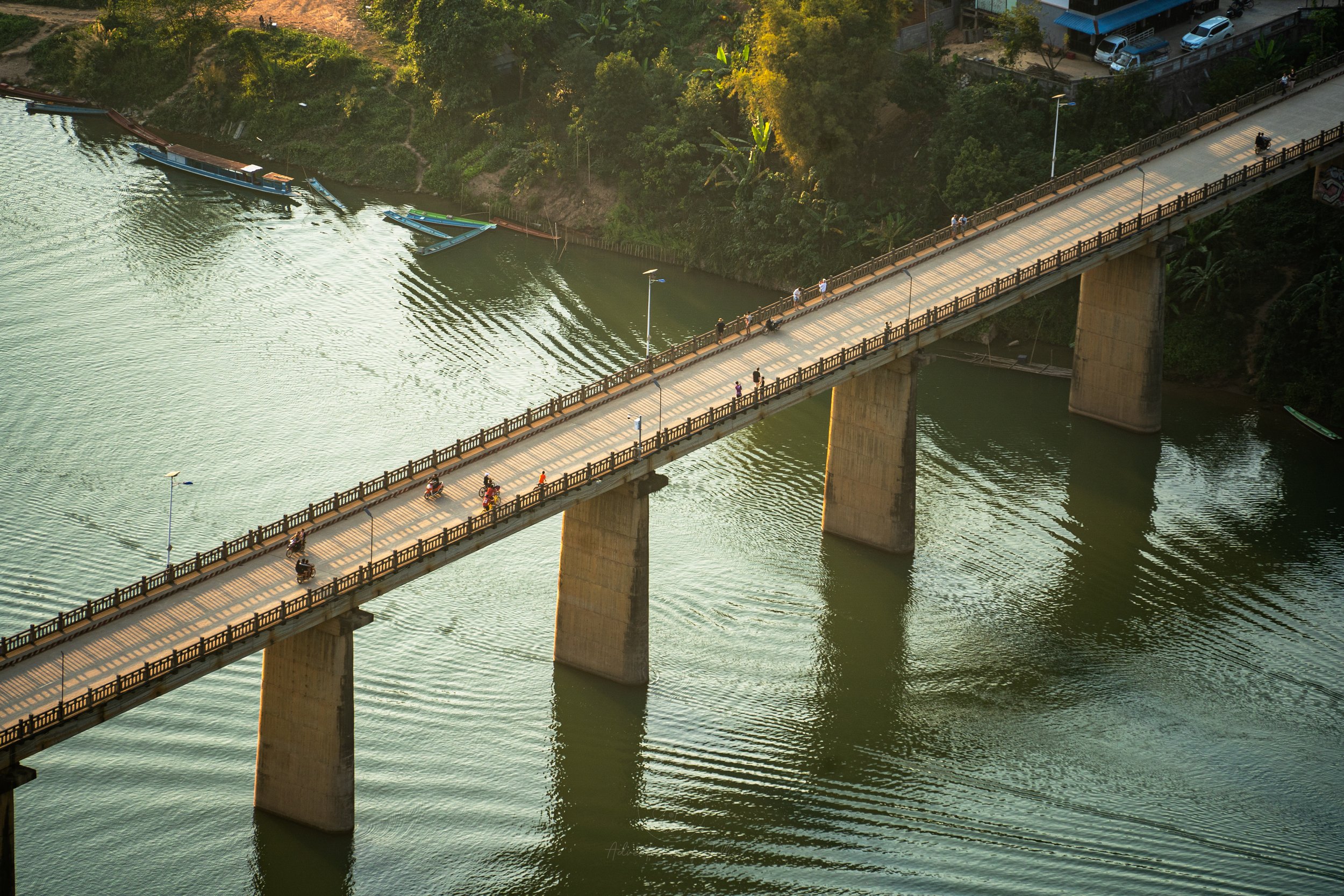
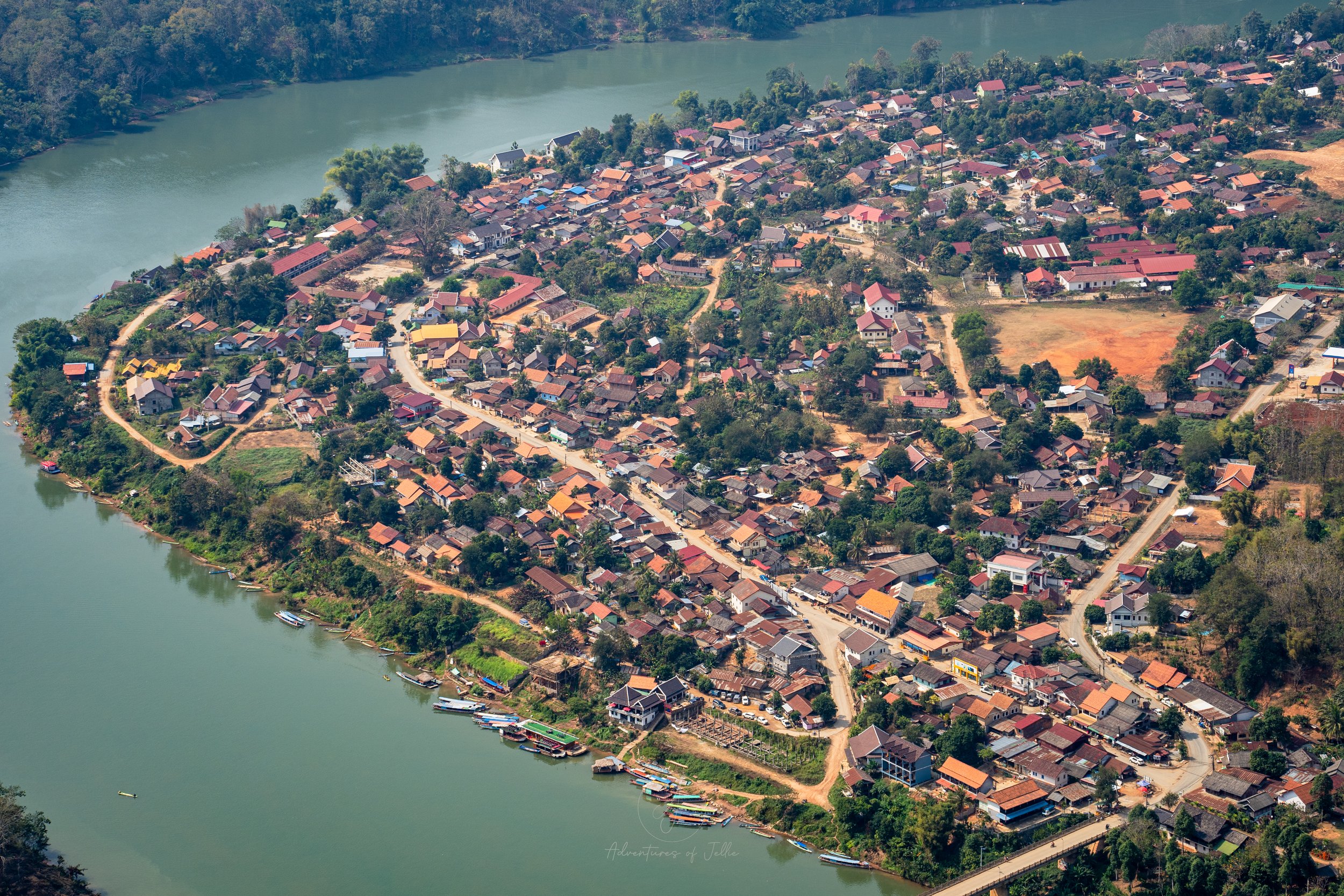
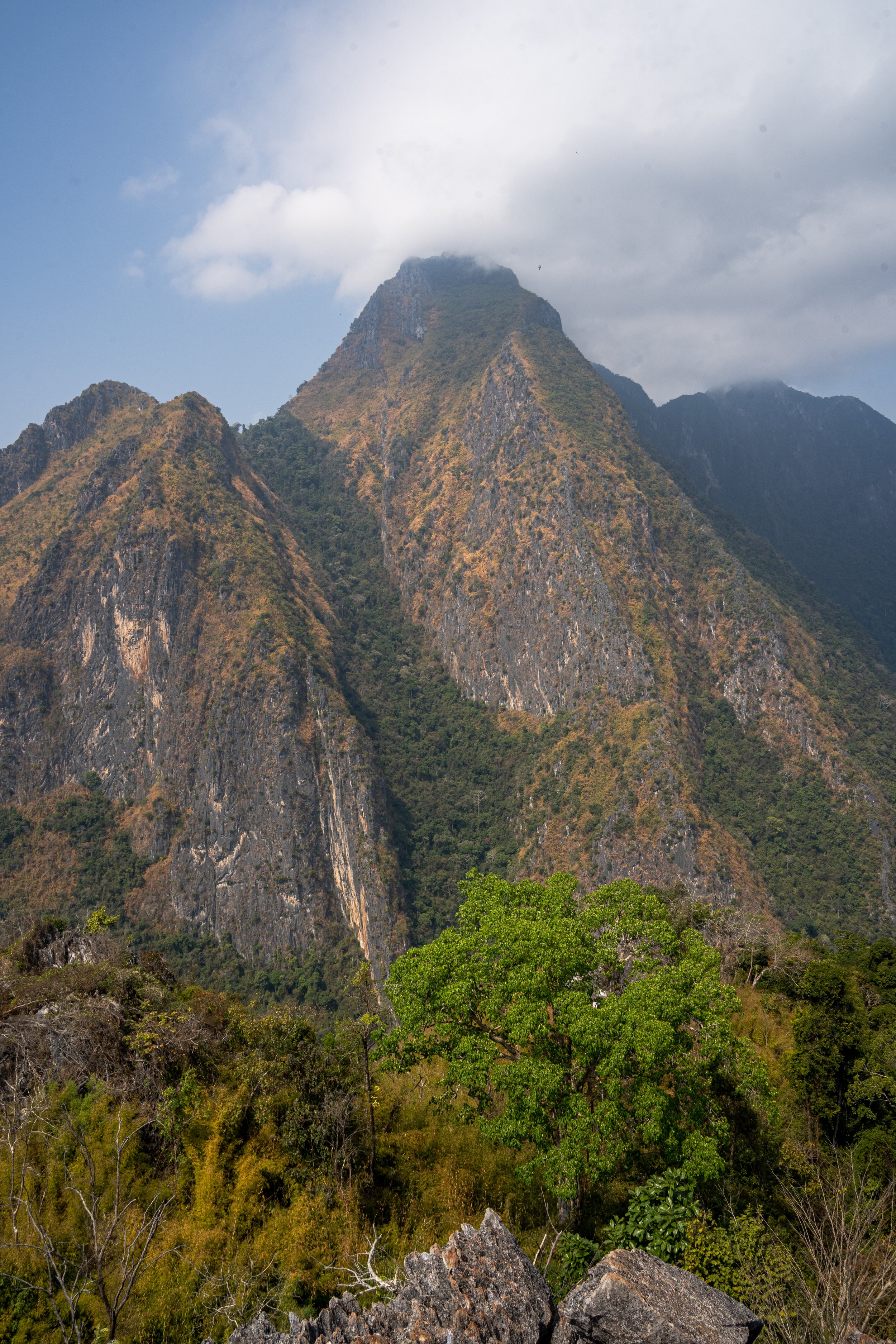
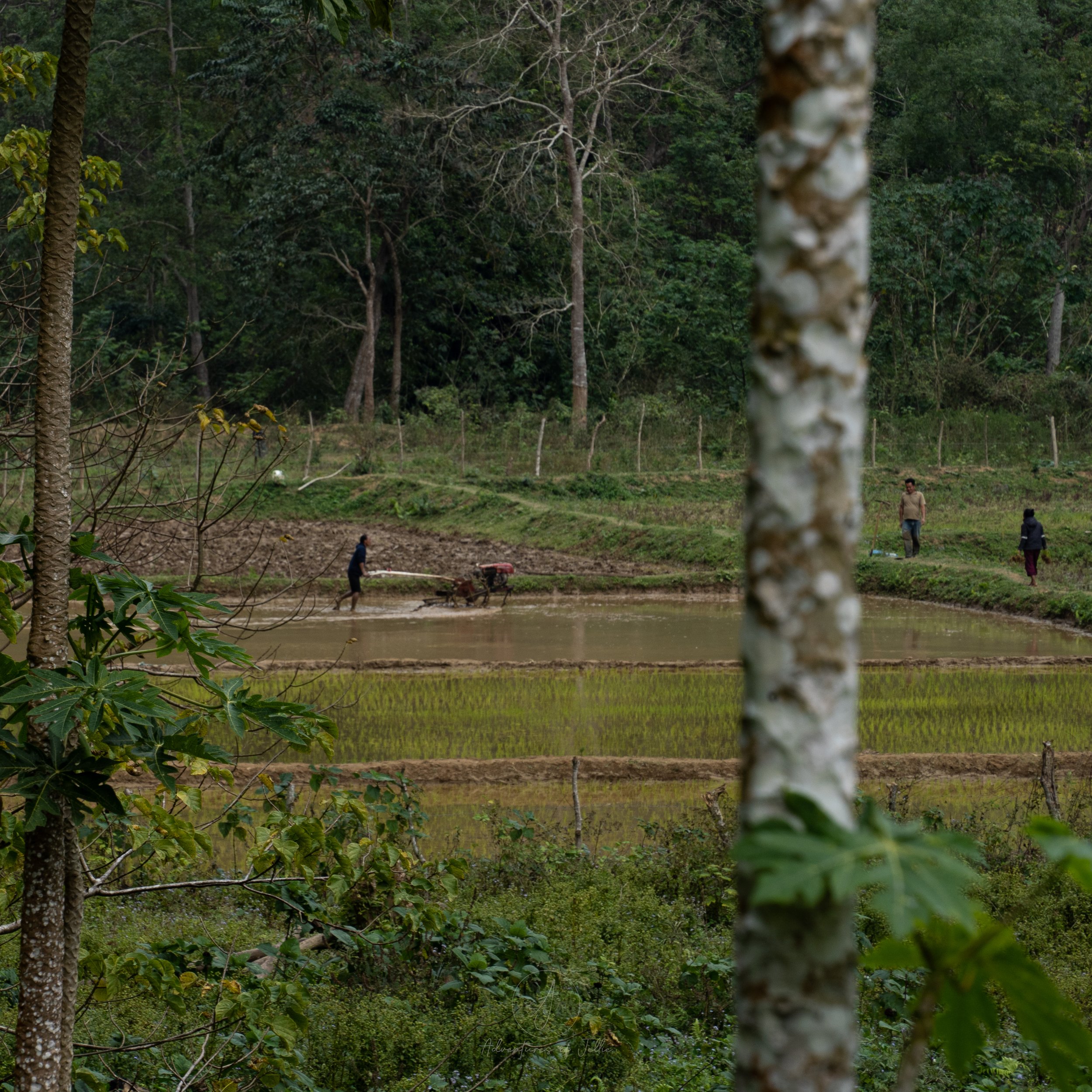
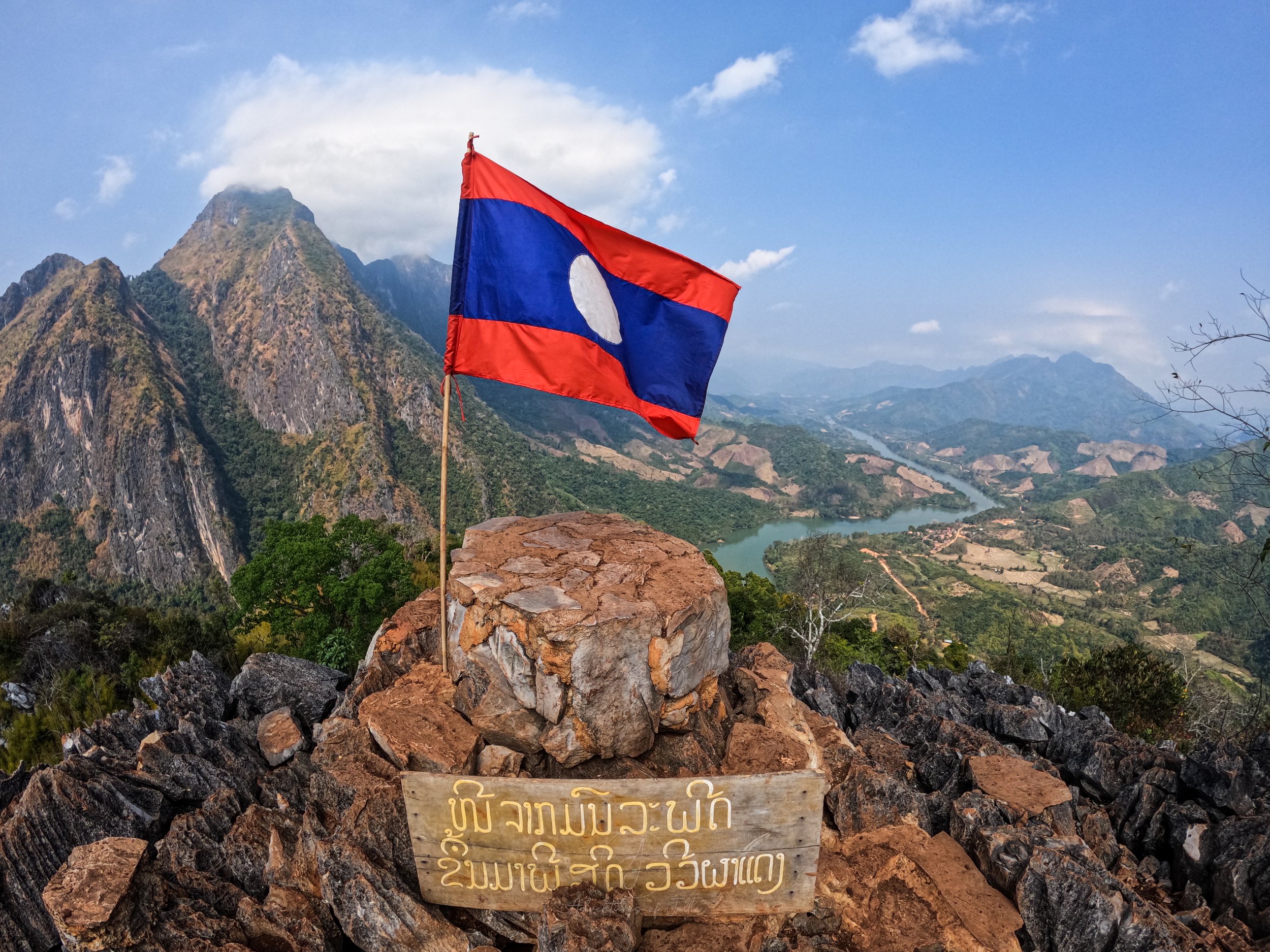
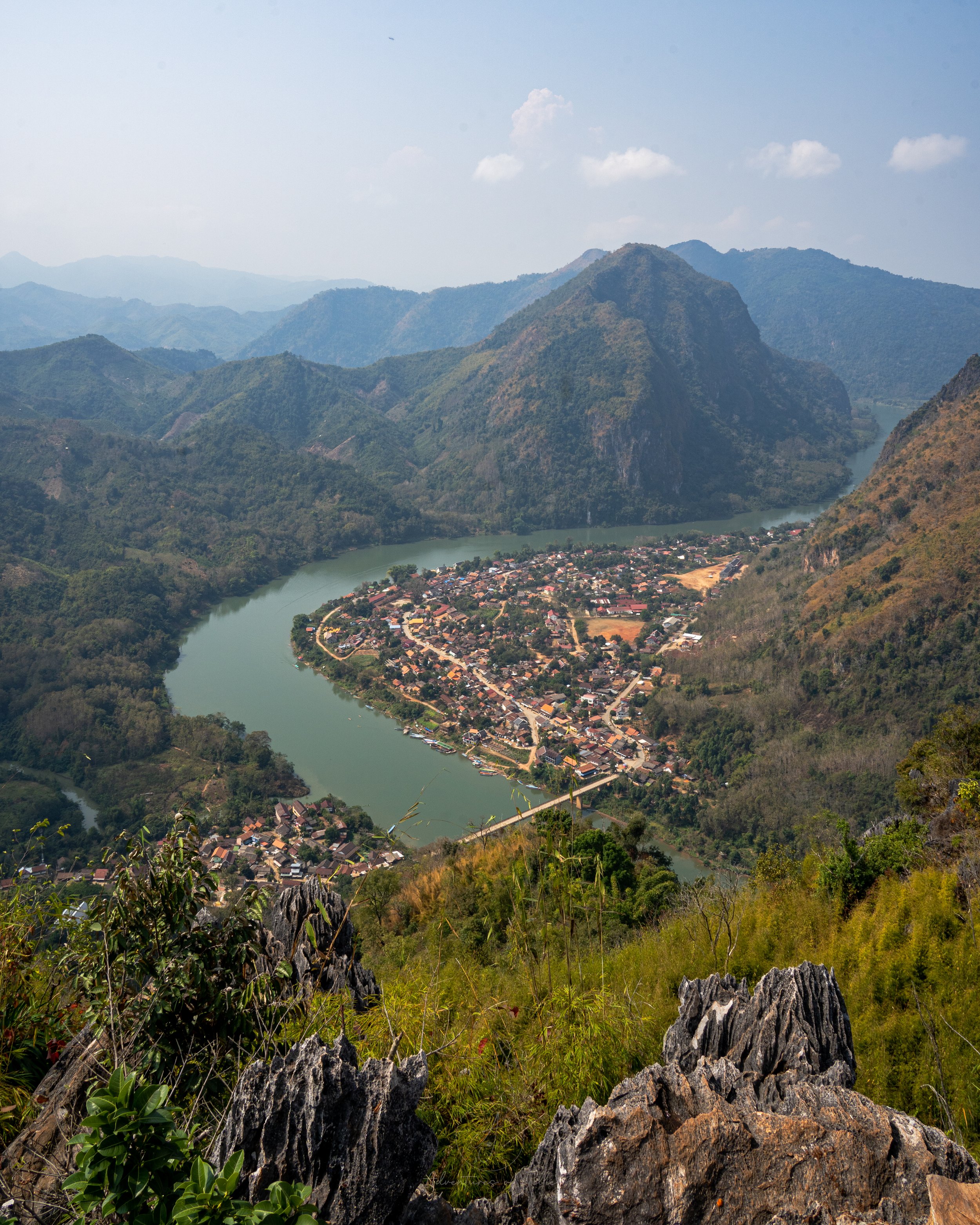
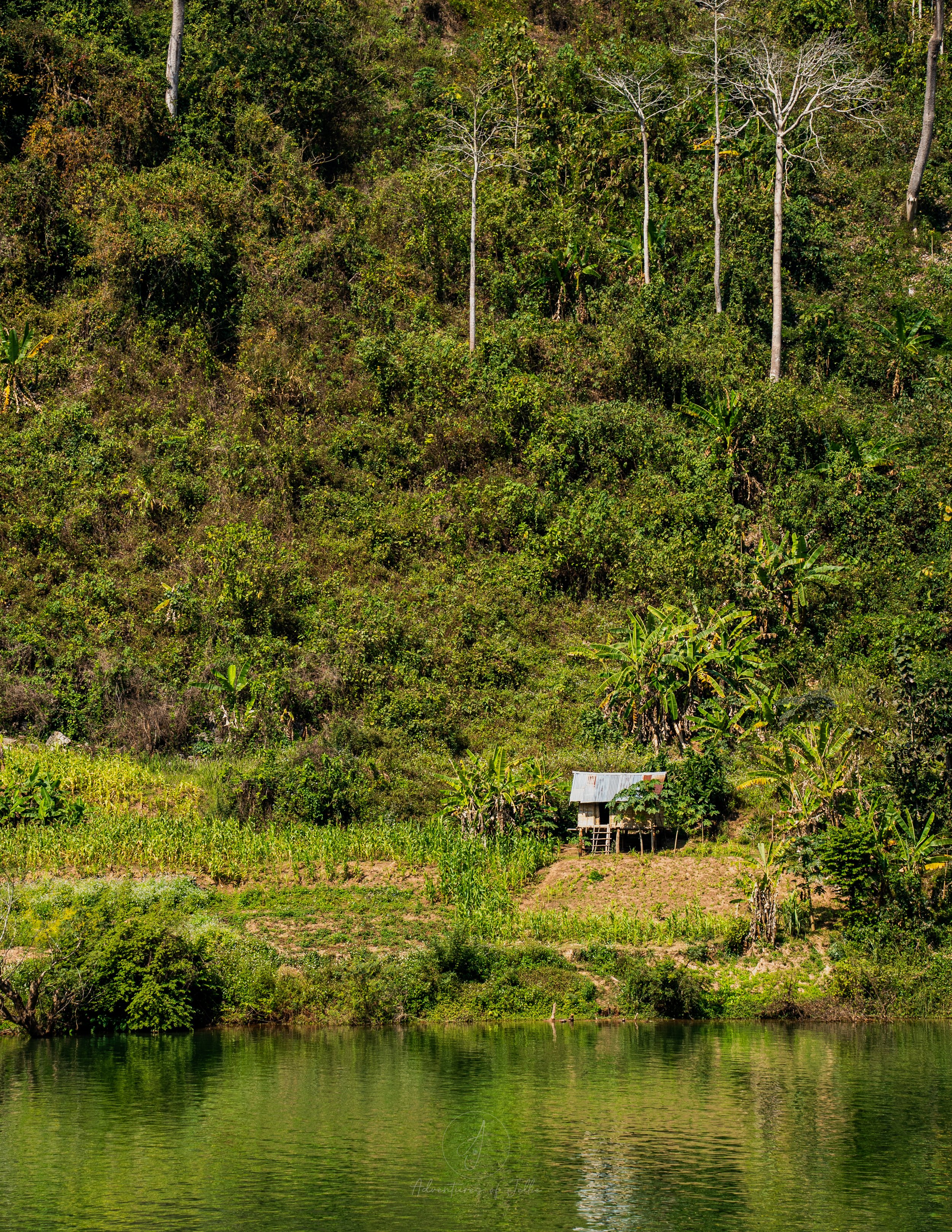
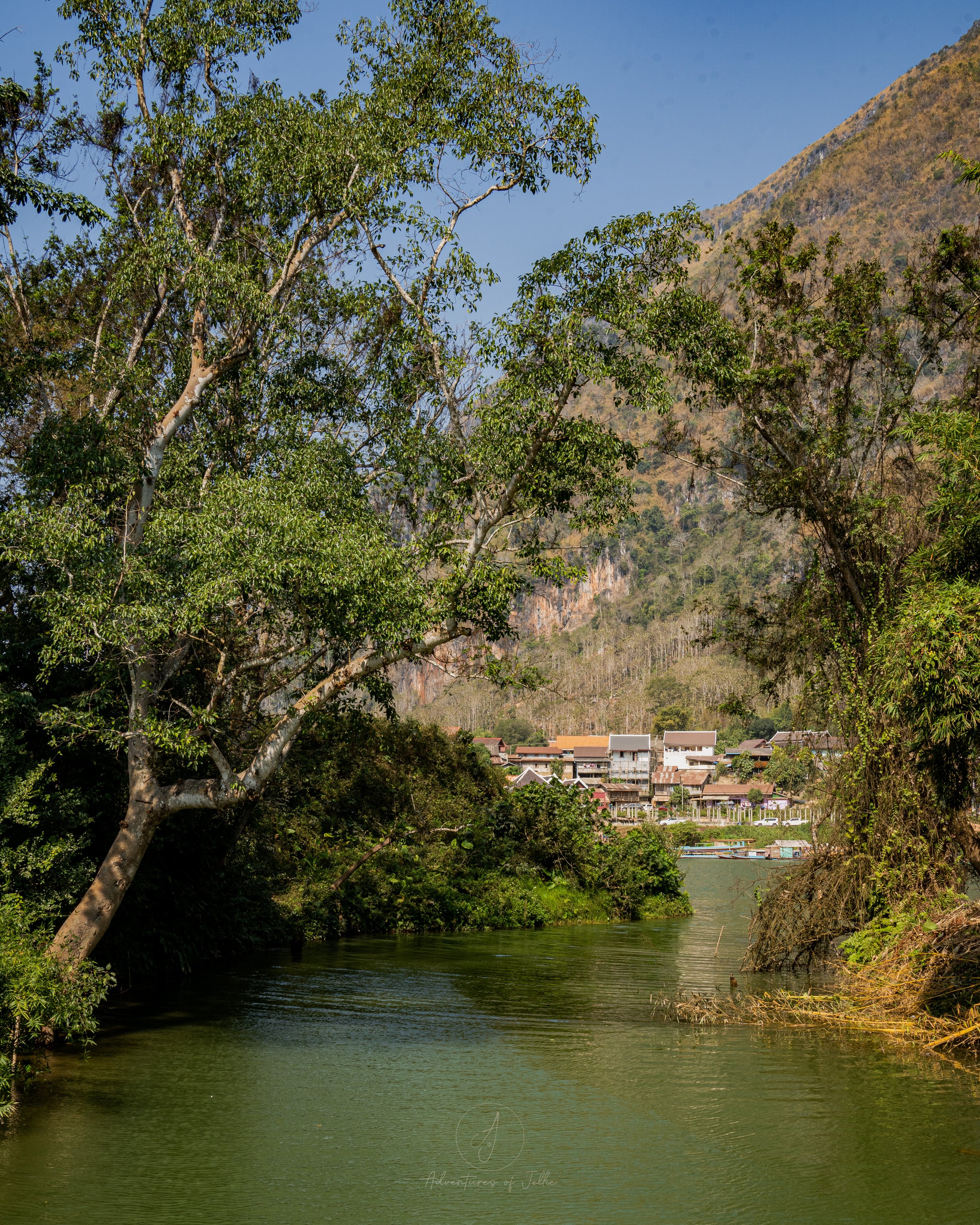
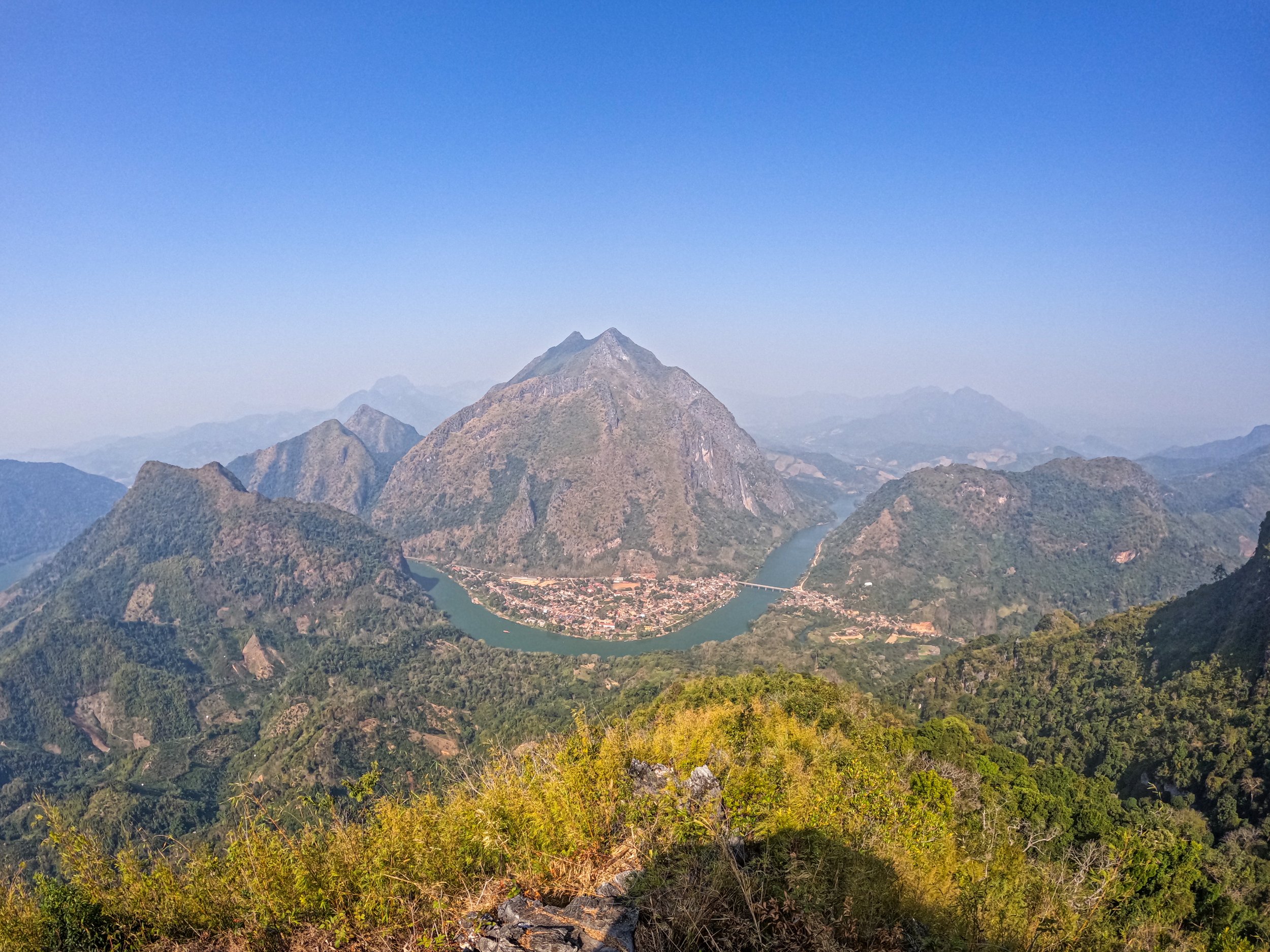
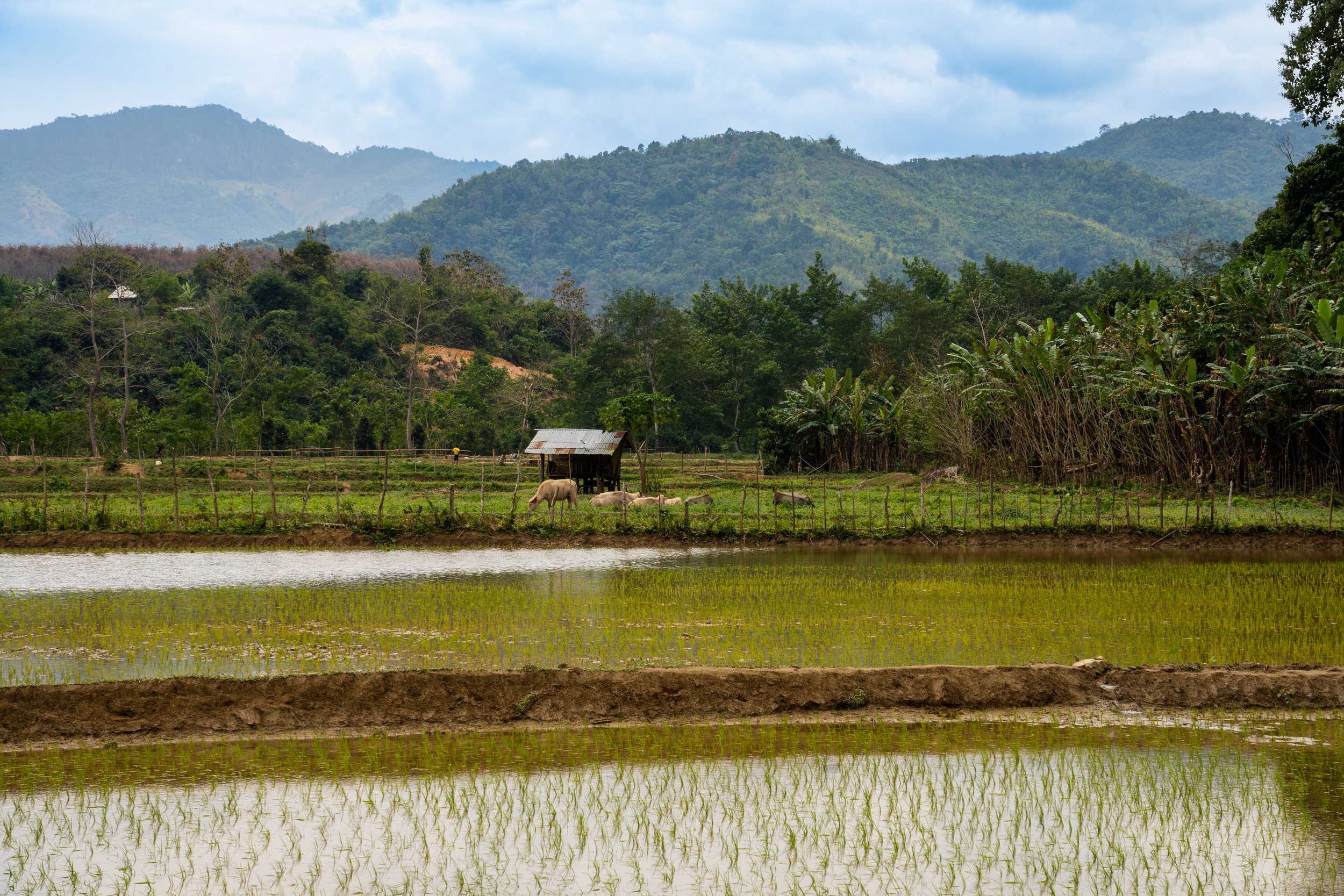
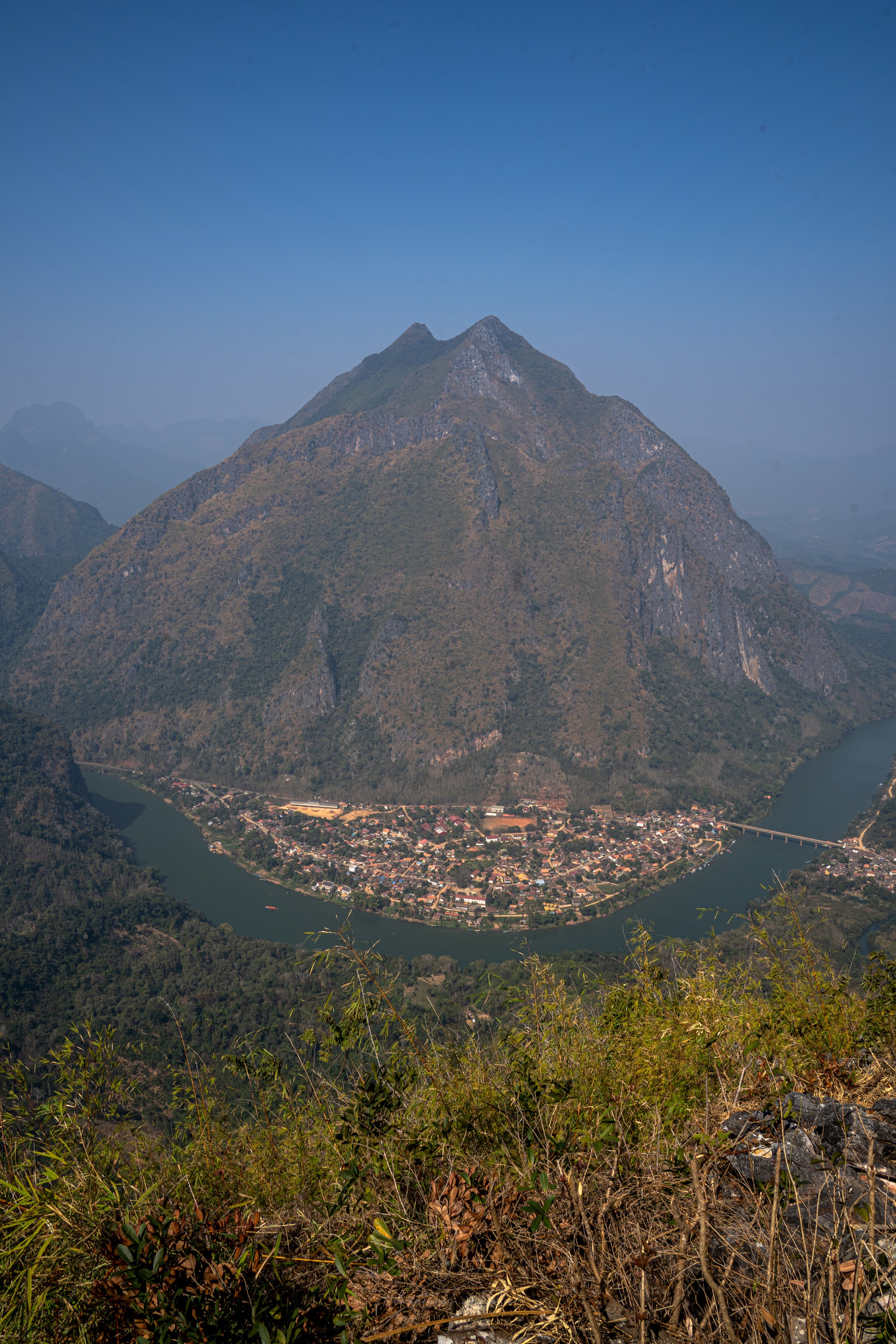

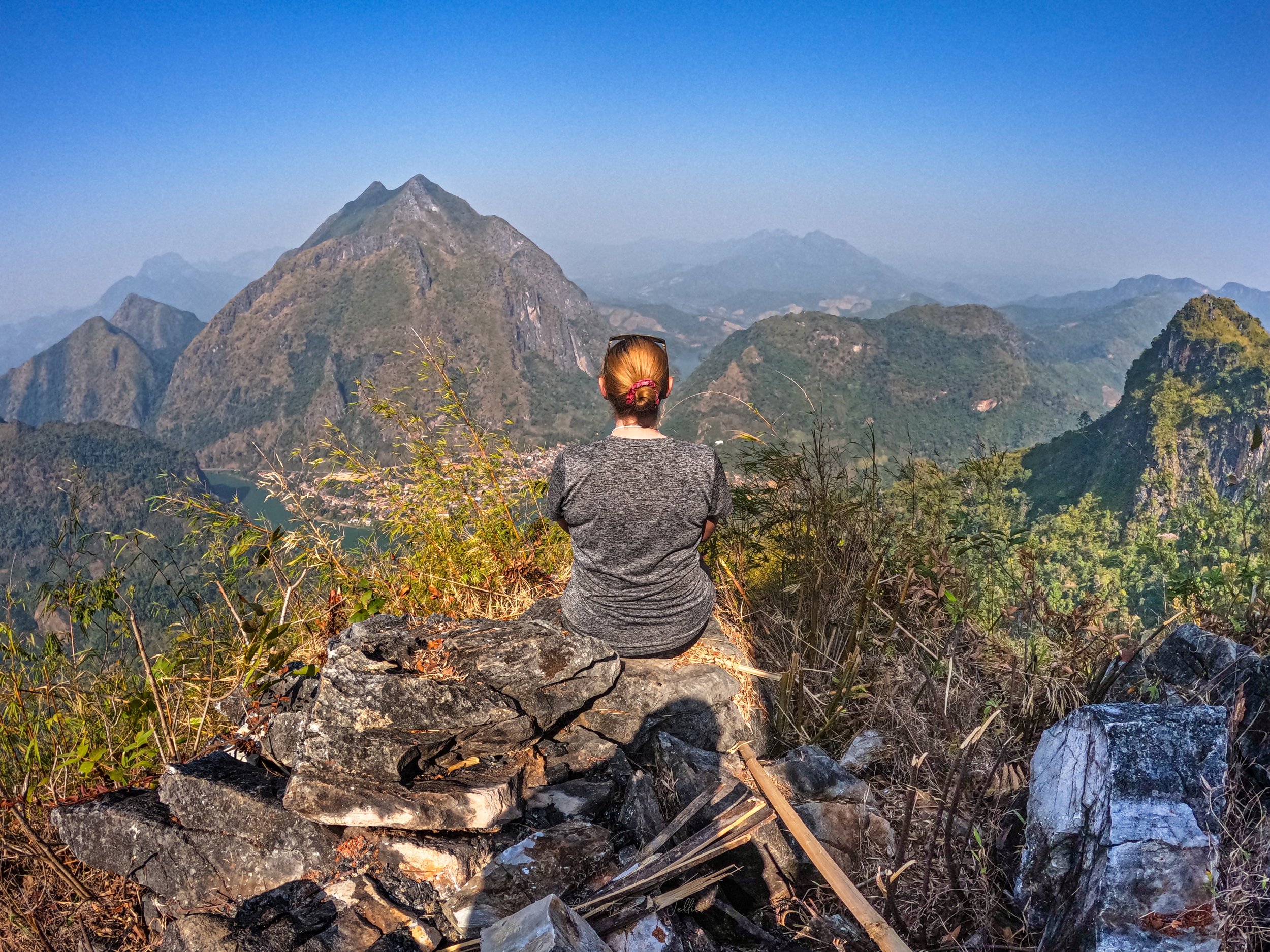
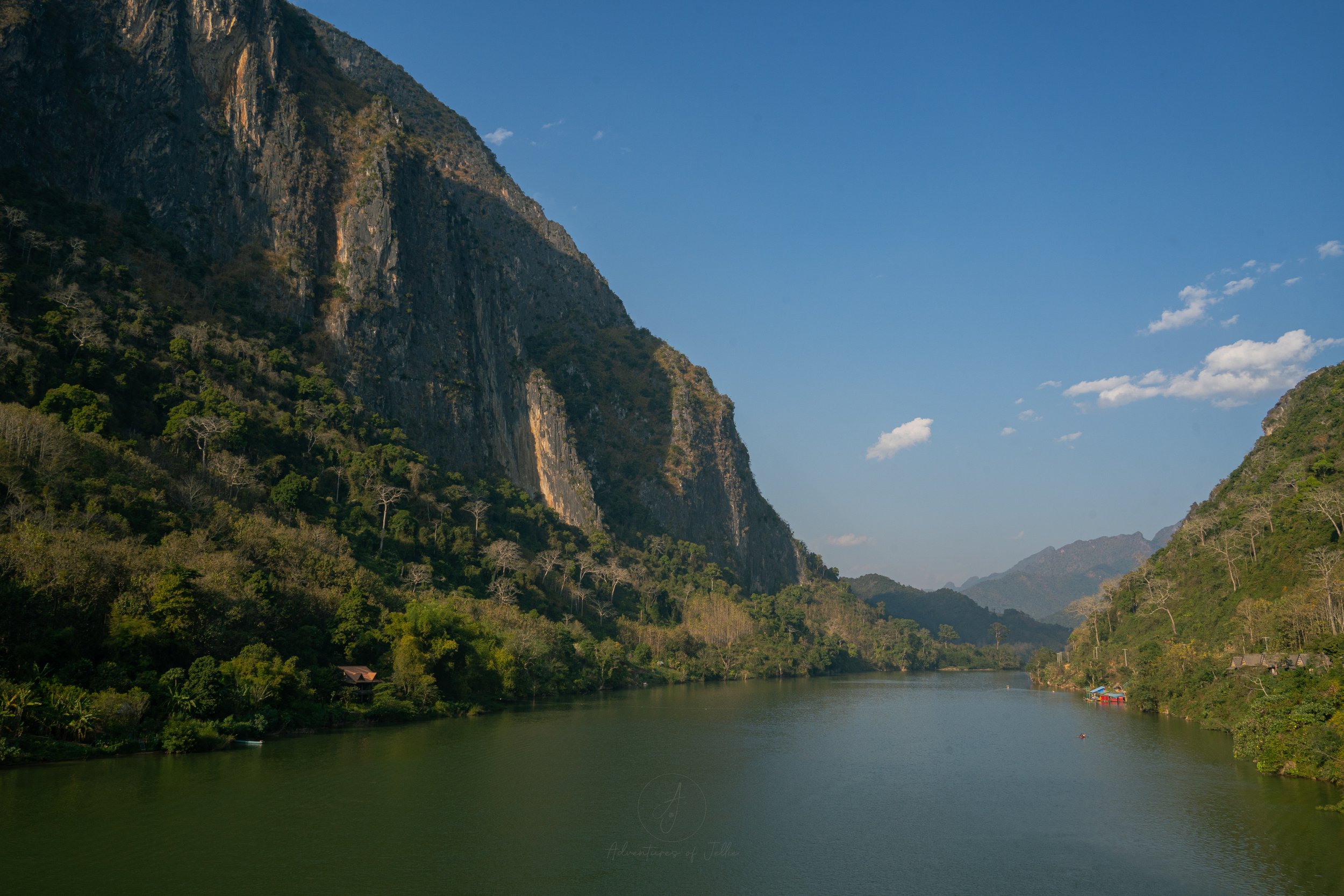
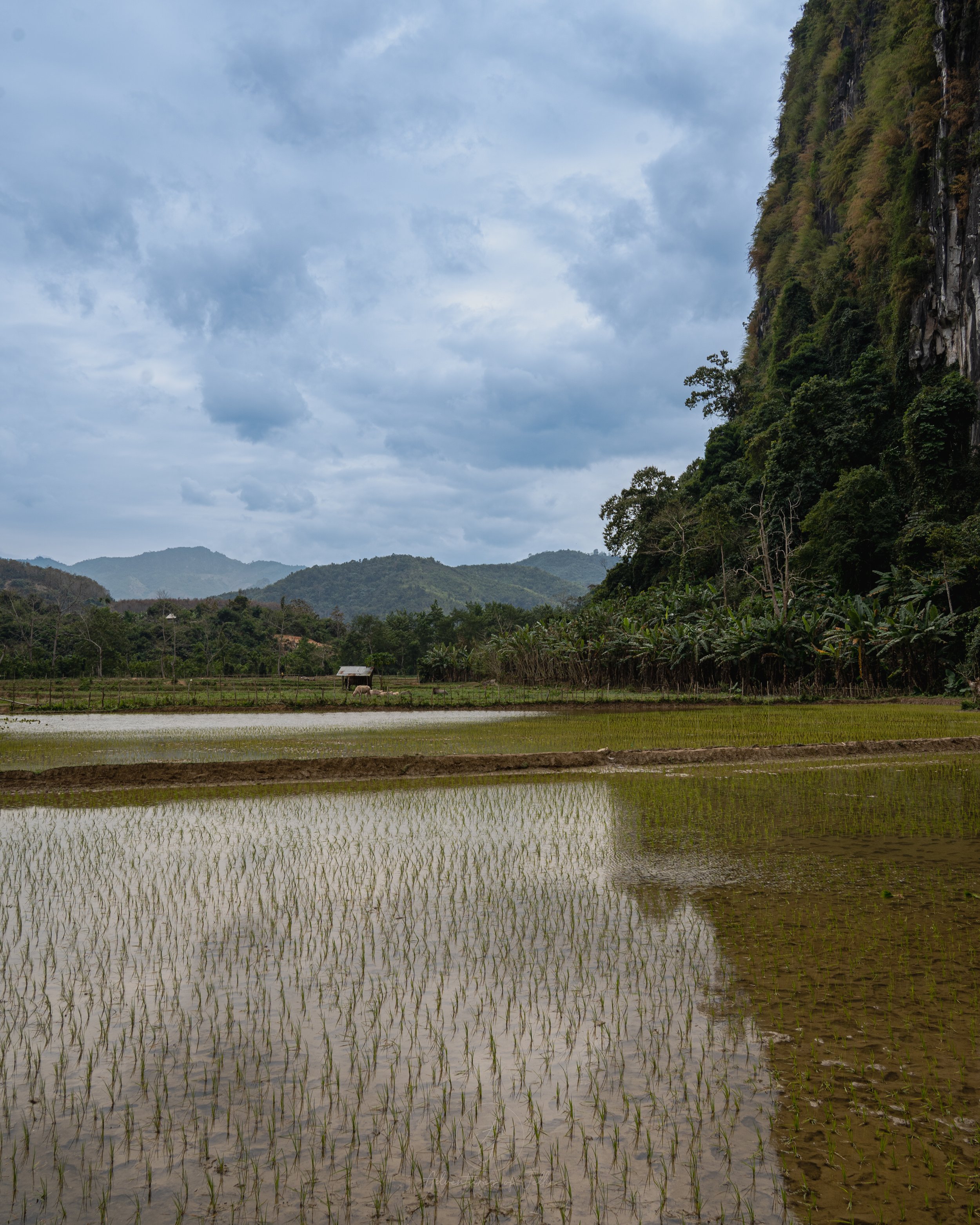
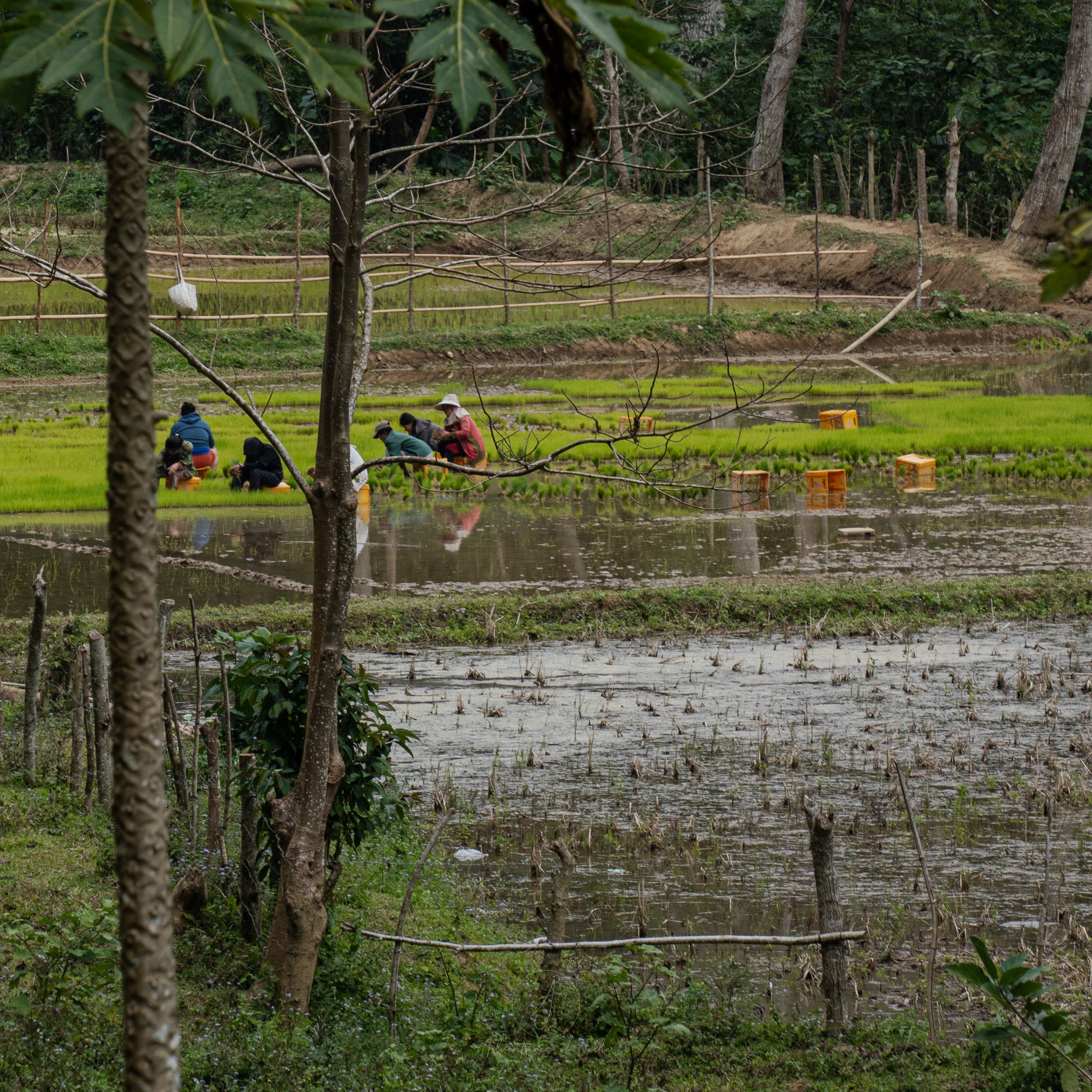
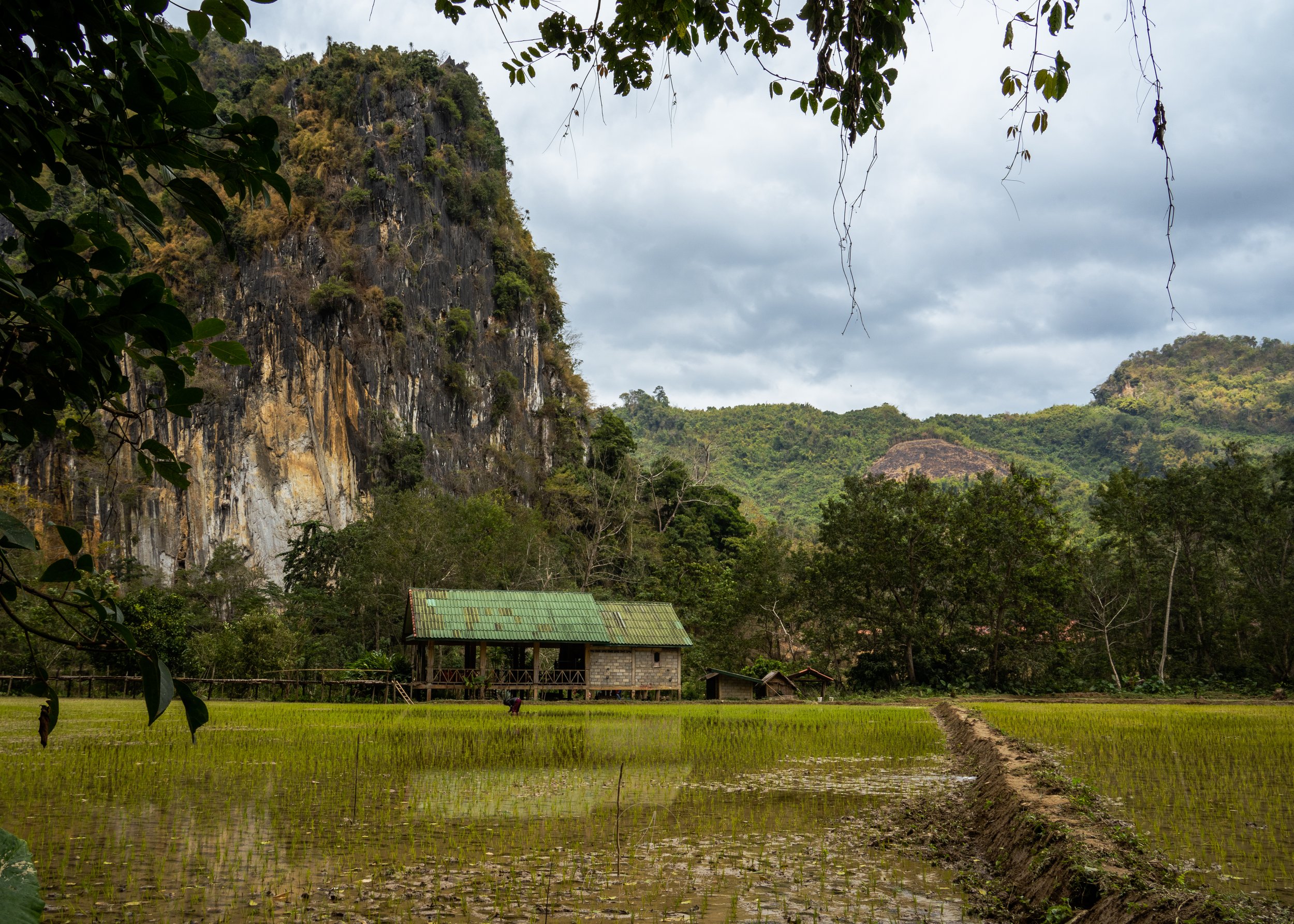
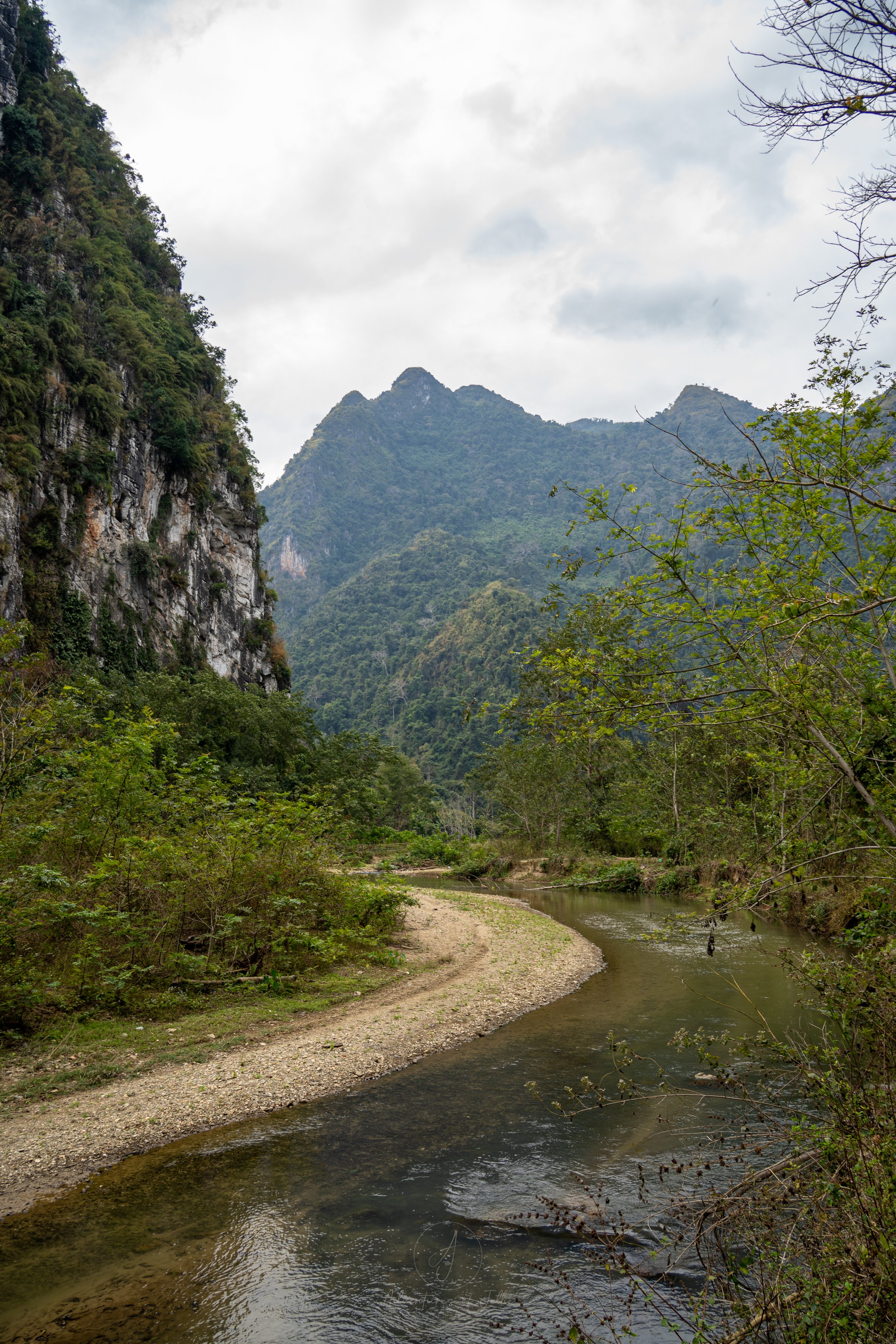
All our Laos travel guides
We absolutely adore Laos and have written plenty of other travel guides to help you plan your Laos adventure. Just scroll along to get some more ideas of where to go, what to eat and what not to miss in this beautiful country!




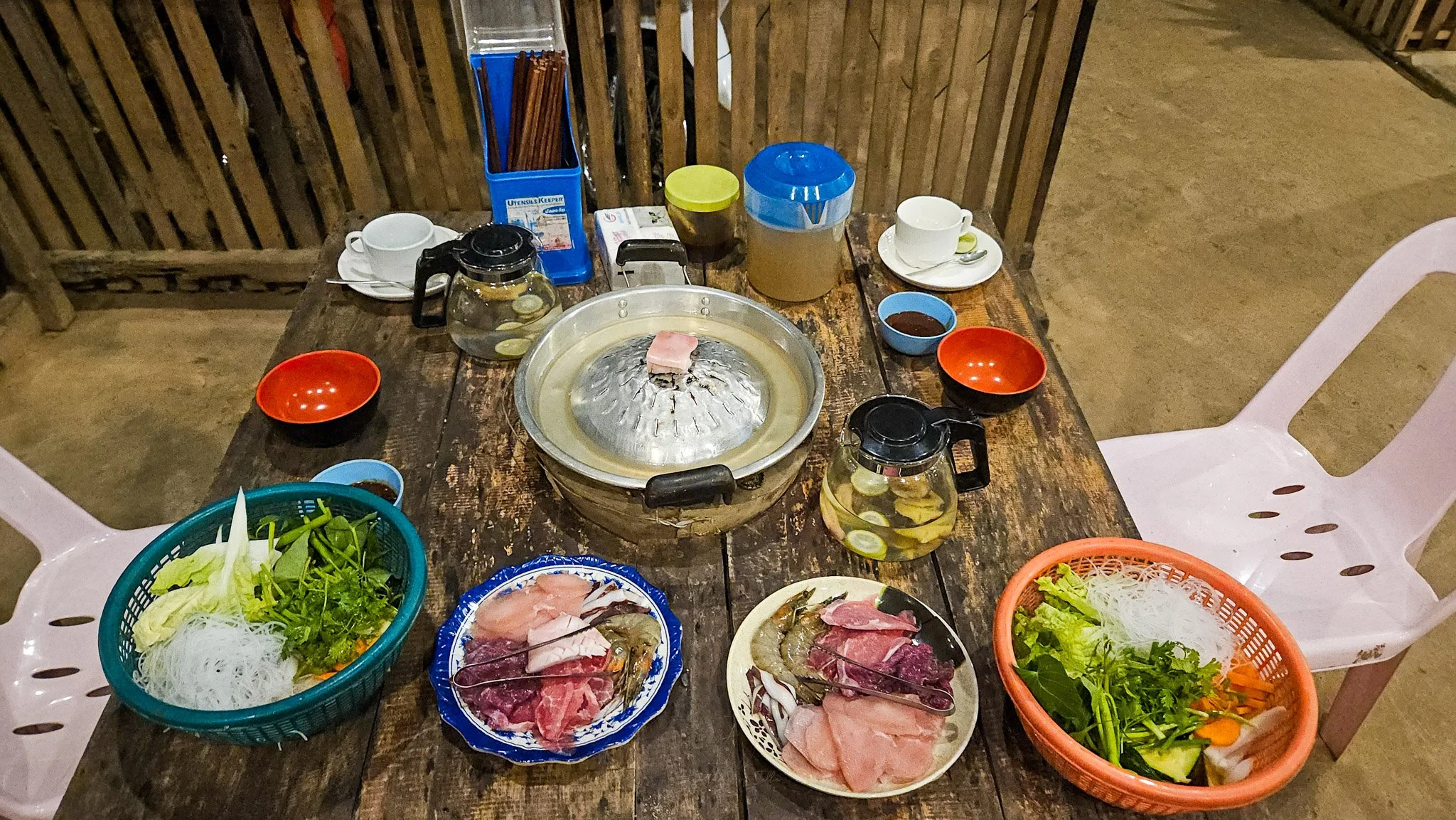


If you’ve found this blog helpful, entertaining or you just fancy supporting us please click the button below!
If you’ve enjoyed reading this article, why not save the pin below?
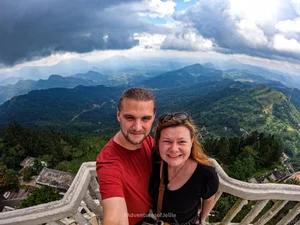
Southern Laos holds a beautiful secret. Older than Angkor Wat, the vast ruins of Wat Phou climb up the sides of a sacred mountain. Our guide covers everything you need to know about visiting Wat Phou as well as the gorgeous nearby town of Champasak.